A dog on the sofa is normal
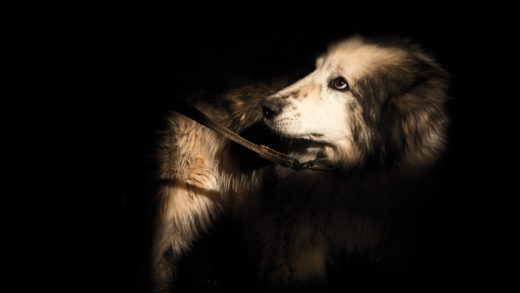
Sammy, just two years ago, was the most difficult dog at the Centaur shelter. We took the unstable, snow-white Labrador with bouts of aggression by the paw and, through gruelling behavioural therapy, brought him to the point of stability where he is now: an affectionate, loyal dog, but still easily excitable.
Whenever a potential adopter for Sammy appeared on the horizon, we gave an honest, detailed account of the particularities of his difficult character, ending with something like: “You have to show him that you dominate.”
I used the word “dominate” without a second thought, because I had repeatedly heard it from professionals working with dogs and come across it in online training guides. But gradually I began to feel a vague inner resistance. What actually is “dominance”, and is it really so important to always be in charge in a relationship with a dog?
— When someone brings you a dog for behaviour modification, I suspect the owner mostly frames their request as “I want, I need…”, without much regard for the dog’s own wishes and particularities. What does a professional do with requests that are, shall we say, strange or inappropriate?
— Eight times out of ten, modifying a dog’s behaviour means teaching the owner. Only two times out of ten is the work specifically with the dog, when the owner understands everything and does everything absolutely right, but the dog displays unwanted behaviour that the person cannot figure out.
We don’t say bad or good, we say wanted or unwanted by the owner. Or species-typical and not species-typical — characteristic of the species “dog” or not. For example, gobbling up stones is not typical behaviour, but yelling at children is very much typical. Unwanted, but typical.
The behaviour specialist’s job is to work out what is happening and formulate the owner’s goal with them. For example, my dog doesn’t like children. My goal in working with her is to keep the people around her safe, but my goal is not for my dog to love children.
Owners usually describe their goals as “I want my dog to be kinder to children”. But since dogs have no abstract thinking, when we work with them we don’t deal in adjectives and nouns, we deal in verbs. [The right question is:] what should the dog do instead of yelling at children?

Or: “I want my dog to be calm.” And you find out that the dog gets nervous when the telly comes on and demands that it stop. What’s your goal then? What should the dog do instead of yelling at you to turn the television off? For example, [you need to teach her to] go into another room, bring a toy, or go outside altogether.
In short, the behaviour specialist’s job is to talk to the owner and find out what they mean by these concepts, then suggest an action, and then assess the dog’s capabilities. Behaviour modification means taking conscious steps to change behaviour and incorporating them into everyday life so that the person barely notices it.
— I’m very concerned about the harshness, the physical violence present in dog training. Trainers have largely adopted the methods of the military, who were the first to train dogs, and the commands often resemble drilling soldiers.
— Hitting a dog to teach it makes no sense, because pain doesn’t help it understand anything; you can’t teach a dog through pain, only through fun and joy.
But this is relatively recent knowledge. It was first discovered in the schooling of human children. Then MRI came along, knowledge of how dogs’ brains work expanded, and people realised that, by and large, pain is bad and pointless.
— But violence in one form or another does exist in our relationship with a dog, doesn’t it?
— In general, we use a lot of violence against beings with no rights. When we decide for a child that they will go to nursery at five, won’t draw but will do ballroom dancing or football; for an animal, that it will stand still while we trim its claws instead of running away screaming and chomping on our hand.
Behaviour specialists use negative stimuli in training, the so-called contrast method — when you teach a dog that doing something good gets it treats, and doing something wrong gets it an unpleasant stimulus.
Unpleasant, but under no circumstances painful. For example, a typical contrast is when we lift the dog’s lead a little and put a finger on its bum; it’s very uncomfortable standing in that position, so it sits down. Then we release it and make sure to praise it.
In the early 90s, I came across a dog-training handbook with a list of dog breeds that could not be [trained]. And an explanation that the contrast method didn’t work with them. No other methods were known then. Contrast training doesn’t work with every dog. If you try using contrast to teach a dog with few infantile traits, one that doesn’t like being stroked, you will give it such a negative experience that it won’t learn anything.
With puppies, negative stimuli should be as minimal as possible. If a puppy is chomping on my hand while playing, I need to tell it that it’s unpleasant, that it hurts. For example, give a loud yelp and stop interacting with it. Once it stops hurting me, the game resumes. But there’s no need to hurt it by rolling it about on the floor.
— I’ve always thought there was a lot of violence and aggression in animals’ relationships with each other. For example, a mother dog drags her puppies away by the scruff when they pester her, or one horse kicks and bites another when it invades her personal space.
— Let’s separate the two. Aggression, or conflict in general, is a normal feature of living in society — human or animal. Violence is when a person with rights acts against the will of someone without rights. Violence isn’t necessarily aggressive. For example, if you pick up a dog that has a rod sticking out of it and needs help, and it resists and screams because it’s in pain, that’s violence, but without aggression.
An overt display of aggression — when we get into a fight over a bone, or a thousand dollars that have fallen on the ground, or whose turn it is to wash the dishes today — is actually rare, especially in a socially advanced species like dogs. If they were constantly aggressive to the point of fighting, they would have destroyed one another long ago.

In fact, hurting each other doesn’t benefit them, and they have developed a language. Most of dogs’ language consists of what are called calming signals. Here’s a puppy pestering its mum; she growls at it: stop pestering me. That’s aggression. The puppy doesn’t get it, so she pins it [to the ground], sits and waits. The puppy calms down, and she makes peace with it.
How does she make peace? Covers her teeth, [signals] with her ears and eyes: let’s play. Well, some bitches get so irritated that they shake their puppies painfully, and the children grow up to start beating up their own children and other dogs too (unless this is specifically worked through with them). Because nobody showed them a calmer way.
— Just like people, really.
— Just like people, yes. This has a bit to do with dominance theory. David Mech rather spoiled things for everyone in that respect: he studied wolves in a zoo and published a book, “Alpha Status, Dominance, and Division of Labour in Wolf Packs”. The book describes adolescent wolves that, in the wild, move away from their pack, start finding themselves and are ready to fight anything and everything as they search for their place in the world, but here they had been locked in one cramped little space. Mech saw alpha status there and a rigid hierarchy with a clear order, and wrote his book on that basis.
The book was completely innovative; everyone picked it up, applied it to dogs, and off it went: if a dog gets on the sofa, it’s dominating, you mustn’t let it. But it got onto the sofa simply because it’s cosy there, and anyway, why is the sofa so crucial?
— Why was Mitch’s book such a success?
— It’s a very convenient arrangement when the bloke is the head of the family, somewhere below him are the son, wife, daughter, and below them the dog. Mostly, there are no rigid hierarchies in animal communities. They exist either in species that haven’t developed much of a brain, like chickens, for example (they have a strict pecking order: the older, stronger chickens peck first, then the weaker ones, then the weaker ones still, and so on), or in artificial communities such as zoos.
But in other, more or less normal natural communities, there isn’t any of that. What’s more, the roles often change. One is better at finding the way, for example, another is better at guarding. In dog and wolf packs, it’s often a little female, and not the oldest one either, who is responsible for finding the way, rather than the alpha male, as people tend to think.
A few years [after publishing the book], Mech went to see wolves in the wild. And was gobsmacked not to find that same rigid hierarchy. A few years later he wrote a new book and tried to stop those earlier ones of his being published, but the publishers were making so much money from them that he couldn’t, and they’re still coming out.
Those books were written about a closed community with nowhere to get away. But in the natural environment there’s a habitat with puppies and an older generation that, for some reason, hasn’t all fought each other, but instead resolves conflicts when the puppies fight. And everyone lives more or less peacefully and happily.
— For me, as probably for many people, dominance is associated not with Mech but with Cesar Milan.
— Cesar Millan made that popular programme about dogs with these crazy cases of magic — here’s a dog, we jerked it about like this, and it felt better… Though we don’t see the dogs in those programmes that ended up worse off.
With that approach, I think that in nine out of ten cases, when we pull a dog around using what is effectively pure violence, force it to do things while telling it: I’m the boss, you’re the idiot, we either produce a dog that breaks down into a nervous wreck, or trigger a defence mechanism and get a dog with learned helplessness, one that takes no interest in anything around it until it’s given a command, that’s afraid to do anything beyond what it’s been allowed to do. You can see this in many working dogs.
I still start from a kind of junior partnership, but a partnership nonetheless. So that the dog and I can feel good together — within the boundaries I set, of course, where I’m always a bit of a bastard.
— Not letting the dog get on the sofa is one of the strictest taboos in many families. Is the owner that very bastard in this case?
— In families where dominance theory has reached the owner and he thinks the sofa is a very valuable resource, he starts fighting the dog for a spot on it, and the dog’s like — aha, he’s defending it, so I need to as well. I don’t fight with [my dog] Chapa, for example. I can say — you’re in my way on the sofa. If I want to lie down, we have the command “Down”. But if you’re not in my way, I can sit next to you.
Well, we have all sorts of boundaries. For example, the bed we sleep in isn’t a sofa, because shaking sand out of a bed is not much of a pleasure. But you swap those roles all the time. It’s a normal social process. It’s what’s called a soft hierarchy.

But a rigid hierarchy — meaning that if the bloke is always right, he’s always right — is bad because it breeds hyper-responsibility. And it’s very stable. If Akela misses once, Akela is done for. Because nobody will believe Akela can still be right about anything. So there are actually very few of these hierarchies.
— Give me an example of a situation where the dog, shall we say, dominates.
— Let’s call them periods of leadership. When, for example, the dog goes to retrieve a duck from a lake. When it protects you in the street. When it runs around the grounds yelling at passers-by. That’s when it takes the leading position.
Loving the television is optional
— Dogs are all different and, accordingly, have different abilities and characters. How do you identify the line between teaching and breaking a character? Who even sets that line? When can you say: well, that’s just how this dog is, and that’s fine?
— It really is a difficult line. You test it by putting the dog in certain circumstances and seeing what it can and can’t do. If you see that the dog is highly excitable, taking it, without preparation, to a rave festival, for example, with loads of glowing things and people, some boozing, some dancing, with firecrackers going off all around as well — that’s a bad idea.
— Yes. But say you’re walking your dog, everything’s quiet, and suddenly a firework goes off. It might get scared, run away, get hit by a car. We have quite a few cases like that; animal welfare advocates raise this issue all the time.
We also have a dog, Lalosh, [at the Centaur shelter] who’s terribly afraid of thunderstorms: he immediately crawls under the table and doesn’t move for hours. Your Chapa is afraid too, and shows it by desperately pestering people to stroke her. Surely all these cases need to be worked on?
— They do need to be worked on. Originally, Chapa panicked at loud noises, particularly the television; she hated it. Chapa ended up with us like this: volunteers asked us to take her in while they looked for owners for her. On the first day she relaxed a little, and then there was this super-loud noise she hadn’t expected, and she hurled herself under an armchair, knocking everything over around her.
She might hide in the basement with an eight-metre trail of diarrhoea behind her, shaking and unable to calm down for hours. That’s not normal, it gets in the way of living, and it needs to be worked on.
We worked through it, generally. For the first two months we watched films on a phone, at first without sound, gradually increasing the volume. We got her to the point where she “said”: I really don’t like you turning on the television, so I’m off [out of the room]. Then came a moment when [my wife and I] were watching some series, Chapa ran in and started telling the television off — turn it off, you’re stopping me living my life! And we were like — hooray, progress! Because if you’re fighting something, you’re not afraid of it any more, you know.
She still has plenty of other bugs, but we fixed her fear of loud noises to the point of — I don’t like it very much, I’d rather you didn’t turn it on, but I can live with it.
— And it’s not necessary/not possible to work through it completely? For example, so she comes to love the television.
— When we want to teach a dog something, our first question should be “Why?”, and the second, “Who will benefit?” For example, trimming claws definitely benefits the dog. As an owner, I get an absence of arthritis by the time she’s eight, the pleasure of knowing the dog will walk better and won’t be in pain, but by and large the beneficiary here is the dog.
Another example: I want to teach the dog to fetch my keys. That’s for me. Well, the dog might enjoy having done something cool, and I’ll stroke her for it. Let’s say it’s for both me and the dog.
But my dog doesn’t get on with children; she doesn’t understand them, she’s afraid of them, she finds it hard being around them. I need her not to gobble up some little girl who comes running in — otherwise I’ll be paying money and blushing afterwards. So I’m working on adapting her to children for myself. A dog that doesn’t like children can be taught to tolerate them and leave them alone, go into its little house and not worry about them running around the garden. But as I’ve already said, it doesn’t have to love them.
— Are there cases when it’s absolutely impossible to work on a dog’s behaviour — for example, it has spent a long time in dog fights and is aggressive towards other dogs and people — and there’s nothing left to do but put it to sleep?
— For me, putting a dog to sleep is clear-cut when it gets no pleasure from life and/or is in pain. For example, my [previous] dog had a brain tumour, and towards the end of her life she was a vegetable for 23 hours out of 24. She wasn’t in pain, but she had hallucinations, was out of her mind. Our vet, whose position was “only when there’s pain”, said: we’re keeping her going, something has to work out. I think that’s wrong. I think that if you have a long-term vegetable that gets no pleasure from life, it needs to be put to sleep.
Does a dog that has taken part in fights fit that description? Well, no. So putting a dog to sleep because of its behaviour is no good.
But then there’s the question of your values. You can’t cope with [the dog’s] behaviour, and you have to either chuck it into some shelter or put it to sleep. My values tell me that if we’ve convened a consultation, asked other specialists for supervision, gone to the vet and found nothing, and the dog keeps biting, then, faced with the choice between life in a cramped cage with practically no walks and being put to sleep, I’ll choose putting it to sleep. But that’s an extreme case.
— So aggression can almost always be worked on.
— Cases of aggression are more or less fixable once you’ve worked out what the dog wants to achieve. Constructive aggression, with a specific goal, can always be fixed.
The hardest constructive aggression to fix is instrumental aggression, when a dog realises that a bite or a growl works so well that it starts using it everywhere.
Another type of aggression is frustration aggression. If you define aggression as a way of achieving a goal, frustration aggression isn’t even aggression. But let’s stick to the general framework — it’s aggression without a goal, it happens because the dog is easily excitable, like Sammy. Something flashed past, or it got excited while playing and started chomping on your hand instead of the toy.
We can fix a dog’s biting in the case of frustration aggression like this: give it a rule — instead of chomping on your owner’s hand, go and chomp on a soft toy, tear it apart, hooray, we’ll even praise you. We adapt the environment and don’t overexcite a dog like that. If the dog has already bitten repeatedly during its upbringing and we’re afraid to work with it, we put a muzzle on it.
There’s aggression from pain and fear. For example, a dog has stomach cramps, it’s in terrible pain and bites whatever comes to hand, which turns out to be its owner’s hand. It’s fixed by removing the pain.

And the last type of aggression is game, an addiction to fighting. As a rule, it occurs in dogs that take part in fights…
— This is a very painful subject in Armenia. Dog fights are officially banned, but they happen nonetheless. How do you work with dogs that have been taken to fights for years?
— It’s quite difficult. If a dog gets a dopamine frenzy [from a fight], it’s not a question of wanting to achieve something; fighting is an end in itself. That is, the end in itself is getting this wild pleasure from it that nothing else can give. It’s fixed through a combination of measures. Negative stimuli are used; [specialists] work with an E-collar (an electric shock collar — Kalemon’s note), and super-safe provocation is also [used]: you take a bitch in heat that the dog really wants to approach and lick, but it wants to fight too, and so it gets a shock for attempts to fight and lots of praise for attempts to get acquainted.
That’s mostly how a dog with an addiction is fixed, and it even becomes able to interact with a certain number of dogs. But once a dog has been on drugs, you can never be one hundred per cent sure it won’t relapse, especially when it meets a dog that’s not averse to a fight either. You need to be careful with dogs like that — always on a lead, preferably muzzled when interacting with other dogs.
Social encouragement matters to a dog
— What do you think about physical punishment? For example, I might flick a dog on the nose for a “misdeed”. Today, for instance, one of our boys attacked another. I gave him a whack on the nose right then, and he immediately backed off. My experience tells me a flick works well in cases like that.
— Look, if it works, you can, but carefully. A million things happen between cause and effect, and the dog has already forgotten it messed up and doesn’t connect one thing to the other. Your punishment might end up reinforcing a different event. But when you give a dog a negative stimulus in the moment and stop as soon as it stops doing what you didn’t like, you’re giving proper feedback.
The strength of that negative stimulus matters too. For one dog it will be fine; for another, a flick on the nose will be painful and absolutely horrifying. So I never recommend that a novice owner use this kind of negative stimulus — you can mess things up so badly that the dog loses trust in its owner, starts being afraid of them, and it’ll take three years to fix, whereas the original problem would have been fixed very quickly if the owner hadn’t applied a disproportionate negative stimulus at the wrong time.
So you need to be very, very careful with it and keep it brief. And afterwards you absolutely have to make peace. Negative stimulus, the dog stops doing what you don’t like, you praise it straight away. With treats, stroking, play, whatever it likes.
The dog should get more positive things from you than negative ones, otherwise it starts reconsidering the whole business of your cooperation. You can also let some things slide. Think — well, I could give a negative stimulus, but how much does [the dog’s misdeed] matter to me? If it doesn’t matter that much, you can let it slide.
— There’s another thought that bothers me. A flick on the nose doesn’t hurt, but I feel it’s somehow humiliating. Perhaps I’m just humanising the dog.
— Humiliation is an abstract concept. For humiliation to work, there has to be an understanding of one’s own dignity, of what’s dignified and what’s shameful. But those are very human things that we define for ourselves. For example, my dad thinks touching a dog with your feet is humiliating it. I’m fine with it — well, I don’t always want to dangle off the sofa when she wants a scratch.
Dogs don’t have quite enough brains for abstract constructions. She understands that you’re displeased. You’re displeased after this action. That means the action shouldn’t be repeated.
— But why should a dog care about my displeasure at all?
— It wants to live.
— I’ve noticed our dogs are happy when I praise them without any material reinforcement, and upset that they’ve upset me when I’m upset but don’t punish them.
— That’s normal. Dogs are infantile animals, unlike, say, horses. A horse doesn’t need you to survive, it can manage on its own; a dog can’t, so these childlike mechanisms develop — empathy, sensing your mood. Their life is bound up with it. If their human is sad, something is wrong. And they express empathy in different ways. One hides in the far corner of the enclosure, another comes to soothe you — lick your face; these are different behavioural strategies.
Social encouragement is very important to a dog. And it’s important to feel part of a team and take a little care of you, adjust to you. Both social negatives — showing displeasure without any physical intervention — and social positives — supporting the dog, telling it it’s doing something good — work.

And all sorts of complicated things, including tricks, don’t work without social encouragement, because you establish the technique with treats, but not the desire to do it. A dog can, in principle, do it for a treat, but it’ll do it without joy.
Why dogs need a swimming pool
— Your second specialism, as an aquatic trainer, is something completely new in Armenia. For me, a pool for a dog has always been associated with arthritis, but you talked about aquatic training in the context of addressing all sorts of different problems — physical and psychological.
— There’s a concept called proprioception, the sense of your own body. That’s the first thing water gives. It’s a funny thing, humans have it too, and in dogs it sometimes shows up very clearly, when the dog doesn’t know it has some part of its body at the back.
If you’ve noticed, many dogs don’t move very well — they might slip, whack into something, fall, and really this isn’t about how clumsy the dog is, but how aware it is that all the parts of its body exist. If a dog knows it has four paws and a tail, it’ll be less likely, say, to leave its tail in the way of a door.
So the first thing working in water gives is a sense of self; the second is that there are no impact loads on the joints in water, which lets us work with puppies, for example, that we can’t work with on land because they don’t have bones yet. With dogs with arthritis, whose joints are inflamed and everything hurts.
The dog moves in water, the water relieves inflammation, it gains muscle mass, and a dog with hernias, for example, starts moving on land too. Some dogs build up their lower-back muscles so much that they stop noticing the hernia.
Swimming improves breathing and heart function. In general, everyone can swim. There are exceptions, not many of them, where you must consult a vet. For example, a dog with a heart defect can swim, but carefully.
I had a lovely dog, a wheaten terrier, with a heart defect: one valve wouldn’t close, and he wasn’t getting any exercise. He was three, but you’d have put him at about 12. After training in water, the valve still wouldn’t close, but the pump had got bigger, the blood was pumping merrily, and the dog didn’t notice his defect. You have to be careful with the heart, work with a vet’s permission. Any unwell dog needs that consultation, really.
And of course, the experience of victories, joyful leaps after all sorts of toys — everything we can do on land, we can do in water, often more. For some dogs, just getting into the water is an adventure.
— And for others, water is stress.
— Stress is a reaction to something new. If a dog is afraid of water, jumping in and overcoming itself a little is already a huge, tangible experience of victory. The dog’s self-esteem grows — it was hard, but I did it, I’m cool.
— But how do you drag it into the pool if it’s scared?
— I don’t drag it in. Remember, I’m for minimal violence. Let’s separate things. Aquatic training was originally devised for medical purposes, and only later became a tool for behaviour modification. If it’s medical, let’s say, a dog like that is prescribed not lifelong swimming but a course of sessions. With dogs like that, getting them used to water isn’t even on the agenda. We carefully carry it in, it swims for about ten minutes, we don’t care how it feels about it, as long as it isn’t scared shitless. With a dog like that, I don’t need it to jump joyfully into the water on its own.
Getting it used to water is when our goal isn’t medical, but we want the dog to know how to swim, to get a kick out of it when we go somewhere, for example, out on a lake in a little boat… One frequent request, actually, is: teach my dog to jump off the boat on command rather than whenever it feels like it.
Though even with a medical dog, I still try to make friends and turn its swimming into a game. Nobody wants to just do press-ups for no reason, but as part of some game it gets more fun.
Ideally, a rehabilitation specialist should be doing all of this. But most good rehabilitation specialists aren’t exactly dreaming of swimming in the water with a dog. And in an ideal world, the vet spells out in the prescription which movements the dog needs and which it mustn’t make. In reality, vets just write “swimming”, and what kind — figure it out yourselves. So the aquatic trainer learns all this, requests MRI scans, examines the dog, and sometimes it turns out the dog mustn’t swim.
— For example?
— For example, once I was sent a dachshund with a spinal hernia for swimming. The diagnosis on the prescription was a lumbar or thoracic hernia. That’s the whole back, minus the tail, cervical and sacral regions. Feel around and find it yourself. I pinpoint it to within two or three vertebrae, send her swimming, she comes ashore, runs happily after a little crocodile, and then I see her back leg twitch like that.
I realise it’s a dislocated kneecap. There is nothing I can do in swimming to improve that kneecap. What’s more, the range of movement in swimming worsens the condition of that poor kneecap. The dog needs either surgery or an orthosis. And then it can swim with the orthosis.
After that incident, when a dog comes to me with a particular diagnosis, I start feeling it all over just in case, check how it moves, and only then take it into the pool. And you always have colleagues in veterinary medicine, orthopaedics, fitness trainers, whom you can ask.
— You’re looking for a swimming pool in Armenia that will let you in with dogs. I’ve been asking people too. But mostly they’re horrified and just won’t understand how a dog could swim in a human swimming pool. The fur, echinococcus, all that.
— Those objections are easy to address. First, the water requirements for working with dogs in a swimming pool are considerably stricter than for people. For people, you chuck some chlorine in and everything dies. Dogs can’t have chlorine, their fur will fall out. For them, cutting-edge disinfectants containing no chlorine are used.
Plus, in a pool for people, they don’t usually worry about the viral load. In a dog pool, that’s a very important criterion. We have to use antiviral disinfection. Roughly speaking, babies can swim in pools that dogs swim in, that’s how clean the water is.
Also, dogs don’t pee much in the pool, whereas people do it all the time. The smell in a swimming pool is urine meeting a chlorine-containing product.

Yes, dogs have more fur than people have hair. All that fur floats in the pool for a very short time, then gets skimmed off the top with a net, vacuumed off the bottom, and some goes through the filtration system outlet. People shed hair too, actually, just less of it.
You can’t catch anything from a dog in a swimming pool. It might just be your personal aversion. And if we’re talking about open bodies of water where people swim, birds and bats relieve themselves in there, and insects swim around.
— What size and temperature should a dog pool be?
— My ideal pool is an indoor pool (fewer external stimuli and no wind or heat), four metres by four. You can actually do rehabilitation in a pool one and a half by two. And a water level of 1.2-1.3 m, so I can stand but the dog can’t touch the bottom with its paws.
Ideally the temperature should be adjustable. Let’s say the normal temperature for most dogs is around 27-30 degrees. If it’s a dog in rehabilitation that can barely move, the water should be warm, 32-33 degrees is just right, whereas an actively moving dog will boil and overload its heart at that temperature. A super-fast, athletic dog needs cold water, shockingly cold, where its whole body starts working in a way that improves blood flow and breathing.
By the way, swimming also sharply reduces the risk of obesity in dogs.
— Just the thing for sterilised dogs.
— Yes. Water is also very good for uncastrated adolescents that display sexual behaviour we find inappropriate. They need increased physical exercise. You can try walking them for hours, but he’s got his scent marks out there, and most likely he won’t want to walk for hours. You can give them active tug games, essentially crossfit. You’ll lose weight and build muscle yourself, but not all owners are athletic.
And a pool is a great workout. In half an hour you can wear a dog out so thoroughly that he’ll sleep on the sofa and forget about girls.
Bitches need physical exercise immediately after being in heat, to prevent false pregnancies. The question is: how do you give more exercise to a bitch that dreams of lying on the sofa and “giving birth”? You have to make her do it a little. A pool does that brilliantly too.
Also, after pregnancy, once she’s finished feeding them all, it’s hard for her to run and jump with her belly flopping about, and she becomes less active. To pull [the belly] back in, you have to get her moving. In the pool, nothing flops about; her belly is underwater.
Dogs have more freedom in Armenia
— We met in a Telegram chat helping people who were trying to leave Russia after the start of Russia’s invasion of Ukraine. Do you remember the moment when you and your wife also decided to leave?
— [As early as] 2011, with the rigging of the Duma elections, it was clear things were shit. My sister said “Oh, that’s it!” and left for Kyiv. I decided to wait and see; there was still hope then that we’d do something, somehow steer our way out. Then it became clear we wouldn’t. Completely clear somewhere around 2020. And then Covid hit and our plans to move went down the drain.
Bucha was the last straw; I realised I couldn’t keep paying for the regime’s needs. You can still hide from personal taxes, but there’s no hiding from VAT in Russia.
And life in Russia [in general] became impossible. Either you stay silent against your conscience, or you get the truncheon and prison.
— Now, after several months in Armenia, have you begun to feel free? (by the time of publication Pavel had moved to Georgia — Kalemon)
— Straight away. We were driving, and it turned out very symbolic. 4:30. At the Russian border, darkness, wind, the tears freeze in your eyes. The border guard gives you a hard time over your grounds for leaving. No man’s land — twilight. The Georgian border — dawn, no wind, and it’s clear where to stick your passport. People smiling.
As soon as we left the Russian Federation, a weight fell off my shoulders. The pressure eased.
Then we ended up with you at the dacha (a temporary refuge) in Armenia. For a while, the problems of emigration overshadowed everything — where to [get] briquettes for the fireplace, how to find a house, and so on.
But none of it goes away completely — it’s unclear what I can do to stop the war. I haven’t thought of anything yet.
— But you did think of helping animals affected by the war, setting up a Telegram chat with friends to provide veterinary help for Ukrainian cats and dogs in trouble. Who do you help, and how?
— Oh, anyone in trouble — it’s mostly veterinary care. And of course, it’s a chronicle of horror.
Since [24 February], I’d been getting a lot of questions about epilepsy, because my previous dog had [epilepsy]. But I’m not a neurologist, so I wrote to a neurologist I knew asking what to say, and she’d already been toying with the idea of a help channel herself. [The channel] launched in one day.
It was hard going in there. You had to gather your strength, read everything, and answer where you had expertise. More than three thousand messages a day about pain, suffering, being unable to find medicines, pets’ PTSD after bombing. As for the hoops vets jump through to give recommendations based on [nothing but] a description [of symptoms] and with limited medicines available — I won’t even go there.
Sometimes you get results like this from there (Pavel shows a chat exchange where, asked “How are things?”, a person replies that there’s no phone connection, internet or electricity, but the dog no longer gets nervous at all, “if something goes off too loudly, she checks our reaction and calms down”), and it gets easier. The dog [developed] a fear of loud noises after being caught in a bombing while out for a walk.
— For Armenia, shall we say, it was somewhat astonishing that people in Ukraine mostly take their animals with them — into bomb shelters, during evacuation. Not just dogs and cats, but animals like rats, hamsters, geckos too. When we had a war, many people left their animals behind as they fled.
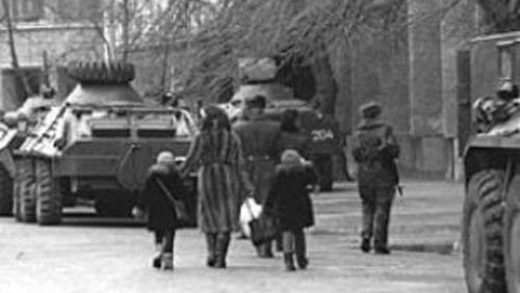
— At Upper Lars [on the way to Armenia], we waited fifteen hours because the pass was closed, and behind us were two Ukrainian cars from Mariupol — full of people and all the belongings they’d managed to get out. One of the men driving, Denis, and I kept meeting on cigarette breaks, and he told me about what had happened in Mariupol completely without emotion. I mean, it was trauma he hadn’t processed, and he told it like a robot, as a series of facts.
In particular, he told me a story that completely rid me of the idea of thinking badly of people who abandon their animals. They were leaving Mariupol when Russian occupying troops were already there. They apparently opened a humanitarian corridor, but periodically shot up all the cars; people went to fetch water under fire, and many never made it. Anyway, he left there having gathered everyone he could into his car — eight people in a little Golf or Opel Astra, naturally with no room for animals.
And he said he had an Alabai and a couple of cats, and he said to his bitch — go on, off you go, you’re free, we’re leaving. But for the Alabai it was time to lie on the sofa, she didn’t want to go anywhere at all. Well, he left the door open, and just as they were driving away from the house, a shell hit it, and the Alabai and the cats shot out screaming. After that, [the Russian occupying troops] also sent their car off with bursts of automatic gunfire — there are bullet holes in several places in his car.
After that story, I’m not prepared to say: those animal abusers, they didn’t take their animals, because the choice is inhuman — either you put eight people in your car, or three people, an Alabai and the cats. Well, in that situation I would definitely have done the same. Though it’s extraordinarily hard to imagine myself in Denis’s place.
Then they made it out to Russia, and he said that at petrol stations and places to eat he heard: serves you Ukrainians right, you’re Nazis, and all that propaganda that pours out of our television. They later went to stay with people they knew in Georgia.
— I probably have difficulty from the outset with drawing a distinction between a human and an animal [in terms of importance]. I haven’t been in Denis’s situation, and I don’t know for sure what I would do, or how, in such an extreme situation, so of course I’m not going to sit here in a comfortable chair and condemn him. I hope I never have to make that choice.
But about attitudes to animals. You moved to Armenia only a few months ago. I don’t know whether you have enough experience to answer this question: do you feel a difference between attitudes to dogs here and, say, in Russia?
— It really is still difficult for me to judge the difference freely, because I don’t have enough experience with local owners. But I can talk about what I see on the street and how it differs somewhat from Moscow, where I lived and worked. In Armenia, there’s a slightly more relaxed attitude towards a dog, less fretting over it, more freedom. Here it’s normal for a dog to roam freely, or to have run away. So what, it’ll come back on its own.
Again, I won’t speak for all of Russia, and even in Moscow my circle is, shall we say, limited, but here there’s more canine independence, more freedom. It applies to children too, by the way.
[Here] it’s still quite unusual, not normal, for a dog to come inside and hang out on the sofa. The owner of the house [we rent] is fine with it, but I spent a long time explaining to the neighbours that yes, we really do need to mend the hole in the fence, because I’m an anxious Moscow person who’s afraid his dog will escape through the hole into the street, where there are cars and people. The neighbours’ reaction was: well, it’ll run away, so what?
— Yes, I once “rescued a poodle”, in a cold February. Found him a home, then his owners turned up, and the girl who’d taken him in as a foster had to give him back, which was hard for her, of course. All because, it turned out, the dog went out walking by himself, and this time he’d followed a bitch in heat and got lost.
— On the other hand, that gives the dog more freedom to express itself.
— But how can that be? It could get hit by a car. It could get stolen, for that matter.
— That’s about safety now. By restricting a dog’s movements, you take away its freedom for the sake of safety. That’s the kind of bastard you are. In general, as I’ve already said, as a dog owner you’re always a bit of a bastard. The question is exactly what kind of bastardry you’re prepared to live with.
For example, I’m not prepared to make a dog into a tool, because I’d find it hard to work with the number of restrictions I’d be forced to impose on it. Again, it comes down to your values — what’s better: living longer, eating better, or risking getting hit by a car but being free to run around?
Or having the joys of sex a few times in your life, complete with a risk of prostate cancer a few years later, or having neither the joys of sex nor prostate cancer?
There’s always a choice, and it belongs not to the dog but to the owner. So you’re a bastard either way.
— It’s a terrible choice, really. I used to say it was better for a dog to live on the street, often hungry but free, than in a shelter, well-fed but shut in an enclosure most of the time. But the street dogs in Yerevan, let alone our other towns, don’t look happy or content with life to me. And I have a feeling — though perhaps I’m just comforting myself — that most dogs themselves choose restricted freedom, but with a human.
— Yes. Dogs developed as infantile animals that need collaboration with humans. So a dog is itself happy to trade its freedom for tasty food and interaction with you.
By keeping a dog in captivity, we restrict the expression of some of its needs. There are certain objective criteria that mean some restrictions mustn’t be made. For example, a dog will sit in a concrete room with no light, but with food. Its need for nutrition will be met, but its need for movement, exploration, social approval won’t be, and that’s bad.
— Shelter dogs, even ones as few in number by shelter standards as ours, have loads of unmet needs, which undoubtedly affects their behaviour. Does it make sense for a behaviour specialist to work with shelter dogs at all? Not ones that are about to be taken home, but those with no immediate prospect of adoption?
— Dogs living in an enclosure… They’re warm and comfortable there, they interact with their own kind. Their need for movement and exploration isn’t met. Dogs in shelters don’t get enough new information. So American specialists devised a discipline for this, nose work (English: “Nose work”) — teaching dogs to search for, find and indicate new smells. That way, the dog gets new information it can’t get for itself because it doesn’t get enough walks. Nose work is just the thing for a shelter.
— The issue of dogs in captivity has been a painful one for me to work through. Now I’ve come to terms with it a little, and the dogs help too, for example by running and jumping and then, after a while, going into their enclosure on their own. And I’m glad that at least I’m not making them…
— You’re not making them?! You’re the one who taught them it’s nice in there.
— Well, at least I taught them it’s nice in there, rather than: “Back to prison, now, or I’ll beat you.”
— Keeping animals in captivity is a big, complicated subject. If we’re talking about dogs, they don’t live without humans in any form. Well, there are some that live without humans, but we don’t encounter them; we’ve practically never seen them. All other dogs live in collaboration.
It’s useful for a behaviour specialist to recognise that, as a dog owner, you’re a bastard, but the owner is better off not knowing it (laughs). Otherwise it’s hard to live.