— When the woman said her child had not seen the sun for fifteen years, everything inside me fell to pieces. I looked at her and thought — I understand that Martuni is the middle of nowhere, but this is the twenty-first century, and this boy has never even been out into the yard in his entire life! I was furious, I was ready to tear everyone to shreds — the mother, the hospital, the neighbours, the officials. The circle kept widening, and suddenly I realised that I, too, was in that circle. I am part of a society that gives no thought to people deprived of the chance to communicate and move.
I asked myself, what can I do for this child right now? For other children like him? Integration — that is what they need first of all. Overnight I wrote a project that I called “Art Opens Doors”. It was my first experience of writing a grant application. It worked. That boy, Vahe, reached into my soul with his huge, lively eyes and changed everything. And I began changing others.
— I saw the happy faces of Vahe and his mother in your cosy rehabilitation room. His mother told me about her son’s achievements with such pride. It is hard to imagine that this is the woman who kept her child shut away for fifteen years.
— Yes, you could say Vahe is the symbol of “Voskeporik”, but I would call the changes in his mother our greatest achievement. She is living proof that we are moving in the right direction. Yes, it took three years of painstaking work, but it was worth it.
— Let’s go back three years. You created a place that changes not only the lives of children with disabilities, but also the outlook of their families and of a society prone to prejudice. How did an opera singer decide to work with children with disabilities, and in Martuni, of all places?
— Quite by chance, if anything in this world happens by chance. But then we need to go back not three, but eleven years.
I was a conservatory student. I was playing the lead in a film, I had the leading part in an opera, life was full, and I had no intention of changing anything in it. And then one day I am riding in a minibus, bouncing rhythmically on the back seat, and I get a call from a fellow student’s uncle — a composer, who offers me a job teaching music at a college for preschool children.
They told me there would be about eight children, but first there were twenty-eight, then fifty-eight. I wrote my own methodology, which the Pedagogical University later adopted. It was based on the idea that any child, and any adult too, can develop their musical abilities.
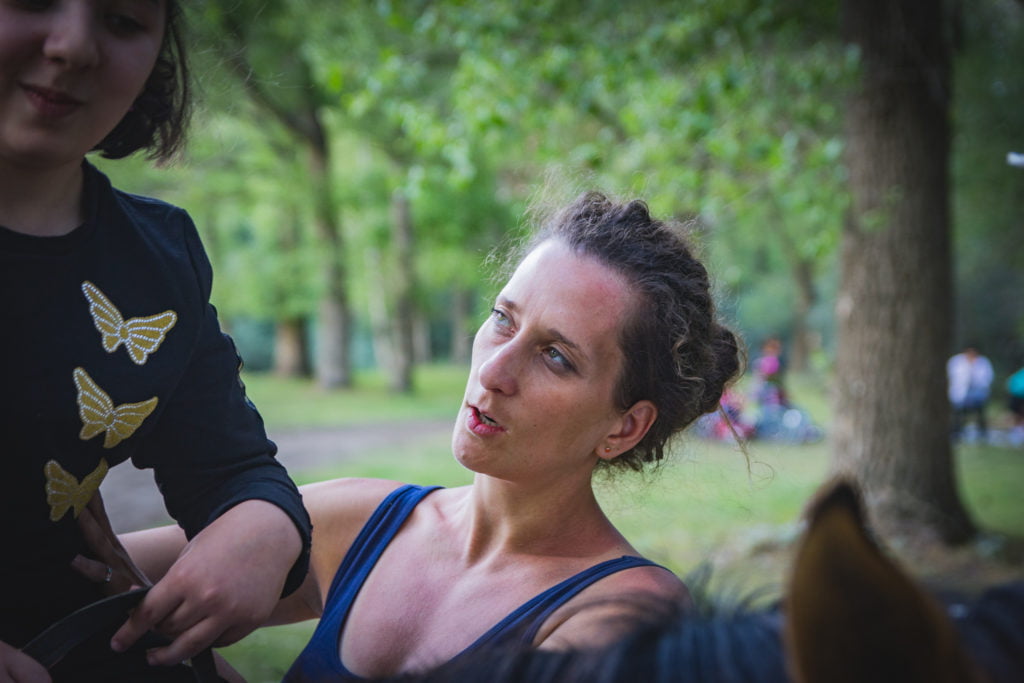
There is no such thing as a child having “no ear for music”. If a child can hear, they can sing. If they do not sing, it means they have psychological blocks. I managed to remove those blocks, and the child would begin to sing.
What I was doing by instinct back then was therapy. Those children of mine are now 14-15, I keep up with them — many have chosen a musical career, and what is interesting is that it was mostly the children who had shown no discernible aptitude at the outset who chose it.
A year later, problems beyond my control arose, and I left the college. It was a very difficult decision. I went to study in Germany to develop my singing, but the thought of returning to children one day was always there.
— You came back, and?
— Back at the conservatory in Yerevan I met a girl called Ani, who had come from Siberia to study singing. She had moved there from Martuni at the age of four. When she enrolled, I was finishing. But sometimes it happens — you see someone and immediately know they are your kind of person.
We became very close, performed together, went to Siberia to visit her family. Ani finished the conservatory, developed problems with her jaw, needed braces, and temporarily could not sing. She decided to live in Martuni for that time. She tried to find work there, tried to get a job at a school, but nothing was right.
And then one day we are having lunch, and I say in passing: “Listen, I wrote a methodology fourteen years ago, maybe we could open a centre in Martuni and you could work with it?”.
We decided on September fifth, and by October fifth we had already opened “Voskeporik”, a centre for aesthetic development for preschool children. “Ordinary” children attended paid classes there. In two months, 120 children came to our drawing, dance and theatre groups, and we fully recouped the money we had put into renovating the room and buying materials and furniture.
Six months later, we decided to do some monitoring — to understand how people in Martuni felt about us, how well they knew us. Initially, both Ani’s relatives and the staff at the mayor’s office had been rather sceptical about our idea, saying you do not know the local people, this [integration] will not work here.
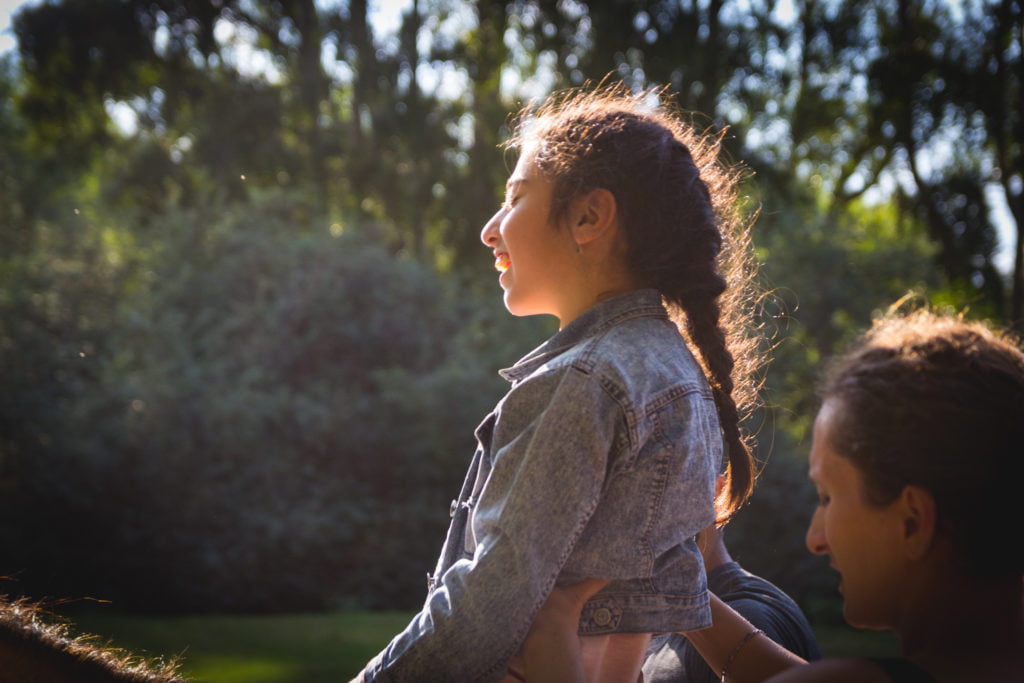
We went randomly from house to house, introducing ourselves, talking about “Voskeporik”, handing out leaflets. And then I knock on a door, it opens, and a man is standing on the threshold with something I cannot make out in his arms. A woman appears behind him and quickly slams the door. I have just enough time to realise that what he was holding was a person — all shrivelled up, with huge eyes that, you know, were calling out. And I followed that call. I began explaining through the door who I was, asking them to open it, saying I would not hurt them.
The door opens again, the woman asks to be left alone, unleashing a torrent of words at me: “This is our cross, we bear it, we do not need anything, just leave us alone. For fifteen years no one has bothered to ask whether our child needs anything, no doctor could help us, we are not beggars, we do not need your help, the child cannot even get a passport”.
So, in less than a minute I get a condensed account of the whole range of problems facing this fifteen-year-old lad who looks eight.
That was Vahe. In the end they let us into the house, and I saw him again. Nothing moved except his eyes, all his muscles were extremely tense. He had no need to move, either.
— He probably did not even know there should be such a need.
— Well, yes, they picked him up, moved him, fed him, did everything for him, he had already developed severe spasticity, what movement could there be? I began communicating with him, and the boy started smiling. Only with his eyes, no facial expression. The ice had broken. A minute later all of us — his mother, father, grandmother, me, our group — were already sitting there sobbing out loud. And a smiling Vahe was looking at us. A surreal scene.
That was when something clicked inside me. Until then his twisted body had stirred a fear in me that many people have — you do not know how to approach him, what to do. I know that for many people this fear produces a desire to turn around and leave. Suddenly I wanted to hug him.
— Was this the first time you had seen a child with a disability so close up?
— With a physical disability — yes. Before that I had some experience of working with children with autism, but it was all fairly superficial. I worked only within my comfort zone, never put myself under stress. It had never even occurred to me to work with “those” children.
But when Vahe’s mother said — my child has not seen the sun for fifteen years, there was no going back. I sat down and wrote my project. “Art Opens Doors” — because art is my path, all our projects were connected with it, even the “Voskeporik” centre opened under my NGO “Artissimo”, which was created as a place where bold and talented people came together and made art.
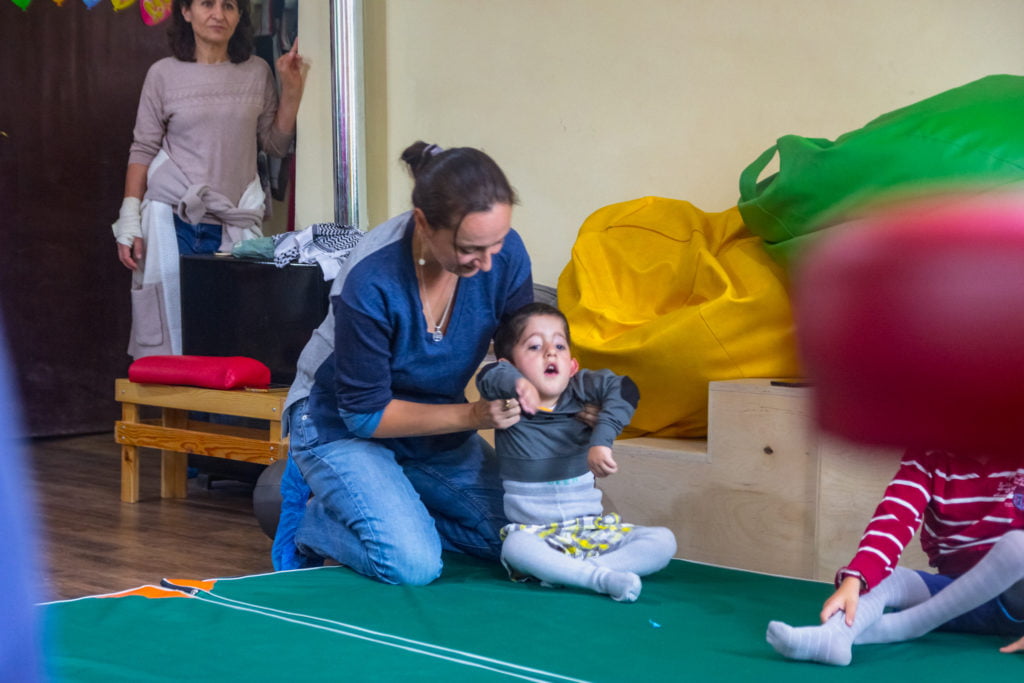
Even before “Voskeporik”, we ran a project called “Beacons”, which was temporarily suspended because of the pandemic. We selected children — artists and musicians — from the regions, organised meetings, workshops and joint performances with their idols for them, gave them a chance to be seen and heard, fostered their sense of aesthetics. We had no competitions between children, only performances and exhibitions.
As part of that project, I showed paintings by a boy with autism. This was a child who found it difficult to be among large numbers of people, but he stood on stage with everyone else at the end-of-project concert.
Art is the space where everyone is equal, where all children can communicate and build relationships. Besides, it is something that even “ordinary” children in Martuni are deprived of. Over the four months that “Art Opens Doors” ran, we invited people from different fields of art from Yerevan, and they interacted with the children. There were 500 “ordinary” children in the project, and we included another 12 children with disabilities.
People in Martuni had the same inner conflict about accepting an “unusual” child that I had before Vahe. The first step was to create a space where they could meet, where a dialogue could take place between them.
We managed to create a very cheerful and positive atmosphere — without pity and without tears.
Over four months, many musicians, artists, puppeteers and magicians visited us, and every one of them came for free.
We held the meetings not in our little adapted room, but on the second floor of the Martuni House of Culture, where there were no facilities for wheelchairs at all. And the local “tough” guys came and carried the wheelchairs up to the second floor. Many came out of “tasib” (a notion of honour common among Armenian men — Kalemon). And only afterwards did they get drawn in, rethink things and come back as different people. I am talking about men in Martuni who are so closed off that they rule out any possibility of dialogue with them.
— Which children joined the project? Was it frightening — without experience?
— Although Vahe was the trigger for the project, we did not include him in the pilot programme. We realised that we did not yet have enough knowledge or tools to work with him. Back then we had nothing to give a child whose most active muscle was his eyelid muscle. We had no idea at all what we could and could not do with him.
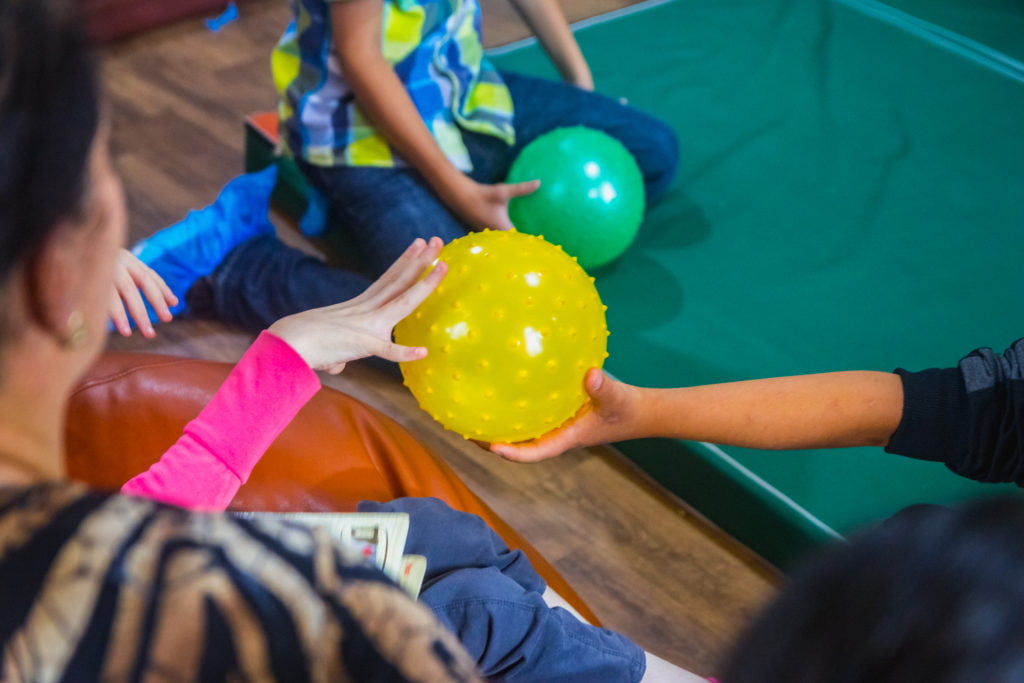
We had children with cerebral palsy, intellectual disability, autism and speech development disorders. We set ourselves this challenge — could we bring together children with very different problems and keep them in the project for four months? We did it.
We did a great deal of work with the parents. Integration must happen in the family first of all. First a parent must accept their child: if they themselves have an inner conflict, stress, a sense of guilt or an “I am bearing my cross” mindset, they will close themselves off and will not be able to help even themselves, let alone their child.
We invited psychologists who worked on the mother-child bond, on “strengthening” the mother. These were mothers who said “yes” as soon as they heard the magic words “free project”, but had no idea of its intensity or the degree of their own responsibility in it.
I call those twelve mothers demobbed soldiers. We are still getting our investment in them back a hundredfold. Among them are people planning to go to college to become physiotherapists, occupational therapists, psychologists, and these are the mothers who had seen nothing in life but their vegetable gardens and their mothers-in-law’s accusations that they had “given birth to a child like that”.
— You keep saying “mothers”. Why were fathers left out of the project?
— Our project was “child-mother-family”, so grandparents and the others were there too. But most of the fathers went away to earn money. This is a serious problem in Martuni – there are few homes where the man does not go to Russia for seasonal work. For the rest, the subject simply did not exist.
There were some very good fathers too, but we discovered them later. With those twelve, we were in direct contact only with the mothers. The women were emotionally weak, had no voice, no opinion of their own, essentially they were lost, downtrodden girls.
For instance, there was a time when the mothers were supposed to attend training — we did not tell them it was actually psychological therapy, so as not to frighten them off with the word — and one of them called and said: “I need to work in the vegetable garden, I cannot come”. I gathered the other mothers and the trainers, and we all went to her vegetable garden.
I said — first you will listen to the seminar, then you will dig up your potatoes, they will not run away. And she listened.
— Vahe’s story is not the only one, is it? In the villages people are still ashamed of children with disabilities and hide them — mainly so that gossip about genetics will not get in the way of the other children marrying. Sometimes you have to all but drag a child out by force for rehabilitation. When did parents themselves start coming to the centre?
— Vahe’s mother played a considerable part in that. His life changed radically — he goes out of the house, his muscles have begun to move, he happily comes to the centre, gets massage, physiotherapy, occupational therapy, takes part in all the activities and has the broadest smile of all.
He understands everything, feels everything, he has an enormous desire to express emotions. I see him opening up day by day. The most important thing we do is love and accept him. From the very moment I hugged him. That is how all our work is organised — every child and every parent must be hugged.
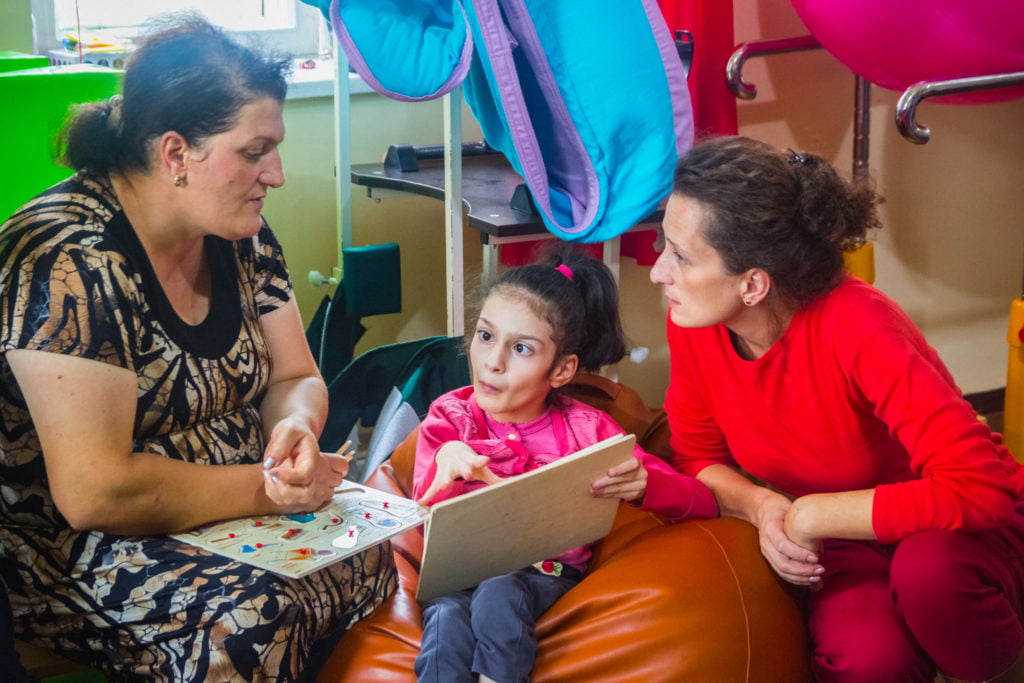
So, we included Vahe in the second part of the project, for which we brought together 48 children and as many mothers. At a seminar for parents at the end of the project, Vahe’s mother came up to me and said she wanted to say something to everyone. I was surprised — she is not just a woman of few words, but very closed off as well. And then at the end of the seminar she stands up — extremely tense, her hands clenched so tightly that I think I am about to hear her fingers crack — and says: “Girls, do not be like me”.
And sat down. Everyone knew Vahe’s story, everyone understood what she meant. I can hold thousands of seminars for them, but however much they love and trust me, I will always be an outsider to them, whereas here someone from within, “of the same blood”, had said it. Her short sentence was more powerful than any seminar.
The parents did not actually resist all that much. Yes, they tried to slip away — the vegetable garden, the mother-in-law, something else — but they were grateful when I did not let them lead me, but led them myself. Their trust was not a conscious step, they did not choose me, there was no such choice — something appeared in the middle of a void, and at first suspiciously, then more and more readily, they began reaching towards it.
We had one family where work with the child was put off for a year because first we needed to bring up the parents — yes, exactly that, I am not afraid of the word. We were giving children wheelchairs, and they called and said they had a child with a disability who needed a wheelchair too. We went to meet them.
We saw a house with two jeeps standing in the yard and two more, smaller jeeps — toy ones — inside, for the “healthy” children, while our seven-year-old David, who has cerebral palsy, sat alone on a little rug in a room where he spent the whole day.
— Did they not know he could play too, or did they not care about his needs?
— They were under severe psychological stress that they themselves did not recognise. There is not a drop of condemnation of parents in me now, absolutely not, and no pity either, I have been through all of that already. I too was learning and changing along with them. But what simply killed me then was what they said: “We are disappointed. We have tried everything and nothing has helped”.
And this child is supposed to sit on a rug like that all his life and carry the burden of your disappointment? As though it were his fault that he did not walk, did not speak, did not justify the money and effort spent on him. I asked the parents why they needed a wheelchair. “Well, ours broke, and you are giving them away free, why not?”. I said nothing to them that day, we just left.
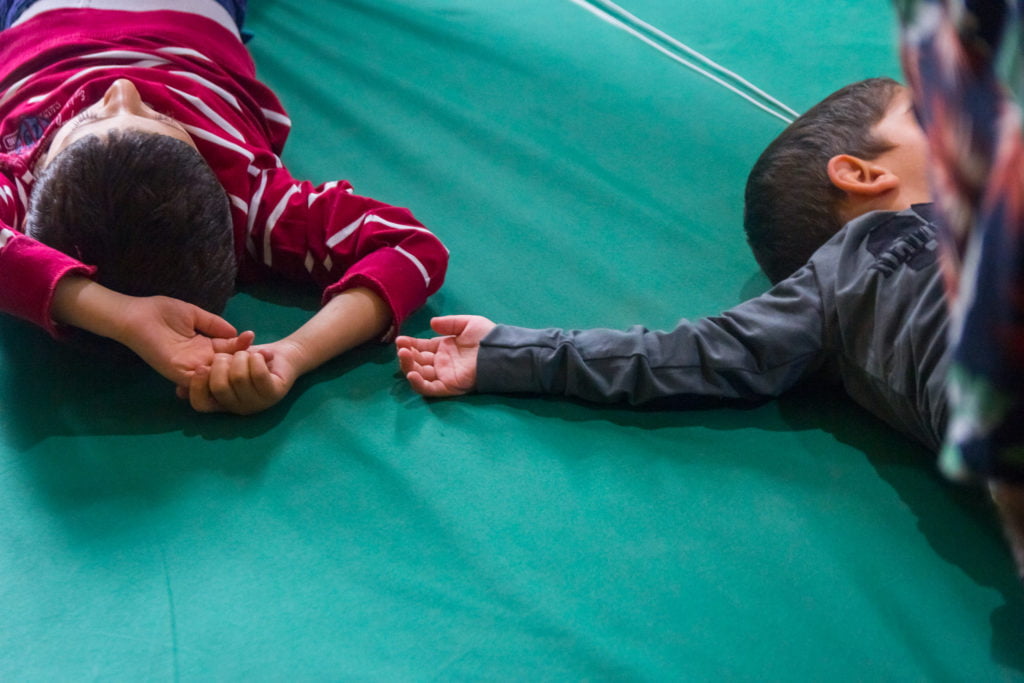
Then the mother began calling over and over, asking about the wheelchair. One day I could not hold back and tore her to pieces. I said: “You could buy a wheelchair for the price of one wheel on your car”. And I sent her away to think for a year, refusing to include the child in the project. My heart was breaking, but I knew I was doing the right thing. A year later she calls and says: “We want to take part. And we have a wheelchair”.
When we were just starting, I “pestered” the heads of rehabilitation centres and NGOs, asking endless questions about how to do things properly. When I said we definitely wanted to involve mothers in their children’s rehabilitation, almost everyone reacted with hostility and told me sternly that mothers needed to be given a rest.
I almost accepted that, but then I thought — just a minute, which mothers are we talking about? The mothers in Martuni who, if they are not milking a cow, are weeding the vegetable garden?
Where will she go to rest when she brings her child to the centre? Not to a salon or a club. This way she too gets a chance to leave the house, to find herself in a different atmosphere.
I will never tire of repeating that the most important thing is to educate parents, to teach them to accept their child, their particular characteristics and needs. Parents need constant support so that they do not tire of loving their children.
— What does teaching parents to love and accept look like in practice?
— A year ago, together with the Peace Corps, we launched “Continuous Love”, a project aimed at teaching parents to care for their children and give them basic rehabilitation. We worked with 56 families for three months.
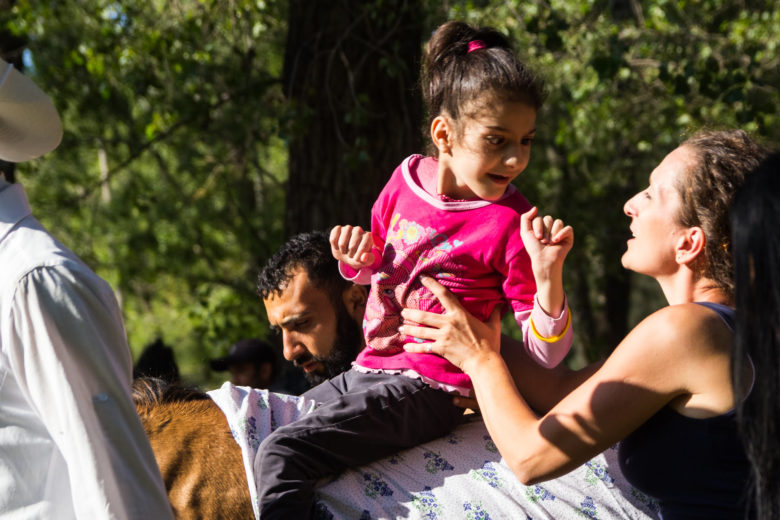
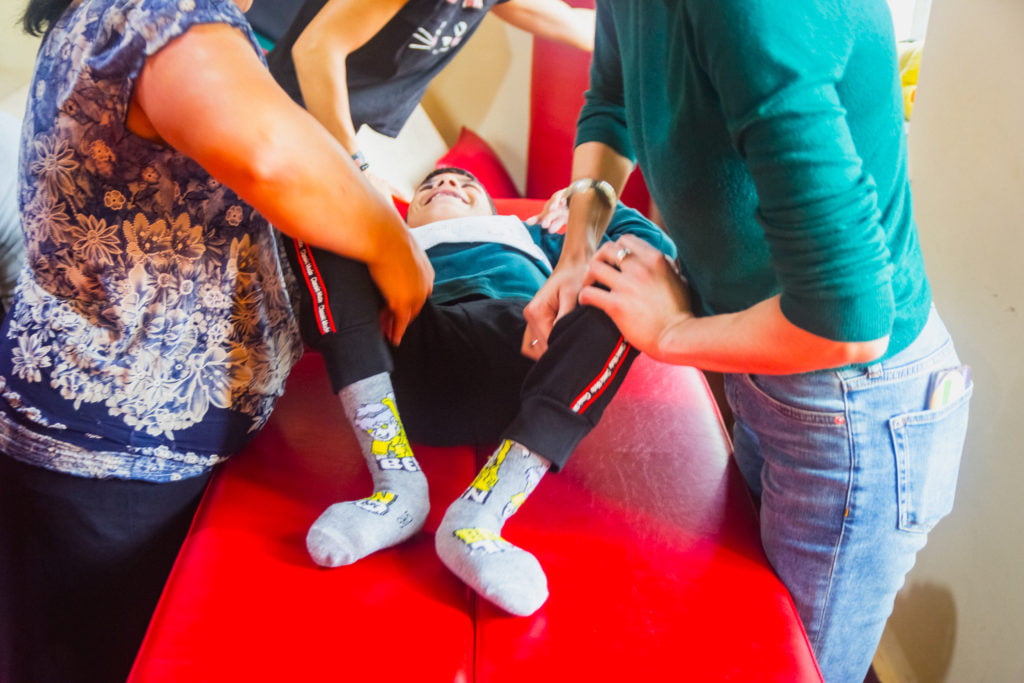
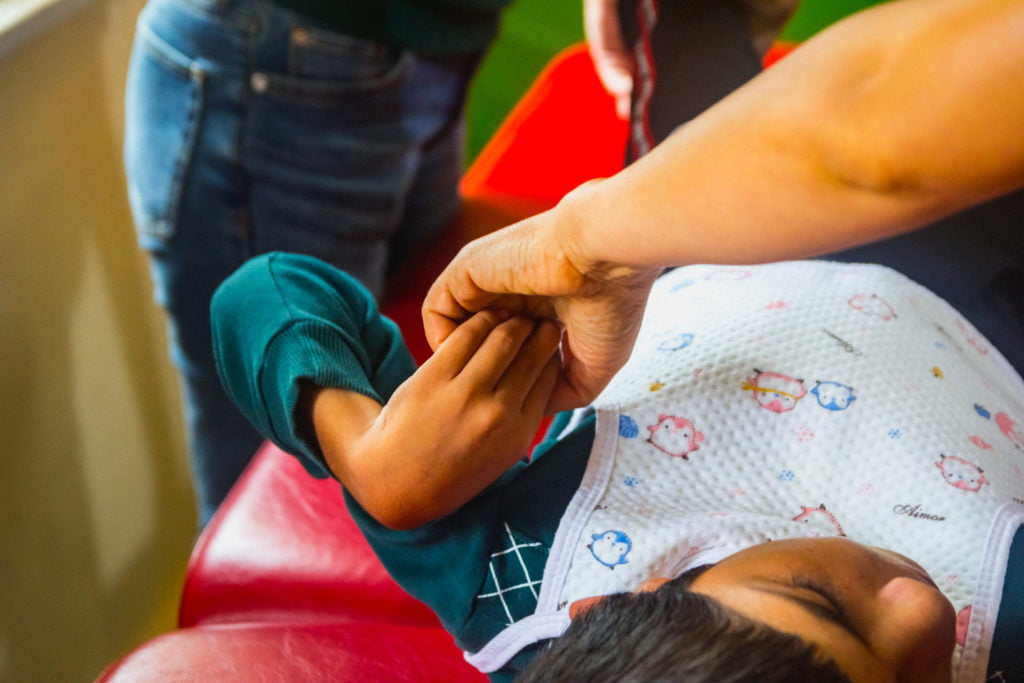
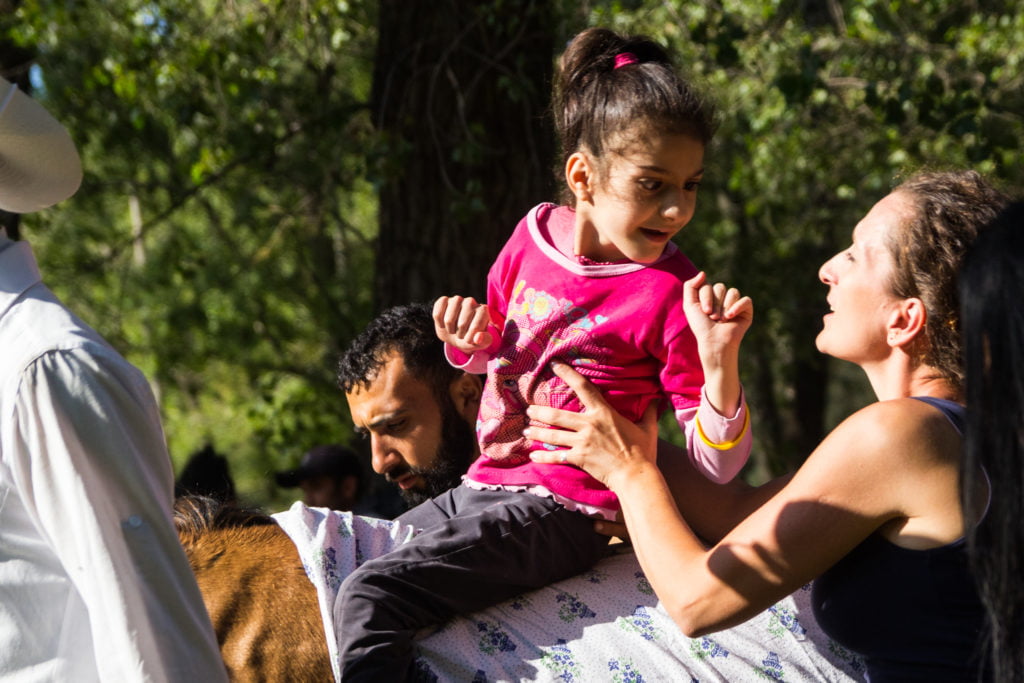
Today our centre provides various kinds of rehabilitation: physiotherapy, occupational therapy, sensory integration, therapeutic massage, music therapy, education for children with hearing impairments, speech therapy, psychological support; last year we began hippotherapy. And the parents are involved in all of these kinds of rehabilitation. We gave the most active mothers equipment for sessions at home.
— Had any of the children been to school?
— All those children who had physical disabilities but whose intellect was unaffected did not know their letters, that is, none of them had been to school or knew how to write.
In the “Art Opens Doors” pilot project in 2018, we found a child from the village of Geghahovit. Because of his physical problems, no one had worked with him, he did not know his letters. He is already 14, he will not go to school, but dreams of learning to write, of corresponding with friends on the computer.
We have a boy who could neither read nor write. He would lie down on the floor and ask the teacher to tell him a story. His mother has no time for him, she has a little one. And he began making up stories himself. His hands work, though poorly. He just needs to be taught to write.
In this way, we can identify children’s abilities and particular characteristics and equip them with skills they could use in life. For example, if a child whose intellect is intact is taught to read and write, given access to the internet, taught mathematics, then he can do programming.
— You also work on diagnosing the children, organise operations for them. Did they have no diagnoses at all? Are they registered?
— Most of them did not. Or the first and last time they were examined was at birth.
We have 249 children with developmental differences in our care. Mostly with musculoskeletal disorders and intellectual problems. Plus about a thousand “problem-free” children. There are 307 registered children with disabilities in Martuni. You can reckon there are actually twice as many.
The way we entered healthcare is a unique story. Our Peace Corps volunteer Kelsey hurt her leg and was sent to the “Wigmore” clinic for physiotherapy. She is an American who speaks the purest Armenian. There they begin asking her what she does, and she tells them about “Voskeporik”. We were just working on opening a physiotherapy room. The clinic expresses a wish to meet me.
Kelsey and I go to the meeting. And from the very first second I see two young people with a fire in their eyes I had perhaps only seen in my own eyes in the mirror (laughs). That is how our collaboration began.
Today our children have operations at “Wigmore”. The state provides about a third of the cost, and “Wigmore” finds the rest from its funds. Sometimes the doctors forgo their pay. And I am incredibly grateful to them. We have a very fruitful collaboration. They can operate with peace of mind, knowing that we will organise proper postoperative rehabilitation. We do not do things like — give a child twenty minutes of occupational therapy and that is it, next.
— But centres that work “on a conveyor belt” explain that this way they will have time to work with ten children, when they need to work with a hundred. Besides, when you apply for grants for those same rehabilitation projects, the first thing they ask about is the number of project beneficiaries. That ties your hands somewhat.
— Today about 30 children a day come to “Voskeporik”. There are only six therapists working with them. But all these children come with their mothers. And when the specialists start working with 30 new children, the mothers of the first 30 already know what to do. They are constantly supervised, but after three months with a physiotherapist they know how to hold, turn and massage their children, what to do and what not to do. You can walk into our little therapy room at any time — and there will be a mother working at every couch, on every mat.
Perhaps those centres that let mothers rest are right. I accept their position too — almost all of those organisations were founded by mothers of children with disabilities. Our mothers often asked me in surprise — why do you need this? It has not affected you.
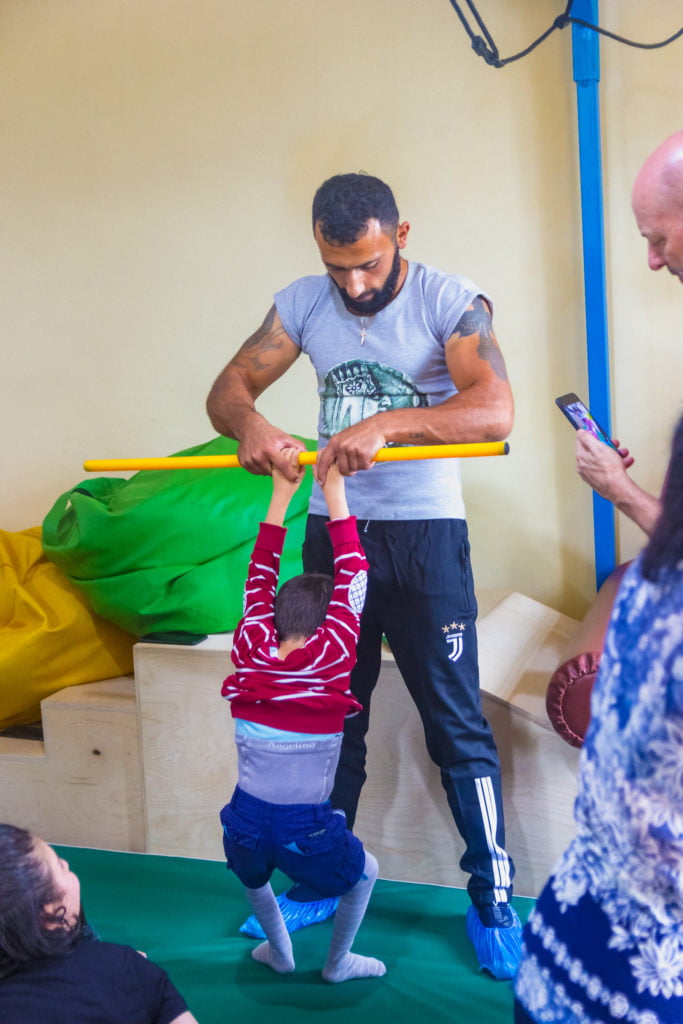
But I believe in our methodology. You should see a new mother arriving here. How our “seasoned” mothers, who were timid and harried themselves only recently, welcome the newcomer, encourage her, rush to the children before the therapists and start working with what they already know.
The mother who did not want to leave her vegetable garden now brings her son, who recently had an operation, and tells him — here you are, there is the couch, get to work, I need to help with the other children. And that is wonderful — for her and for the child. He gains independence, she has let her child go, instead of clinging to him and doing everything for him, she helps others, feels needed.
— By the way, why do you need this?
— I take enormous pleasure in transforming the negative into the positive. And I learn more and more about myself — my feelings, abilities, stubbornness, patience. And there is far too much that is negative in Martuni, so I still have more work than I can handle.
First of all, I want the children to get out. We are talking about villages you cannot reach by car in winter. Nature itself locks these children in a cage for several months of the year. At least for the rest of the time they should be able to get out. And we must help them.
This is actually very hard work. And dangerous. You make them get used to you, tame them, as it were, and then suddenly there is a pause, a technical problem that means the work has to be interrupted for a while, and that is – a catastrophe for the child. Before, he did not know there was a world beyond his wall, but now he knows, and it is much harder for him. So I must not relax for a second, not in the search for people, not in development, not in finding the means to make it all happen. I must always find money.
— How are your relations with the local mayor’s office?
— When we were giving children wheelchairs, I called the mayor and suggested he come with us to their homes, meet the children in person. He readily agreed.
What usually happens at events mayors are invited to? He stands there ceremoniously in a suit and tie… But here he arrives and sees us taking wheelchairs out of car boots, and these wheelchairs have to be lifted and carried through mud, over rough ground, to the house. We are very good friends now, and often joke that the mayor came to grace the occasion with his presence, only to be made to lug wheelchairs.
He still entered the first house as a mayor, all official, but then he saw how the child received something that would now let him leave the house, how the parent expressed thanks… I saw him experiencing the same emotions I had.
Our mayor went through all the other houses in silence. I do not even remember whether he said goodbye when he left. The next day he called and said: “Is that what you wanted?”. I answered: “Yes”. Until you fall to pieces, until you change yourself, you will not change anything.
After that I called him with every problem we had, and he always helped. Now all the members of his family, without arranging it among themselves, are our sponsors.
— Do you ever feel like giving up — it seems organisations are being founded, integration projects written, but taken together they do not change the quality of life of people with disabilities or society’s consciousness?
— I do. Because it is not happening at state level. Because our education is weak in every field.
Actually, I cannot say there are no changes, because changes begin with you and me. They begin at a point. You need to notice the little shifts and realise that they happened thanks to you too.
For change to spread to the whole country, the state’s way of thinking must change, and then be imposed. Until that happens, the only way forward is for individual enthusiasts to carry on their work and be heard.
— I am afraid they will burn out sooner or later.
— Others will come. “Voskeporik” itself is raising a different generation today — we have a future director, accountant, therapists. Even if I left all this right now, I know that my work would still be alive there ten years from now.
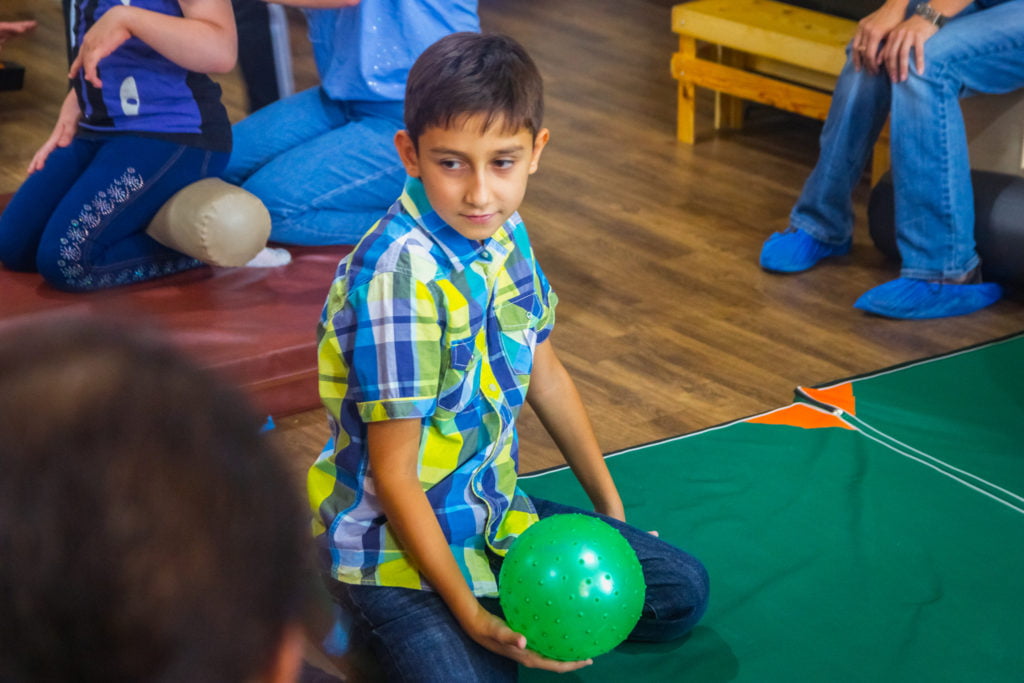
This generation of children shares a piece of bread, plays, talks with a child with a disability. If even twenty children have a different way of thinking, our efforts are already not in vain. We are simply spreading light point by point, as long as — and as far as — it is within our power.
I do not expect sweeping changes and acceptance right now. My best indicator that everything is going right is the parents and volunteers. We started with Martuni, but today the whole region comes to us. And people from other regions too.
At present “Voskeporik” has twelve employees with above-average salaries. Six of our teachers completed eight months of training in sensory integration. We already have four excellent specialists working directly with autism. Tomorrow they will be training new therapists themselves.
I will say more. We want to open a wing in Yeghegnadzor soon. We are putting a team together now, working with parents, equipping a room. There is a request from Armavir. I do not say a branch, but a wing — first you spread one wing, then another, another. I have an ambitious desire to have a “Voskeporik” in every region.
— Why Yeghegnadzor in particular?
— There is a fantastic organisation in Yeghegnadzor — a psychological support centre that has helped children for twenty years. Integration was not their main aim, more social assistance, but all the vulnerable groups in the region gathered around them.
They do not have modern SMM and fundraising tools, but for all those twenty years they did everything they could for these children. In Yeghegnadzor the focus will be on autism, it is a very pressing issue there.
I also discovered the village of Khachik (in the Vayots Dzor region in southern Armenia — Kalemon). It is a border village [on the border with Azerbaijan], and many residents have come to see themselves as heroes who live on the border — and so everyone owes them handouts. That is how people turn into layabouts and beggars.
I want to develop agriculture there. By educating people, I want to help them first produce, then sell — teach them how to grow, package and present their products properly. So that they have a factory to process what is grown there. I am sure that if we set it on the right track, in about five years we will have a serious brand of goods from border villages.
Recently I discovered cold-pressed flaxseed oil in Khachik, which a local resident has been making for many years. I tried it, liked it, posted about it and sold forty litres of oil to Yerevan in a week. And you talk about burnout! (by the time of publication, Eka had already “exported” a total of more than two tonnes of garlic from the village of Khachik to Yerevan — Kalemon).
— The pandemic hit the NGO sector hard — both psychologically and financially. How did you cope?
— Before quarantine, at least forty children a day came to the centre. During the state of emergency we stopped all group sessions, but continued some individual ones. There were children who had recently undergone extremely complex operations, after which physiotherapy was vital to consolidate the result.
Our main donor, the organisation “Amcor”, which was the first to believe in us when we were just starting, continued to fund the rent and administrative expenses. If they had not supported us, we could not have managed the rent and everything else.
We also worked online wherever possible. Ran development programmes, held group sessions. But sessions like that are more for children with typical development.
— Did the children have any difficulties with online sessions? Did everyone have internet access and devices?
— It was mainly children living in remote villages who had difficulties with the internet, and their progress slowed. But we brought in sponsors, local businesspeople, no less, and society mobilised too. Even if some problems were not solved, they were seen, and that is already an enormous step.
When you do not know how to suffer and do not like it, you look for a way out, a solution, something to lean on to get out of the situation. The most important thing here is to change the point of support.
Our entire staff was also actively studying. Almost everyone took part in various online professional development training sessions and conferences. We ended up with a sort of strict educational quarantine (laughs).
— Who was hit hardest by quarantine?
— Children with autism, I think. In my opinion, virtual sessions are completely unsuitable for children with autism. The main work with autistic people is sensory integration. You cannot do that virtually. I am not even talking about behaviour correction or the work of a speech therapist, but sensory integration, in my opinion, is the most important thing, because almost all the other problems arise from sensory disintegration.
And children with visual hypersensitivity, for example, must not spend a long time in front of a screen. The only thing you can do here is give parents virtual lessons in everyday skills that they can practise with their children. To my great joy, our psychologists were actively managing this, and so were the mothers. This is where our educating the mothers proved its full worth.
It may sound strange, but during quarantine “typical” families suffered more than “atypical” ones. And I am even glad that the “typical” had a chance to understand that there are people for whom quarantine lasts forever.
Our “typical” society is, in principle, the most vulnerable, it is the one that needs socialisation now. Nothing much changed for our children, yes, they were cut off from “Voskeporik”, but they have had “Voskeporik” for the past two years, and before that they lived their whole lives in isolation. Unlike “typical” people, they returned to their natural rhythm. A few months of returning to the old reality is not so long that we should fear irreversible losses.
Of course, we had fantastic events cancelled, but who said we cannot hold them a little later? We simply postponed them, nothing terrible.
— Your optimism is disarming, it makes me want to ask mischievously — where is the catch?
— It is not groundless, and there is no catch. I will tell you a story. During the first two weeks of quarantine, even my stable psyche succumbed to the general fear and panic at the unknown. For two weeks I did not show up at the centre — I was afraid of getting sick without knowing it and infecting someone. But then I pulled myself together and went to Martuni with every precaution — masks, gloves, hand sanitiser.
We needed to get together, discuss the situation, reorganise the therapists’ work. One of the therapists came to the meeting with her ten-year-old boy. We are sitting there discussing our work under the new conditions. Suddenly I notice the child is not there. I go out to look for him, and he is in the therapy room next door. Standing there looking intently at an empty wheelchair in the room.
— Soon quarantine will end, I will go to school, but they are sort of always in quarantine… — he says. His eyes are wide open, his voice full of emotion.
This boy had been spending time with our children in wheelchairs for two years already. He is an experienced volunteer of ours. He helps with everything — cleaning the premises, making our traditional little angels, accompanying the children to examinations at a Yerevan clinic.
For two years he saw them constantly, but only now, when his own movement had been restricted and his usual way of life had changed, did he suddenly understand that the difficulties that were temporary for him lasted a whole lifetime for these children. That there are people in perpetual isolation.
— You know, when quarantine ends, — the boy said after a silence, — I will hug them all even tighter.
Tears came to my eyes. Here it was, my victory, here it was — the conscious integration I had been striving for over these two years, the very reason I started this centre. Today it was this boy. Tomorrow there will be more little ones like him. And grown-ups too.