
Arev longs for a miracle to happen one day, for her little girl to start walking and smiling. And for her always to have her medicines. She can handle everything else.
Arev meets us at the entrance to a five-storey apartment building, and we run up to the third floor. We run because her daughter Nare is waiting upstairs, and she cannot be left alone even for a few minutes.
We hurry down a long, dimly lit corridor cluttered with junk and lined with mismatched doors. We go through the half-open one and find ourselves in a local Versailles. A partition with a narrow countertop divides the tiny room into a kitchen and a sleeping area. An alabaster ceiling, wallpaper, two little chandeliers, an ornate bed filling the entire sleeping area and two stools — everything is in the same garish style, in black with “gilding”.
“This isn’t my home, I’d never have walls and ceilings like these,” Arev says, noticing my look. “I found something cheap on the internet. We needed to stay for a day and a half for the examinations, but the landlady was kind — she charged us for one day. I always stay with a friend when we come, but her children are ill at the moment, and Nare mustn’t catch anything, her immune system is weak.”
Nare is lying on the bed. She is three and a half, but looks a few months old. She has astonishingly beautiful, colour-changing eyes that take up half her face, and slender, almost bloodless little fingers.

Nare has severe hypoxic-ischaemic damage to the central nervous system, microcephaly, West syndrome (an epileptic syndrome) and, as a consequence, global developmental delay. Her doctor considers it a miracle that the little girl has lived to three and a half.
On the countertop is a pile of anticonvulsant tablets, crushed and wrapped in little paper packets, one dose in each. Although West syndrome is incurable in her case, they are vital to keep her seizures to a minimum. Every seizure means the irreversible loss of brain cells and, over time, of more life skills.
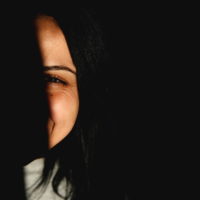
Arev dresses Nare in pretty clothes and asks Fyodor to photograph only the child, but on no account her, because she comes out badly in photographs. And she sternly warns us that she will not talk about anything personal, only about things related to her daughter’s illness, because all she needs is help to make sure her little girl always has medicines, formula and orthopaedic rehabilitation. Nare’s latest X-ray showed a dislocated hip.
Arev (“Sun”) is not the woman’s real name, but one she chose to conceal her identity, and it suits her very well. At first she is reserved and answers questions sparingly, but then something happens and the words start pouring out in a breathless torrent. I try to slip questions into this torrent, but soon give up and simply listen to the rambling confession of someone who looks as though she has been silent for a very long time. And I cannot help regretting the ban on photographing this radiant face.
Nare needs to be held all the time. When she cannot feel arms around her, she starts to panic. I lift her off the bed, settle her on my lap and, as I listen to her mother, stroke her slender little fingers and kiss the top of her head.

From time to time Arev interrupts the hurried flow of her story to ask whether I am tired — the child does weigh five kilos, after all; her own shoulders and arms ache constantly. I shake my head, keep holding the child close and feel disappointed when, a couple of hours later, I have to hand her back to her mother to be fed.
I want to keep holding her not in order to be useful and give her mother a chance to rest, if only for a while. When the tiny body nestles against me, something unusual happens — my almost constantly tense nervous system begins to relax, as though someone is massaging one nerve after another and wrapping them in a featherbed. I want to hold on to this new sensation a little longer.
“She likes you, she’s falling asleep,” Arev observes after a while, and tells me that everyone who takes Nare in their arms experiences this sense of extraordinary calm.
We talk until almost one in the morning. “I think this is the first time in my life I’ve been so open. I hope you won’t take advantage of it,” Arev says so touchingly that my heart gives a jolt.
No, I won’t take advantage of it. And much of what she has told me — very personal, very painful things she would prefer to forget — will not be part of this confession.
This is the story of a woman who needs nerves and arms of steel to hold the daughter who lives in those arms. Never to leave her alone. The story is told in Arev’s voice.
A Miracle
I live in a little village in the forest, a few hours’ drive from Yerevan. There are no decent roads here, no transport comes to us. We don’t even have a shop. There are classes at the school with just one pupil each, and the kindergarten closed a few months ago. We filed a complaint with the municipality, but so far it hasn’t helped. I live near my parents in a little house that kind people living abroad have lent me and the children for a while.
I have twins — Nare and her brother. I left their father when they were six months old. He didn’t throw me out, I left of my own accord. I don’t want to say much about him — he was indifferent to my little girl, he wouldn’t even hold her, he said he was afraid of her.
Nare needed an MRI of her head then, and they injected her with medicine to make her sleep. When they finished, they said I could take her home, the child would wake up in an hour and a half. But time went by, and she still wouldn’t wake up.

It was very frightening, because usually she starts at the slightest sound. I was left alone with the child, and it felt as though my husband didn’t care whether she woke up or not. He didn’t even come home when I called him. Nare woke up after about eight hours. That was when I realised just how indifferent he was, gathered up the children and went back to my parents.
I should have done it earlier, but back then, when I found out I was already pregnant, I didn’t dare. A village isn’t like a city — everyone knows everyone, they would have gossiped. My family always supported me, my brothers said I could come home that very moment, but I was terribly afraid of gossip. I was stupid.
I had to fight through the courts to get child support from their father, but he still pays very rarely. We haven’t seen anyone from his family in the past year — they don’t visit or take an interest in the children.
When the ultrasound showed I was having twins, they put me under close observation at the hospital in Goris. I had two Doppler scans to be sure the foetuses were separate and their limbs were developing normally.
In my eighth month I was admitted to hospital with a kidney attack — one of my kidneys is bad. They checked the children again then, too. They told me that the supply of nutrients to one foetus’s brain was impaired, and that it could be caused by anything — genetics, oxygen deprivation, a viral infection. Later they ruled out a genetic cause on my side, but their dad didn’t have the tests.
I asked her straight out — will my little girl ever walk and smile? She said — only if a miracle happens, and miracles do happen sometimes.
They prescribed medicines and told me to take them, otherwise the foetus would die. I can’t remember now what the medicines were, but I took them diligently for two days. Then I started having pains, and it became clear that my waters were breaking. One of the babies was already ready to move down the birth canal, they had to operate immediately.
The babies were born by caesarean section. They assured me that both were in a normal condition. But the next day they separated the little girl, saying she was suffering from oxygen deprivation. They put her on a feeding tube, and in her second month she began feeding on her own — and we were discharged.
Her epileptic seizures began almost straight away. At three months they became much more frequent. A doctor at the children’s hospital suspected neurological problems, and Nare had a CT scan of her head. The doctors said Nare would never be a normal child, and that if I planned to have more children in the future, I would need a genetic test.
I came home and phoned a relative in tears. She suggested going to the Arabkir Medical Centre, because the best doctors were there, and gave me their names — Biayna Gagikovna and Nune Rubenovna.
Nune Rubenovna is still our doctor to this day. She is an amazing specialist. She never lies, but at the same time she tells you the most terrible truth in a way that leaves you with hope. I asked her straight out — will my little girl ever walk and smile? She said — only if a miracle happens, and miracles do happen sometimes.
I think that for miracles to happen, you have to believe in them very, very strongly. Maybe it’s stupid, but I believe. Though sometimes I get so tired and disheartened that I don’t even feel like doing that. I can’t even get up. Then I pull myself together, get an hour’s sleep if I can, and it passes.

Fear
Nare now takes three anticonvulsant medicines — morning and evening. There was a time when she took five. We have examinations periodically, and they change her medicines or add new ones. Depending on how her condition changes.
Her main food is formula, and I also give her some of our food — everything puréed, Nare can’t chew. We also have protein supplements to help her gain weight. She hasn’t been gaining very well so far. Her weight dropped sharply at seven or eight months, when she started teething. Her seizures became more frequent then, too.
My greatest fear in life is that Nare’s medicines will run out and I won’t have the money to buy more.
Not all the medicines can be found in Armenia. When her main medicine — Vigabatrin — was first prescribed, we had to get that from abroad, too. Sometimes my cousin sent it from Ukraine, sometimes Nune Rubenovna helped. Sometimes we ordered it from Moscow. Now it’s sold here, and you can buy it for almost a third of the price.
The doctors are happy every time they see Nare. They say she is alive thanks to good medicines. We travel to Yerevan for examinations once every six months. More often if she loses weight sharply or her seizures become more frequent.
When there are very few tablets left, I start to panic terribly — I snap at the people close to me, I become nervously exhausted, I can faint for no apparent reason.
I used to cry almost all the time. I couldn’t talk this calmly. I’ve only just started smiling. Maybe I realised I had to be very strong to be able to do everything my child needs.

People
Lately I’ve become more and more convinced that the world is full of wonderful people.
A few months ago my neighbours suggested posting Nare’s story on Facebook and asking for help. I felt very awkward, but there was no other way out.
Nare receives a disability benefit — 26 500 drams. As a single mother, I also receive a child benefit — 14 000 drams per child. They say they want to cut those benefits, too. Altogether that’s 54 500 a month.
The medicines cost about 80 000 drams a month. Formula costs 30 000. I try to buy cheap nappies, 5-6 000 drams for 100. But the monthly total is still more than I can afford. My brothers and parents try to help, but they don’t have much themselves.
I wrote in the post that I didn’t need money, just medicines for my child. Usually people responded under the post by wishing her well and promising to pray for her. Prayers are good, but they won’t buy medicines. There were also people who insulted me and accused me of wanting to make money off my child.
But there were people who helped, too. A foundation in the district centre raised money and helped with treatment. One grandmother helped a lot — her granddaughter had been ill, too. She gave us medicines. And when we were in hospital with no one to look after us, this grandmother brought us food and water. I will never forget what she did for us for as long as I live.
Usually people responded under the post by wishing her well and promising to pray for her. Prayers are good, but they won’t buy medicines.
One mother, whose child had already recovered from epilepsy, gave me the number of Elena Bagdasaryan, the head of the Road of Life charitable foundation, and said she would help.
When I spoke to Elena on the phone, I was very upset, I even cried. I thought, how hard-hearted she is. She was very angry with me for putting my child’s story on Facebook, and said this was exactly how parents got in the way of foundations’ work. Some even profit from their children, and people stop trusting both parents and foundations. I was shocked — how could it occur to anyone to make money from a child’s illness?
Nevertheless, even before she had seen me, Elena believed me and said her foundation would pay for Nare’s medicines for six months. It might help with examinations, too, if she needed ones the state didn’t cover. I was so happy. Not having to worry about medicines for six months is an enormous help to me.
On this visit to the hospital, Elena and I met, and I realised how kind she really is. She doesn’t make a fuss over you, she actually supports you. She’s probably just had enough of parents who lie and do nothing but collect money. When Nare was having an ECG, I was holding her and my arms hurt terribly. Elena stood beside me and distracted me with conversation.
Elena told me I wasn’t alone, and that many dads abandon children with epilepsy. Less often, but it happens, mothers give them up, too. I was very surprised. In a way I understand the dads, they don’t always develop a paternal instinct. But I don’t understand the mothers. How can they abandon their children?

Elena said we should try to find a regular sponsor for Nare. That would be very good. One of her hips is dislocated, and the other is beginning to dislocate. Without rehabilitation, she will eventually need an operation lasting four hours, and she weighs only five kilos — no anaesthetist would risk putting her under for that long.
Therapy at the Republican Children’s Rehabilitation Centre would be free for her, but we would have to stay there for a month and pay for food and nappies ourselves.
The Ring
My grandmother and grandfather supported me a lot. As a war veteran, my grandfather received 125 000 drams a month, and he helped me a great deal with buying medicines. I lost them both almost on the same day last year. We all came down with a bad case of flu, with fevers of nearly forty.
They only just managed to save my mother, but they couldn’t save them. They were old already, and their bodies couldn’t cope. Thanks to them, I grew up as though wrapped in cotton wool. To them I was always a little girl who needed looking after. They really didn’t like it when I got into law school in the city and had to live far away from them. But getting an education was important to my dad, and he insisted.
I wasn’t at my grandparents’ funeral. The children and I were in hospital. I was the last to fall ill. When they took me away, I couldn’t move my legs. A relative stayed with us one night while I was on a drip, and then I pulled myself together and looked after the children myself. The strange thing is that Nare had the mildest illness of all.
It was after my grandfather died that I wrote that social media post. I was panicking and didn’t know what to do now that we had so suddenly lost his money for medicines. We borrowed money to bury him and my grandmother. Afterwards our relatives collected money and paid off the debt.

It’s awful — borrowing money to bury the people you love. This ring on my finger… no, it’s not a wedding ring. It was a gift from my friends for my thirtieth birthday. Men were bothering me, and I asked for this ring so everyone would see I was married and leave me alone.
I also had gold that relatives and friends gave us for the children’s christening. I gradually sold it all when there was no money for medicines. But I keep this ring, however tight things get. So that if suddenly… something happens to my little girl, I won’t have to borrow money to…
Nobody knows how long she will live. Usually children like her don’t live to adulthood. Nune Rubenovna told me straight out: be ready for anything, every second. I try to prepare myself psychologically for every possible outcome, but it’s impossible to get used to that thought. And you can’t prepare for it.
Deterioration
She used to be able to concentrate, she was more responsive, she moved her arms and legs. But her brain cells are gradually being destroyed. In children like her, the internal organs begin to fail over time. Nare, for example, has digestive problems.
We’ve only had orthopaedic rehabilitation once. I think if she’d had regular rehabilitation, she wouldn’t have lost the ability to move. They discovered her dislocation three years ago.
I’ve learnt to recognise her gestures and facial expressions. For example, I ask: do you love Mummy? She closes her eyes. And if she’s not sure of the answer, she raises one shoulder.
Before, when my parents called her, she recognised them, smiled and reached out to them. Then she stopped smiling. All that matters to her is being held — it doesn’t matter by whom.
She used to cry when the light was switched off. Now she doesn’t. They say it’s because she can’t see. But at the hospital, when we approach the treatment room where they take blood from her vein, she starts crying, and when we come to the door of an ordinary ward, she’s calm. So she does see, she can tell the difference. Not as well as before, but she sees.
Improvements
But we have progress, too, and it gives us hope, faint though it is. Before, when she cried, only tears rolled down. Now she cries with sound. Her eyes used to be closed all the time, and now she opens them.
People tell me she doesn’t feel or understand anything. That’s not true — she understands everything, but can’t express it the way we do. I’ve learnt to recognise her gestures and facial expressions. For example, I ask: do you love Mummy? She closes her eyes. And if she’s not sure of the answer, she raises one shoulder. But you have to pay attention when she does it, to understand — did she raise her shoulder or was it a spasm? When Nare is angry, she points her index fingers upwards.
Someone brought her a toy from Moscow. It spins, lights up and makes sounds. She looks at it and reacts to the light. It’s the only toy she pays attention to.
Everyone who has ever spent time with Nare loves her. I used to feel that some people pitied both her and me. They say I’m clutching at these tiny changes like a straw, when in fact they mean nothing. I used to take it very badly. But now I’ve stopped caring. Now I try to focus on making sure my child feels good.
I don’t know how many days, weeks, months, years she has, but I won’t waste time worrying about other people’s attitudes. Every person who gives her even a little help means the whole world to me, and I shower them with all my blessings. I promise everyone that if Nare gets well, I’ll work from morning till night and buy them anything they want.
A Fake Mum
My children have that special connection twins have. But they’re very different. When I take Nare in my arms, however on edge I am, I calm down straight away. With my son it’s the opposite. He’s very lively, his energy never runs out. Especially now the kindergarten has closed, he has nowhere to put all that energy.
People tell me I spoil him and that he’s badly brought up. But I think it’s the opposite, he simply doesn’t get enough of my attention and tries to get it in every way he can.
Nare and I go into hospital very often. He misses me, gets angry, cries when we talk on the phone. When he was younger, he’d forget me and start calling my mother Mummy.
My son makes up for my absence by asking me to bring him toys from Yerevan. When I have money, I buy him something, and when I don’t, I try to explain. But he doesn’t want to understand and starts shouting that I’m a fake mum.

I constantly feel guilty towards my son. I feel as though I’m depriving him and giving all my energy to Nare. But she needs me more, she can’t manage without me.
My son really does love Nare and understands that she needs me. He says: Mummy went to Yerevan to massage Nare’s legs so she can get better. When I pick up other children, my nephews, for example, he gets jealous and starts trying to sit beside me, but when I have Nare, he doesn’t interfere.
When children ask why his little sister doesn’t walk, he says her legs are still little, they’ll grow and she’ll walk.
Her Head on My Arm
I no longer know when I fall asleep and when I wake up. When she isn’t having seizures, Nare mostly sleeps peacefully. But I still wake up ten times a night to check on her. My son sleeps in a little cot, but Nare is always with me.
Her head is always on my arm so I’ll wake up if she starts having a seizure. Even when she isn’t having them, Nare needs to feel physical contact all the time. Otherwise she panics. She extends her index fingers then, too. So my arms and shoulders ache almost all the time.
Nare breathes through her mouth, and sometimes she starts struggling for breath — then you have to turn her on her side or sit her up. During a seizure she may scream, her body stretches out, she can have severe spasticity, her eyes roll back. A seizure can last twenty minutes. And there’s nothing you can do. Only wait. And hold her.
Sometimes they’re mild spasms that an outsider wouldn’t notice. The doctor says that in fact she is having seizures like these all the time — but we don’t see them.
Sometimes I jump up because I think I’ll roll onto my side in my sleep and suffocate her.

For the past two months I’ve been constantly afraid. You close your eyes and strange visions appear. Sometimes the panic and pounding heart are so strong that I think I’m dying. Or that something bad is going to happen.
My left hand trembles, too. It’s because I’m very tense and often don’t show my feelings, my worries. I avoid talking about them because people start giving their opinions and offering advice. And nobody needs that, sometimes all you need is to be heard and understood.
Strangely, this anxiety goes away when I’m in Yerevan.
When I can’t stay awake any longer, I ask Mum to sleep with Nare and get some sleep myself. The only thing Mum can’t do is give her medicine, her eyesight is poor, she manages everything else.
Mum helps me a lot in general. I have an inflamed kidney, nephritis, and need to drink at least two or three litres of water a day. I also have pharyngitis and a herniated disc. When I have bouts of pain myself, sometimes I can’t walk, it’s hard even to lift a baby bottle. I found exercises on the internet myself, and when I get a chance to be at home without my son, I do them. Otherwise he gets in the way — climbs on me and demands that the “horsey” give him a ride.
When it becomes completely unbearable, they give me an injection of a strong painkiller, and it eases off for a while. I know I need rehabilitation too, but there’s no time for me now, Nare matters more now.
I’m very tense and often don’t show my feelings, my worries. I avoid talking about them because people start giving their opinions and offering advice. And nobody needs that
Mum has enough to worry about without me. Since his army service, my dad has been living with half a lung and can’t work. His brother also lives with them, he has cerebral palsy and doesn’t speak. He’s old already. People often asked my parents: why don’t you put him in a madhouse? But Mum would pull them up short. How can you put someone in a madhouse when he understands everything, he just doesn’t speak?
There were people who said about Nare, too — put her in an orphanage. But did they think about who would hold her there all day? When she feels lonely, you have to pick her up quickly. Who would do that?
When I need to prepare food or do something else and ask someone to hold Nare, I always say: she’s very calm, she won’t give you any trouble. Only if she makes sounds, that means she feels lonely, just stroke her head.

Dreams
I don’t tell many people about this, people usually think it’s superstition or coincidence, but I often have dreams that come true. My brother laughs at me, too, but I believe in them. I also believe in God. I used to go to church and feel at peace. Now I don’t, I don’t know why. But every evening before bed I pray and always make the sign of the cross over the children.
Sometimes I’m asleep and dream that my son keeps trying to wake me, even though I’ve only just fallen asleep and I’m terribly tired. I wake up ready to be angry with him and realise he isn’t even at home, he’s staying with his grandparents. And it turns out Nare is having a seizure or struggling to breathe.
Before I even knew I was pregnant, my niece brought me fruit in a dream — an apple and a pear. The apple had a rotten patch on one side. My son was born with a birthmark covering his whole cheek. And the pear was baked, so soft all over, like Nare’s little head.
It’s funny, but when I dream of their father, I receive either money or presents for the children. And the night before someone called from Elena’s and said there would be medicines for six months, I dreamt of wheat — my sister-in-law had brought some for me to sort through. Wheat means abundance.
I often dream of Nare. I dream that she’s grown up, she’s still just as tiny in size, but she walks, she’s coming towards me smiling, and her hair is in little ponytails, the way I used to do it before I cut her hair. Nune Rubenovna said to cut it so her head wouldn’t hurt.
In the dream I tell her — I suffered so much, and it was all for nothing. And Nare answers — no, look, I couldn’t walk before, and now I can. And she smiles and comes towards me, waddling. I also see my grandmother who died, she’s actually alive and says: there, look, the child can even talk, you’re making progress, keep fighting, you’re on the right path.

Work
I could make cakes to order. I really like doing that. I made the children such a beautiful cake for their first birthday! Then, when people started saying that Nare… it was as though something died inside me, I lost the desire to create anything.
I’d like to move to the city and find a job there. But one where I could take Nare with me.
I have no amenities at home, not even a washing machine. Sometimes I do the washing at Mum’s, sometimes by hand. There’s no gas in the village, and no hot water either. As someone receiving benefits, I’m entitled to eight cubic metres of firewood a year. If the winter is cold and it isn’t enough, I have to buy more. But I try to be sparing.
I’d also really like an electric oven so I could bake bread for the children. You say there’s a machine that bakes it itself? And kneads the dough itself, does absolutely everything? That would be wonderful. I also saw on television that there’s a device you put clothes into and take them out ironed. My arms could have a rest (laughs).
My son has a real talent for acting, he’s very clever and enterprising, but he has nowhere to develop. It would be ideal if I could get him into a kindergarten and work there myself, and they’d let me bring Nare with me.
I graduated from law school, but I’ll take any work as long as it doesn’t involve maths. I’m not good at maths (laughs).
If I had a job, besides bringing in money, it would also take my mind off things. You can go mad being stuck within four walls all the time. There’s a vacancy coming up for a caretaker at our school, and I’ve applied too. I don’t know if they’ll take me, it’s more of a man’s job. If there’s heavy lifting, carrying firewood, for example, Dad or my brother will help, but things like fixing a tap, sorting out electrical faults and that sort of thing — I can do those myself.

Wishes
I used to have dreams, and plans too, now there are hardly any left. Well, I dream of Nare walking and my son becoming more obedient. What would I want for myself? Well, for there always to be medicines, and food. Just, just for myself? I don’t know… Quiet, a chance to talk to someone and get it all out.
I like writing poetry, knitting and embroidering. I used to write a poem on any subject in ten minutes for a bet. I wrote acrostics. I’d like to do it now, too. When there’s peace inside me and not so much exhaustion.
People ask me: if Nare gets better, will you marry her off? I say — no, let my son-in-law move in with us. My boy can live far away if he needs to, and come to visit. But not Nare. I can’t imagine myself without her.
Thank you for reading the story of Nare!
Road of Life is the only charitable foundation in Armenia helping children with epilepsy and other neurological conditions. You can contact the foundation and offer it help on the foundation’s Facebook page. Your support will enable Road of Life to pay for medicines and diagnostic examinations for children who need them.


The creation of this article was supported by the NGO NESEHNUTÍ’s programme for the development of civil society in Armenia (the Czech Ministry of Foreign Affairs’ TRANSITION Programme)
Become a Patron
We are creating a community of caring, free and unbiased people. If you want to support our work examining deep social problems through ordinary people’s personal stories, the best way to do so is to become our Patron.
The text is finished, the story continues
Our mission is to have a positive influence on society by breaking taboos and freely discussing such important topics as violence, poverty, discrimination, parental and medical ethics — and so on.
The stories told here will always remain honest and unbiased — thanks in part to our Patrons. You too can join by clicking the button and choosing a level of support. Thank you!