
Cats, Volodya, a Golden Wig
Hrant was a failing student and a troublemaker. In class he would look out of the window at the cumulus clouds, which took on all sorts of shapes in his imagination. He claimed that if you looked at them closely enough, you could even see the face of God.
He also drew cats. With narrowed eyes, patterns on their graceful bodies, painted in bright colors. Hrant cut their outlines out of his notebook and gave them to me.
I was a straight-A student. With a portrait of little Volodya on a badge on my chest, a dream of one day tying a red neckerchief around my neck, and no belief in God. I had a faded little chest where I kept matchboxes containing dead ladybugs (for later burial), one ruble, and Hrant’s cats.
Our primary school teacher, Valentina Ivanovna, did not take kindly to cats sitting on their hind legs. Or to anything else that did not fit within the outlines of the school curriculum. For all three years she taught us, she punished Hrant’s drawing fingers with her pointer, and his “empty head” by summoning his parents.
In third grade it was always Hrant’s mother who answered the summons. Because Hrant’s father was a fedayi in Karabakh. Valentina Ivanovna disapproved of the “Karabakh Is Ours” movement and condemned Hrant’s father for “fooling around” somewhere far away instead of bringing up his son.
Valentina Ivanovna was over sixty. Tall, with a very straight back, she wore short denim skirts above the knee, boldly baring her slender legs. After parents’ meetings our mothers would discuss, in lowered voices and with glances over their shoulders—they were no less afraid of the teacher than we were—the strokes she drew in place of her plucked-out eyebrows and the golden curly wig she wore in place of hair.
Many years earlier, Valentina Ivanovna had come to Yerevan from Moscow with the important mission of “educating” as many heads as possible in this big village she did not quite understand, and one day going back.
Behind Valentina Ivanovna’s back, I was friends with Hrant. Together we broke a window at school, turned up for class without our homework, talked back to the PE teacher, came to school without textbooks, and shrugged carelessly when our parents were summoned. Hrant—in reality; I—in my dreams. In reality, I was afraid of no longer being Valentina Ivanovna’s favorite.

In her presence, I took Hrant under my wing. The top students stayed after class and helped the failing students become more worthy of Volodya’s curly head. Hrant was “my” failing student. I sat beside him at his desk, watched him form letters in his handwriting workbook in his clumsy script, and made my expression stern every time Valentina Ivanovna walked past.
Hrant’s father was fighting for his homeland. That was what Hrant said. Valentina Ivanovna, however, forbade us to feel patriotic toward any homeland other than the Great Soviet Union. As her pupil, I sprang to my feet at the words “An unbreakable union of free republics,” revered the guarantor of that freedom—Gorbachev—and did everything I could to keep Valentina Ivanovna’s faith in my “clever eyes and brains” unshakable.
Stilettos, Fists, Yellow Eyes
Valentina Ivanovna loved parents’ meetings with a sort of sadistic love. To keep herself from getting bored, our teacher varied them by inviting mothers to one meeting, only fathers to the next, and requiring, say, the model pupils to attend a third. So that the performances she put on there would never grow stale.
First Valentina Ivanovna praised us, the top students, under the doting gazes of the parents—ours—and then began her purge of the failing students and troublemakers before the rows of bowed parental heads—theirs.
Our mothers came to the meetings as though to a formal ceremony—in stilettos, in festive dresses, with their hair done, so as not to lose face before the teacher, who was thirty years older than they were. Valentina Ivanovna scolded the mothers for a sloppy appearance as unperturbedly as she tore into us for untied shoelaces.
Valentina Ivanovna awaited Hrant’s mother with particular relish. She was almost always a little late. She would open the door quietly—tall, fair-haired and fair-skinned like her son, in a simple long sundress, her hair pinned at the back of her head—quietly apologize for being late, slip behind a desk, and immediately lower her eyes.
Valentina Ivanovna saved Hrant for the very end of the meeting. The highlight of the show. She would pause, draw breath, and begin listing all of Hrant’s escapades in chronological order. The list was always long: if there was one thing Hrant knew how to do, it was to have fun.

While crucifying Hrant, Valentina Ivanovna never forgot to point out that his father was fooling around while his wife worked herself to exhaustion to feed four children. She would calm down only when Hrant’s mother’s pale, almost yellow eyes filled with tears.
As soon as the parents’ meeting ended, the woman would hurry out and look with weary reproach at the son she had neither the strength nor the time to bring up. Hrant would lower his head and follow her home.
Drunken Cherry
Why didn’t our mothers stand up for Hrant’s mother? It is hard now to imagine the reverence, I would say—the holy terror, that parents can feel toward a teacher.
Once, after learning that my mother was a good baker, Valentina Ivanovna asked her to bake a cake for some important guests—one that would make them gasp in amazement. Mom decided to make her most wonderful cake, our pride and joy—drunken cherry.
She baked the cake layers, scooped out their crumb with a spoon, mixed it with cherries preserved in vodka, and splashed in a generous helping of cognac. She filled the layers back up, took one in each hand, and deftly clapped them together. She covered the cake with chocolate glaze, traced grooves in it with a fork, and put it in the refrigerator to steep.
The next morning Valentina Ivanovna’s husband was collecting the cake. Not only had it never occurred to her to pay for the ingredients of this far from inexpensive cake, but Valentina Ivanovna had also warned us over the phone that her husband had no time to drive up to our house, so Dad had to take the heavy cake and carry it to the bus stop.
While the cake was on its way to the hostess, Mom was terribly anxious. So was Dad. Valentina Ivanovna called forty minutes later and, in a displeased voice, expressed her disappointment at the appearance of this “solid brown mass”: there were no decorations, no flowers made of cream, and the guests were about to arrive, so there was no time left to find a replacement.
Perhaps she should have made an “Olympic Bear”? Or a “butterfly” cake? For those, Dad cut out templates for Mom using tracing paper. She laid the tracing paper on the batter, cut out the sponge cake, fitted the pieces together, and turned them into various animals and characters. They looked beautiful, but no cake in the world could compare in taste with drunken cherry. Mom was upset all day that she had “failed to live up to the great trust placed in her.”
I felt no outrage at Valentina Ivanovna’s behavior either. Only an immense sadness that she had not appreciated our cake.
And only a month later, at the very end of a parents’ meeting, did Valentina Ivanovna, as though suddenly remembering something, ask Mom to stay behind and tell her in a measured, even voice that her guests that day had oohed and aahed in astonishment, trying to coax the cake recipe out of her. It had been very pleasant for her, she said. Mom smiled shyly.
War, Vika, Dashdemir
In a world parallel to meetings, ideologies, and proper upbringing, the war went on. Refugees flooded the city—alien and incomprehensible. They were housed everywhere—in the semi-basement of the five-story building next to ours, where a few months later a rat would gnaw off a sleeping five-year-old child’s ear, in foul-smelling dormitories, in people’s homes.
A girl named Victoria joined our class. She was different from us. Vika was very tall and fat. In our class of 36 pupils there was not a single fat person. Vika also spoke no Armenian at all. Well, ours was a Russian school, but an Armenian girl—and unable to speak Armenian?..
Victoria’s mother was a loud woman who cried a lot and accused a lot. They had fled Baku in winter, in slippers. Her mother had only managed to put socks on Vika: of different sizes and colors. They were saved by an Azerbaijani neighbor, who took them to the last plane to Yerevan and gave them a little money.
Victoria’s mother said that they had lived very well in Baku. We children understood from her stories that living well meant having lots of caviar in jars and a fish with no bones at all called sturgeon.
And now, the woman complained, they had been put in a dark, damp semi-basement, her daughter had asthma, and she was going from one government office to another to fight for decent living conditions.
Our mothers listened to her in silence, with a sort of anger. Little Armenia, at war and having lived through a terrible earthquake that left tens of thousands homeless, had neither the strength nor the resources for good living conditions or sympathy.
Our mothers disliked Victoria’s mother, and we disliked Vika herself.
One winter day Hrant and I were waiting for our mothers at the school gates. I—with my checked schoolbag full of books, heavy as a brick. Hrant—with a pen in the breast pocket of a beige jacket unsuited to the season, its sleeves not reaching his wrists. His big, unchildlike hands were always covered in ink.
I was a little irritated. In reading class Valentina Ivanovna had once again brought her thin pointer down on Hrant’s back. I felt that there was something wrong about this, that it should not be this way. But to take my thoughts any further and, more frightening still, to take action, I would have had to judge Valentina Ivanovna’s actions, dare to condemn her.
I did not have the courage for that, and redirected my anger at Hrant, who was making my carefree soul uneasy.
But Hrant had no time to think about the pointer. Hrant was talking about our side’s victories. He complained that while “real life” was happening over there and there were so many important things to do, he was stuck here in boring lessons. And while we sang “Arise, vast country,” we ought to be rising up for real and “winning quickly.”
But Hrant’s father would not let him go to the front. He had instructed him to study hard and help his mother. Hrant helped as best he could—for instance, by working alongside her in the bakery. Studying—well, he just couldn’t manage it.
I did not have a very clear idea of who “our side” were. I remembered demonstrations of people with fists raised high; they fascinated me, they were like something out of the films or books I literally lived in.
“If the war isn’t over by the time I grow up, I’ll go to the front.”
“But you haven’t got a gun.”
“They’ll give me one there. What, do you think Dad brought his from home?”
“And you’ll kill people?”
“Of course. Enemies. Turks.”
I knew what enemies were. The fascist horde. Germans. Every so often in music and reading lessons, we would “repel the stranglers of all ardent ideas, the rapists, plunderers, torturers of people.” How was I to feel about these new enemies? I did not know.
A family of Turks lived in my aunt’s basement. Who very much did not want to leave Armenia, but were eventually taken away. A very poor husband and wife with nine children—I gave them my toys. My friends’ mothers and my aunt forbade us to play with them. But with my mother’s tacit consent, I would slip down into their basement from time to time and leave my toys with the children. We did not know each other’s language, but that did not get in our way. Their father smiled and stroked my head. They looked nothing at all like the fascist horde in textbooks and films.
That same winter, at another aunt’s, who lived in Gyumri, I had another encounter with the new enemies.
My aunt’s family had lost their home in the earthquake and were temporarily renting the second floor from a family who stayed on the first. The house was heated by a stove. One day my aunt was listening to the scant reports from the front. On the radio, I think. Her face suddenly changed. She got up, paced around the room, looked closely at the bookshelf, took a paperback, and threw it into the stove. My aunt, a philologist—a book—into the stove.
It was one of my favorite books, called “Azerbaijani Tales.” A book of frightening stories about murders in the night, court conspiracies, mystical dervishes. The story I reread most often in it was “The Tale of Dashdemir.”
It was about a brave boy with extraordinary abilities who was sent to study with Mirza Mohsun (that name sounded like music to my ears), who investigated his own father’s death, used his wits to save his city from a bloody war with its neighbors and his padishah from a treacherous vizier, and even won the hand of his teacher’s beautiful daughter, who actually turned out to be the padishah’s daughter.
“Dashdemir” burned almost instantly. My aunt turned and left the room. Dashdemir, Mirza Mohsun, Dashdemir’s modest and honest father Zaman-kishi, and the person who wrote “Dashdemir” were the enemies Hrant’s father was fighting.
The Photograph
One day Hrant brought a photograph to class. In it, three bearded guys in camouflage were lying back against a haystack, laughing. One had an АКМ slung over his shoulder. Two other assault rifles lay on the ground. We gathered in a circle and looked at the photo. One of the men was Hrant’s father. Hrant made no secret of his pride.
“They’re defending our homeland,” he said. “They’re there so that we can play in the yard here and go to class.”
Hrant’s father’s laughter looked as warm and open as his son’s. As their whole sunny family’s. We looked at the photograph with the kind of sacred awe that military uniforms inspire in children.
Then the bell rang and Valentina Ivanovna came into the classroom. She took the photograph away from Hrant and studied it for a long time. Her gaze became contemptuous and condemning. At first we were at a loss, then obligingly put on the same expression as hers.
“Is this your father?” she asked, unerringly recognizing the resemblance to Hrant in the guy on the far right.
Hrant nodded.
“And what, I wonder, is he laughing at? What’s funny about two brotherly peoples killing each other?”
We lowered our eyes. It was true, the heroes of the Holy War in our textbooks did not laugh. They were serious and stern. At most, they might smile at a German child whom his own people had abandoned and whom they had found and saved. There was even a monument to such soldiers in Germany. They did not lounge about on hay—they had no time for that. The heroes of the Holy War wore neat uniforms and were clean-shaven, unlike these disheveled, unkempt fedayi.

Valentina Ivanovna went on reprimanding Hrant for his father’s unworthy behavior in the photograph. As the metal in her voice grew hotter, Hrant’s eyes dimmed. His unusual yellow-green eyes turned to cloudy glass.
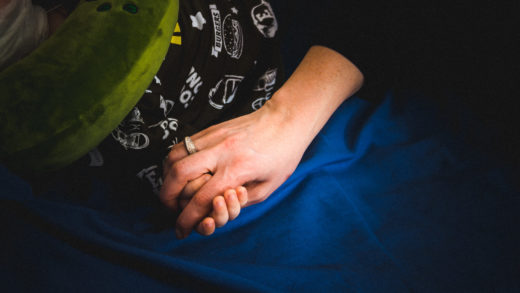
I stole a glance at him from beneath my lowered lashes. Slowly walked over and stood beside him. Looked firmly at Valentina Ivanovna and said quietly that Hrant’s father could not be bad. That surely he had laughed for the photograph on purpose, so Hrant’s mother would not think he was lonely and sad over there. We were learning “If a Friend Should Suddenly Turn Out” by heart; I was in love with Timur and a little with his team. I knew how friends ought to act. I took my friend’s hand.
In my brave inner world.
In the real world I stood with my eyes lowered and my little fists clenched. I waited for the deity to finish tormenting Hrant, order us back to our desks and tell us to open our reading textbooks, sat down at my desk at the front of the middle row, and opened the book.
Toward the end of the lesson, Hrant’s eyes and mine happened to meet. He smiled faintly. Hrant understood everything and did not judge. He never judged anyone at all. Except perhaps the Turks.
In Half
Valentina Ivanovna left our class when we moved up to fourth grade. We had different teachers now. A cast-iron wood-burning stove appeared in the middle of the classroom. Mut u tsurt began, the dark and cold years.
Most of our teachers were over 40. Very old, we thought. Adrine Grigoryevna was young. She was standing in for the craft teacher, who was ill. Thanks to her, we came to truly love the subject. The classroom gradually filled up with our work.
We adored Adrine Grigoryevna. She was not a deity but a human being, and our love for her was human. Without fear.
Hrant still drew cats for me, made the class laugh, got hit across the back with thin pointers, and drove teachers to despair, which was then poured out on his mother with her head bowed.
One day Hrant brought ampoules to school and announced that you could use them to make a real explosion.
As luck would have it, the real explosion went off in craft class. The teacher was just handing out enormous sheets of drawing paper. Adrine Grigoryevna dropped the sheets and, I think, jumped aside. I think we all jumped at the unexpectedly loud sound. Even Hrant himself.
When Adrine Grigoryevna came to her senses, she picked up a stick and struck Hrant across the back with all her strength. The stick broke in half. Hrant howled in pain and doubled up. The stick—both its pieces—fell with a dull thud onto the faded parquet floor.
Adrine Grigoryevna looked at the floor for a minute or so, then ran out of the classroom. We sat through the rest of the lesson in silence, not daring to raise our eyes. When the bell rang, everyone got up, took their schoolbags, and left the classroom. I took the class register to the staffroom. Adrine Nikolayevna was sitting there. She was crying.
Hrant’s mother was summoned to the principal’s office. Hrant did not come to class. Nor the next day. We were told he had been transferred to another school. I never saw him again.
I Just Take Their Hand
Why did I write this story? There are traumas that are not really traumas, yet still will not let go. Like dyslexia, for example. Or topographical cretinism. Not noticeable to the naked eye, something no one would call a disability, but it really gets in the way of living.
These traumas, too, need to be spoken about out loud, to at least try to get rid of them. The thought that I did not take my friend’s hand that day really gets in the way of my life.

I grow older, I change, but the memory of Hrant and what I did—“unworthy of a Pioneer,” which I never got the chance to become—trails after me like an invisible thread through the years.
For example, I have had a lifelong soft spot for failing students. I consider them special a priori. And brave, without fail. I love big “bear-like” hands on men. Especially ones out of proportion to the body. After Hrant left our school, I, a shy, timid child, a straight-A student, a model of good behavior, began organizing escapes from school, sowing anarchy, and rebelling. In every variety of school and university, at work, and simply in everyday life.
I rush to defend someone standing alone against everyone. Even if I disagree with them. First I rush in, then I think. I do not quite know whether I believe in God, but I still pray that Hrant’s father was among those who came back from the war.
There is no moral to this story and nothing abstruse between the lines. There is just one thought: late though it may be, I am still taking my friend’s hand.