
Almost Chernobyl
Out of a thick veil of fog, an old shepherd with a white mare and a brown foal floats onto the deserted night road.
Behind us lies the Zod Pass, with its procession of buses, trucks and cars loaded with belongings and filled with people leaving their homes in the villages of Karvachar and Martakert. Early evening, November 19. Seven Martakert villages will pass to Azerbaijan at midnight, the Karvachar district in five days.
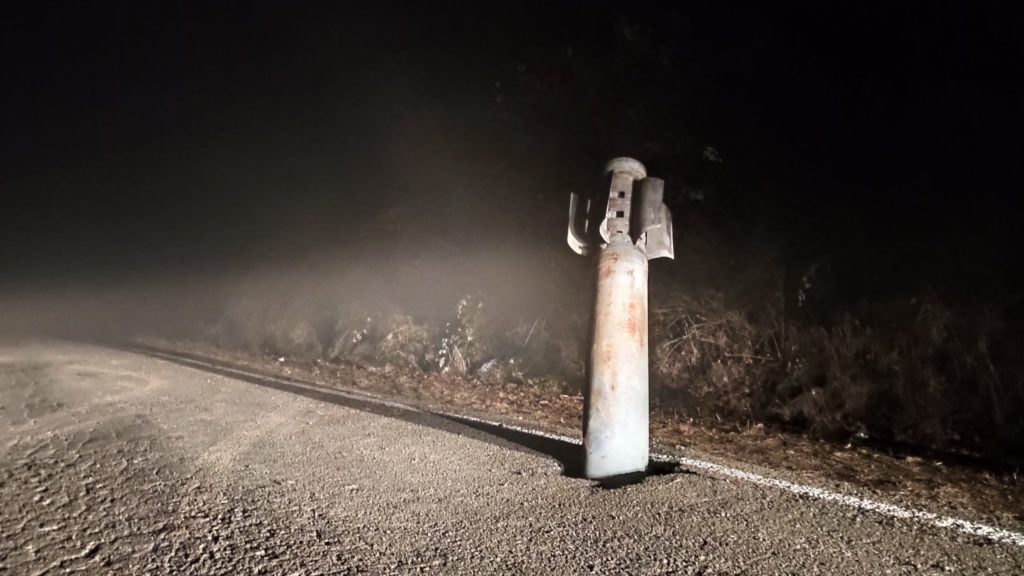
Ahead, waiting for us, are cars abandoned on the road with flat tires, shattered windows and mangled metal, a completely burned-out UAZ, unexploded rockets sticking out of the ground, shell craters. Foxes dart across the highway in front of the car’s headlights.
The fog is the usual Karvachar fog. It covers the mountains with a dirty beige blanket, considerately leaving a few meters of visibility for the cars on the highway. Sometimes it blocks the hairpin road too, but quickly catches itself and, as though apologizing, crawls back into the gorges.
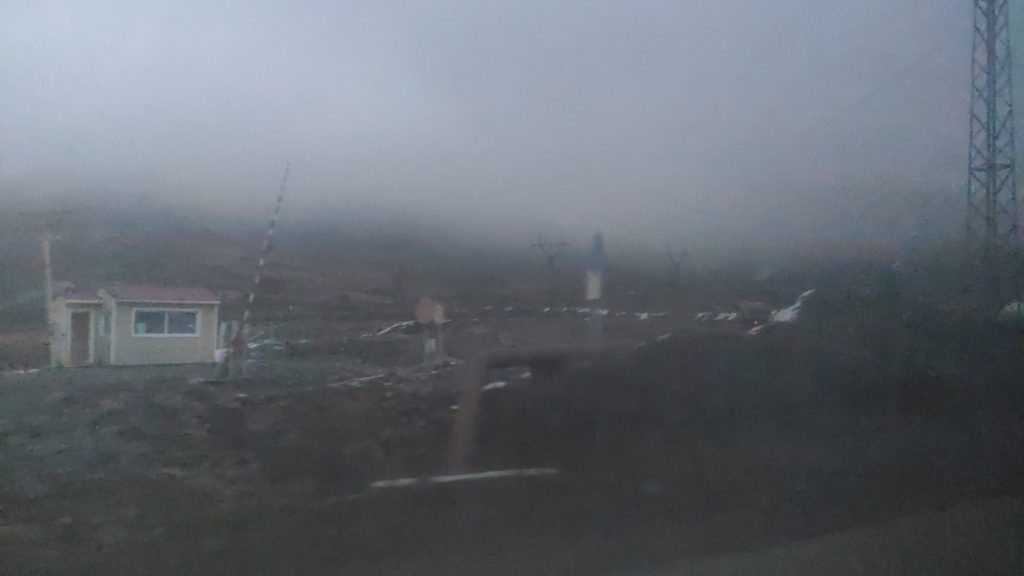
Something unfamiliar has appeared in the smell of the mountains and the dearly familiar Karvachar fog. The fog seems a little bewildered, as though asking: is it true that soon it will be parting to reveal the road for other cars, cars it is not used to? Or perhaps it doesn’t care, and I am simply humanizing my favorite fog of all and shifting my own bewilderment onto it.
“It’s as if we’ve driven into Chernobyl,” David says, turning onto another spiral.
David lives in Moscow. As chairman of the Armenian community, he organized fundraising and the dispatch of necessary military gear for the army from the first days of the war. Soon he came to Armenia to oversee the delivery of aid to soldiers and displaced people on the ground. The SUV’s trunk is crammed with padded jackets, warm hats and food. Inside are Vahram, a former border guard who served in the army with David, and Karlen, a retired officer, as well as Fyodor and me, who are going to film the last day of the almost completely deserted villages.
We stop to refuel. The owner of the gas filling station doesn’t care that the district will soon pass to Azerbaijan; he has no intention of leaving. David tells us the man joked that “at least there are lots of Azerbaijanis”—there will be more profit.
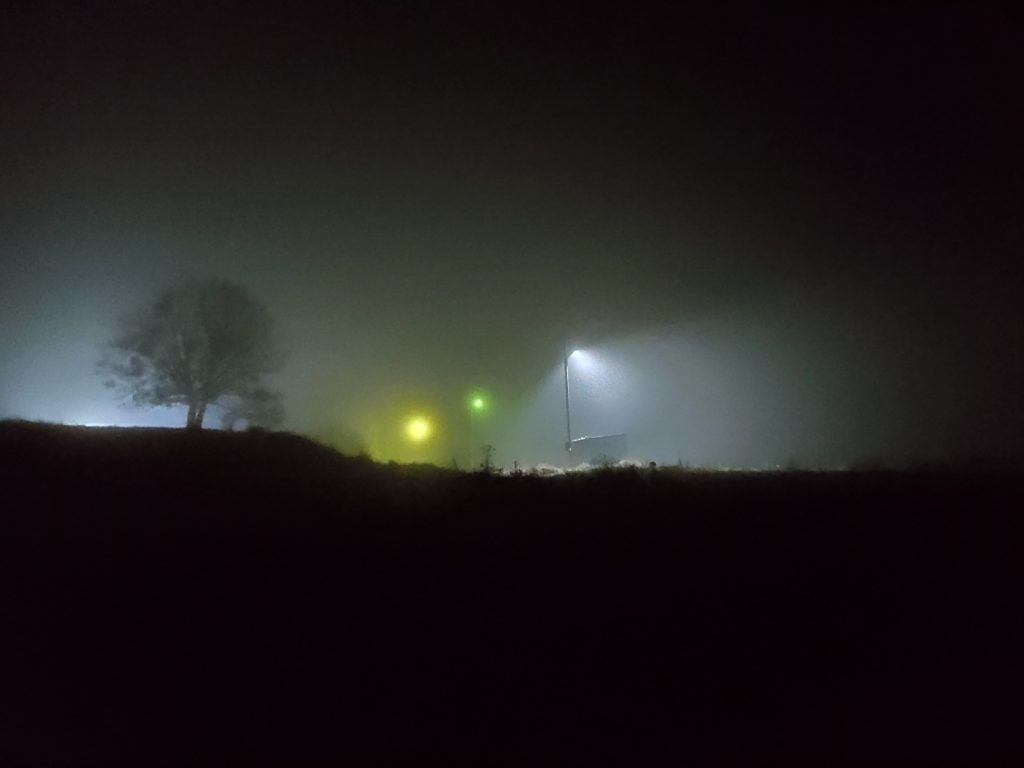
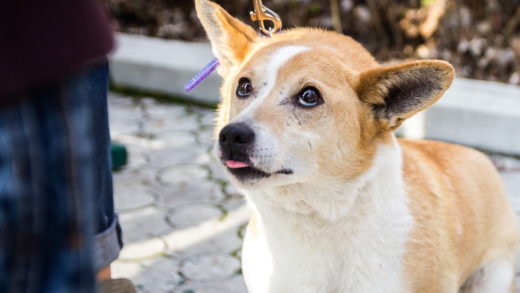
There is a line at the filling station. Two dogs run up to people, nuzzling them and begging—a large one with serene eyes and a small dachshund-like one with shiny black fur and crooked little legs. They deftly catch the pieces of sausage we toss them in midair.
“Soon you’ll be Azerbaijani dogs,” Karlen says.
I laugh at the cheerless joke as though it were the funniest one in the world. With the loud, nervous laugh I have acquired over the last month and a half. Laughter is like a commercial break in this reality that keeps seeming like a film to me. A pity you can’t turn it off.
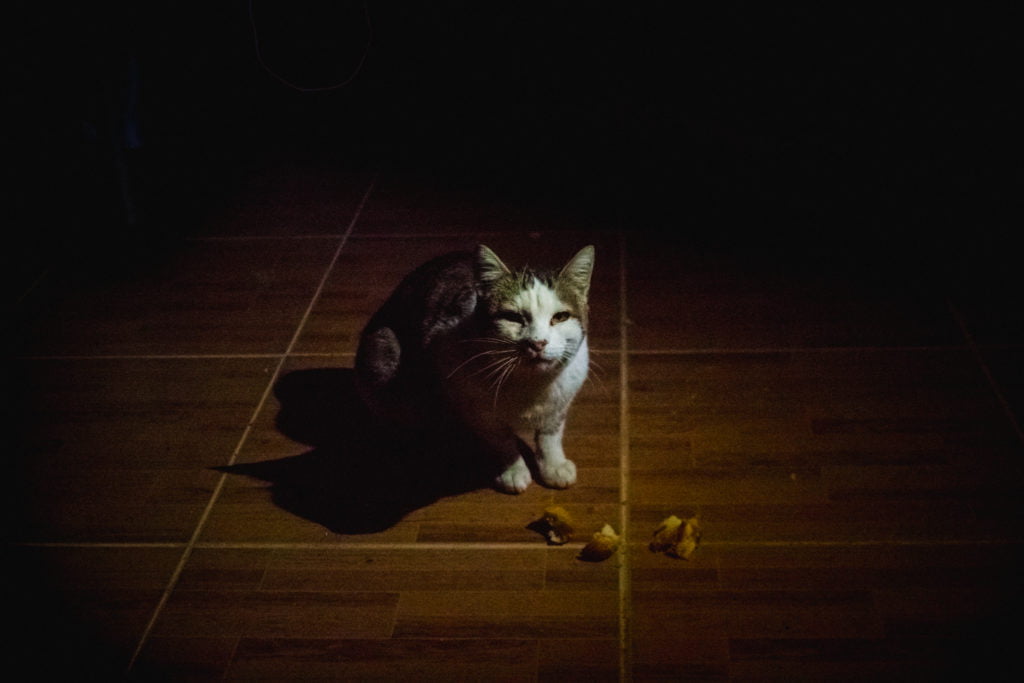
A pregnant cat cautiously slips past the dogs to her refuge. She refuses the sausage; she isn’t hungry. Her kittens, too, will be born in what will already be Azerbaijan.
The Administration at Night
In the regional center, Martakert, we will wait for Hakob, a guy from Vanadzor who for almost ten days has been organizing volunteers and the transport of residents’ belongings and school supplies from Karvachar villages, and for the last two days from Martakert villages.
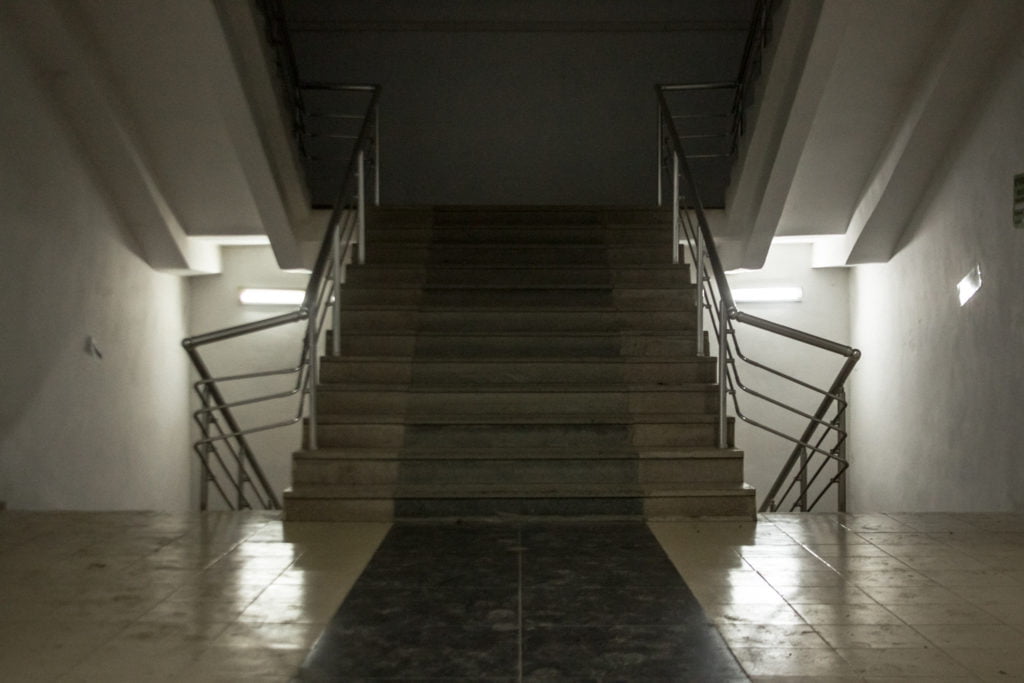
The administration building is cold and dirty. There are large boxes and empty shelves in the foyer; plants are drying out in their pots.
“There haven’t been any women here for a long time,” Garik, the deputy head of the administration, says apologetically. “They were all evacuated at the beginning of the war.”
Martakert had been under incessant shelling from the very first day of hostilities. Garik says the civilians were quickly placed in bomb shelters, then taken by bus to safer areas of Karabakh and to Armenia.
“Thanks to that, we have only three dead and one wounded among the civilian population, and even that was through their own stupidity,” Garik says with vexation. “This guy (the one who was wounded), his parents and his aunt refused to go down to the basement and kept standing by their little shop. So the blast wave from a shell hit them.”
Very few of the evacuated residents are returning. Electricity, gas and, in places, water supplies in the city are intermittent. Food deliveries to the shops have been disrupted, especially bread. The administration staff refused to take a loaf from us, asking us to give it on our way back to people worse off than they were, but gladly accepted a box of tea.
Many cats live in the administration building. The black-and-white tomcat that greets us keeps coughing.
“Worms,” Fyodor diagnoses at once.
“Maybe he’s swallowed some fur?” I continue the medical consultation.
Several kittens run over to look at the new arrivals and find out, while they’re at it, whether they have brought any treats. They all push forward shamelessly to be petted. A fat yellow tomcat is a little wary of people, but with all that bulk he is so reluctant to run away from us that in the end he prefers to trust the hands stroking him.
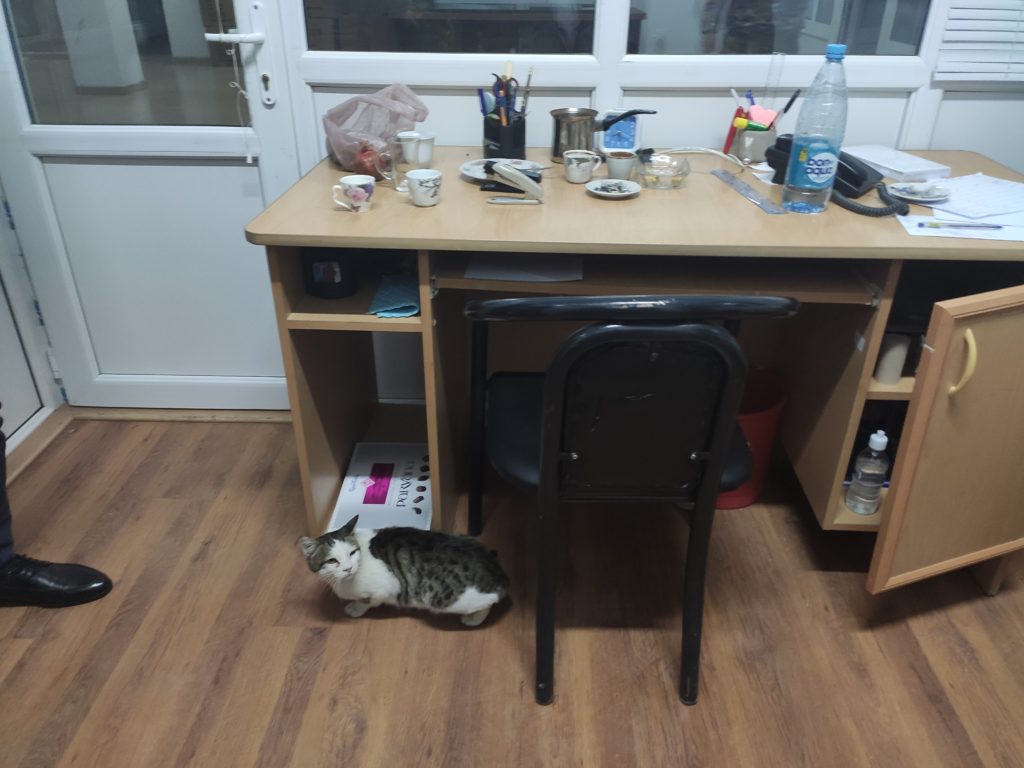
We don’t give a damn about the closed windows in the administration’s little reception room and take out our cigarettes. The corridor is as freezing as it is outside. The administration’s outer door won’t close; the windows above it have had their glass blown out by shell blasts.
I ask Garik why the evacuation of the residents of the seven villages was so badly organized, why they were given just two days to pack up and leave. Hakob, the activist from Vanadzor, was essentially recruiting volunteers and raising money for trucks through a Facebook post, finding truck drivers and making arrangements with them himself.
“We gave them as many vehicles as we could. We have hardly any resources ourselves. Besides, it’s such a mess there, a dog wouldn’t recognize its owner (an Armenian expression—Kalemon),” Garik says dismissively. “Even now it isn’t clear which villages we’re handing over. At first they said only New Maragha, that the others would stay with us. Then that no, we’re giving everything up, that it had been clear since November 10 that all seven would go, because they used to be part of the Aghdam district. Nothing is known for certain yet.”
We hear the phrase “Nothing is known yet” from administration representatives and the military throughout the two days.
Thin Garik, in military uniform, with tired eyes and long little-finger nails, tells us that from the first days of the war he left Martakert only once—to visit a colleague in hospital who had been wounded in Krasny Bazar. The rest of the time he was here. A house was burning—they put it out alongside the firefighters; during bombardments they often forcibly took heedless people out of their homes and into basements.
During the war a great deal of humanitarian aid came to Martakert; now the flow has dried up. And the administration still has to think about where to house around 1500 refugees from the seven villages. Some have gone to Stepanakert or Armenia, but many have nowhere to go.
The Turks Won’t Be Here for Another Month
Hakob returns from the village of Nor Aygestan tired and angry. Barely having said hello, he launches into a breathless account of the latest news, warming his hands over a battered electric coil heater.
Since yesterday he has helped at least ten families leave the Martakert villages. Today alone he sent off seven trucks. He himself slept in the car last night.
The trucks are charging inhuman prices. Many are afraid to come here.
One truck turned around and left because it got stuck in snow on a stretch of road, and the driver began protesting that nobody had warned him there would be snow in places, and turned back. Meanwhile, the residents had already carried their furniture out of their houses and were waiting for the heavy truck.
A resident of one village couldn’t transport his belongings and burned down his house with them inside.
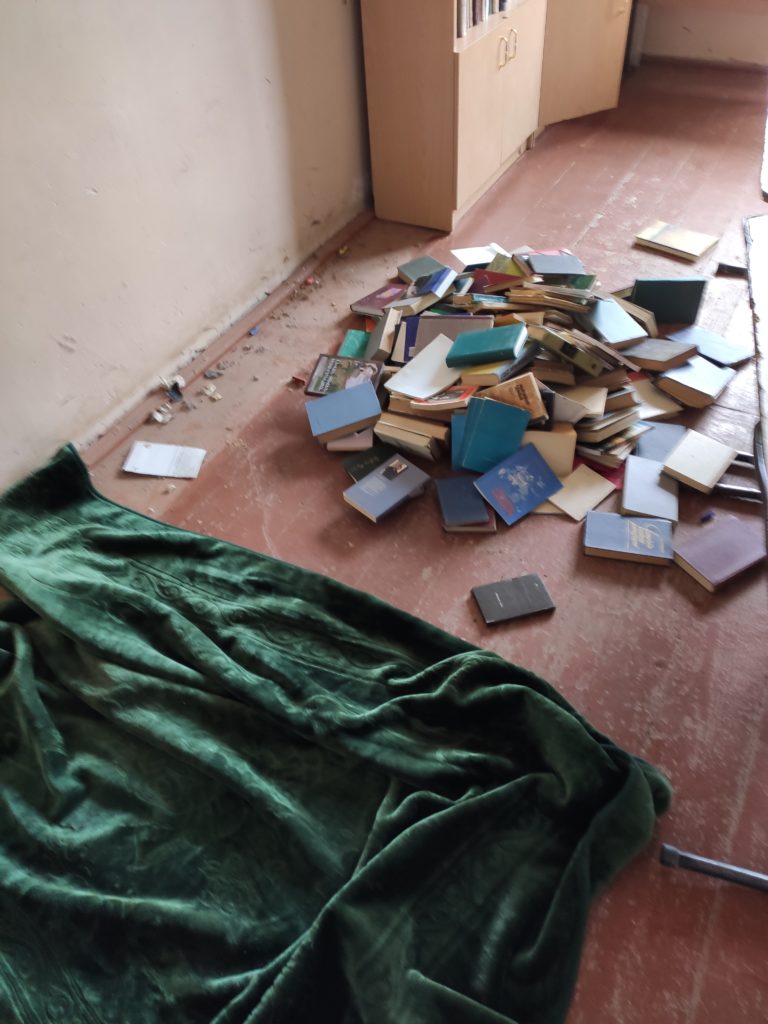
Furniture and many books remain in the Nor Aygestan school, and nobody intends to take them away.
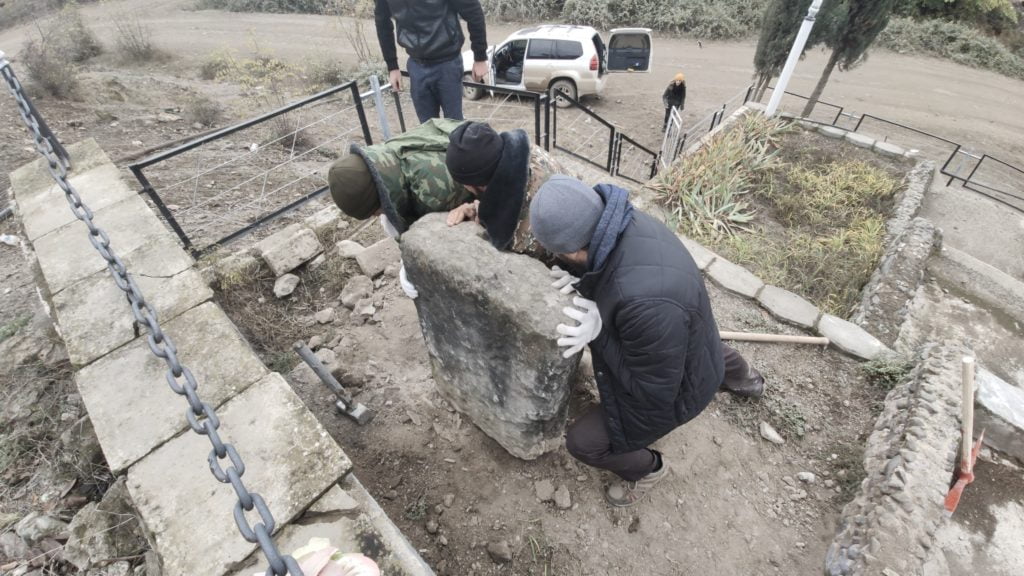
In the village of Hovtashen, Hakob found an ancient khachkar that he wants to dig out and take away.
In the same village, Hakob saw a man sitting in front of his house, weeping bitterly. His son had been missing for a month and a half, no truck had been found to take his possessions away, and there was nowhere to go.
Before that, Hakob spent ten days in Karvachar. There, he and his friends helped residents relocate, took out four libraries, school laboratories and things from medical stations.
In Karvachar he saw people helping. Tourists who had rushed to say goodbye to Dadivank and were causing traffic jams. People embracing their homes for the last time. People burning their homes. Looters, mostly from Vardenis, robbing houses and taking timber away to sell. Looters caught and punished by residents. People who don’t consider themselves robbers but buy up livestock from the locals for next to nothing.
Garik listens to Hakob with the same tired expression. The deputy head of the administration was born in Baku. He was three months old when his family fled the pogroms—first to Yerevan, then to Martakert. He doesn’t know whether he will have to migrate again. Martakert is now surrounded by Azerbaijanis on three sides. Instead of the short road to Stepanakert through Aghdam, there is now a detour through Drmbon that takes several hours.
“But no Turk will show up here for another month,” Garik says calmly when Hakob finishes. “First the Russian peacekeepers will come, then their sappers will clear the territory, and only then will the soldiers enter.”
Arriving in Armenia, Leaving Azerbaijan
There were two hours left until midnight when we decided to go to New Aygestan and neighboring Hovtashen.
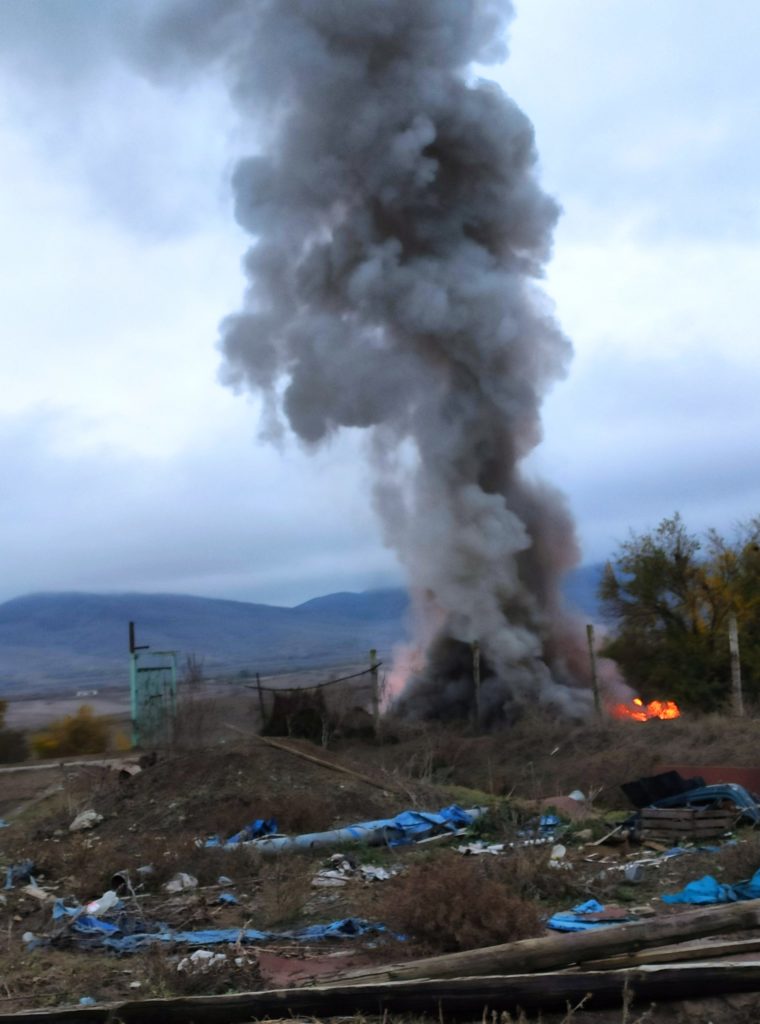
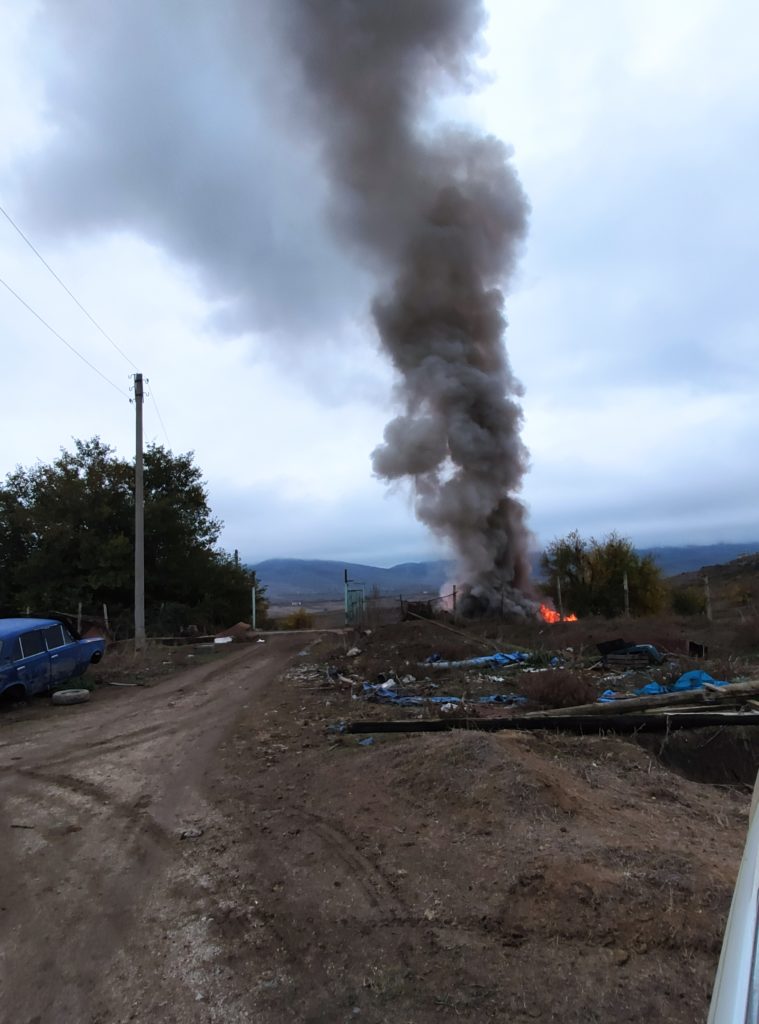
The villages greeted us with blazing houses. Many residents had burned down the homes they had built with their own hands so they wouldn’t fall to the enemy. Some had removed the roof, windows, doors and everything else they had time for and taken it all into the unknown.
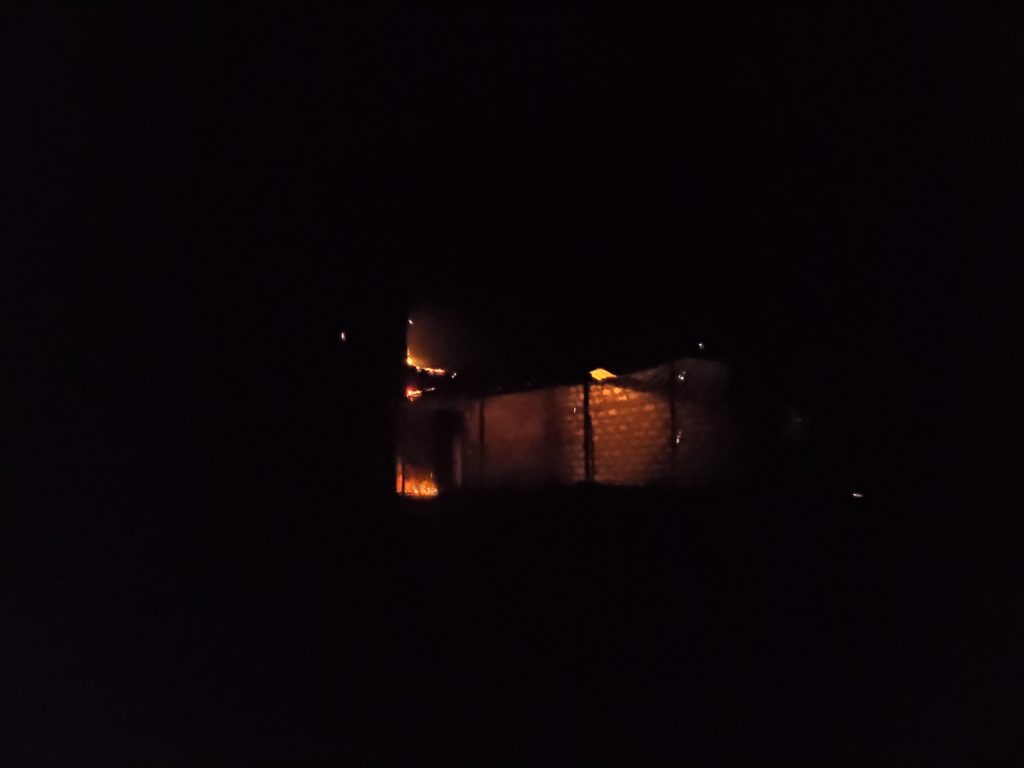
An old bed lay on the road along the way—perhaps it had fallen off a truck.
In a house burning feebly, almost reluctantly, the guys found a pantry lined with preserves for the winter. Under burning embers falling from the roof rafters, they carried out jars—as many as would fit in the already crowded car—to give to the soldiers.
In Hovtashen we go to the cemetery. Three 18-year-old soldiers who never returned from the war were buried here very recently. Three neat rectangular pits stand empty. People have dug up their dead so that Azerbaijani soldiers won’t desecrate them. Beside the pits, slightly wilted flowers and a little basket of artificial ones have been set neatly to one side. Hakob says he will never forget how yesterday the father of one of them stood over the graves while the coffins were being dug up, and wept bitterly.
Hakob gets a call from a man who hadn’t managed to take away some of his household things.
“I don’t know yet, perhaps it will be possible to come tomorrow too,” Hakob says wearily.
“You think so? Well, I’ll be waiting for good news from you, brother.”
People abandoned by two governments are waiting for good news from Hakob.
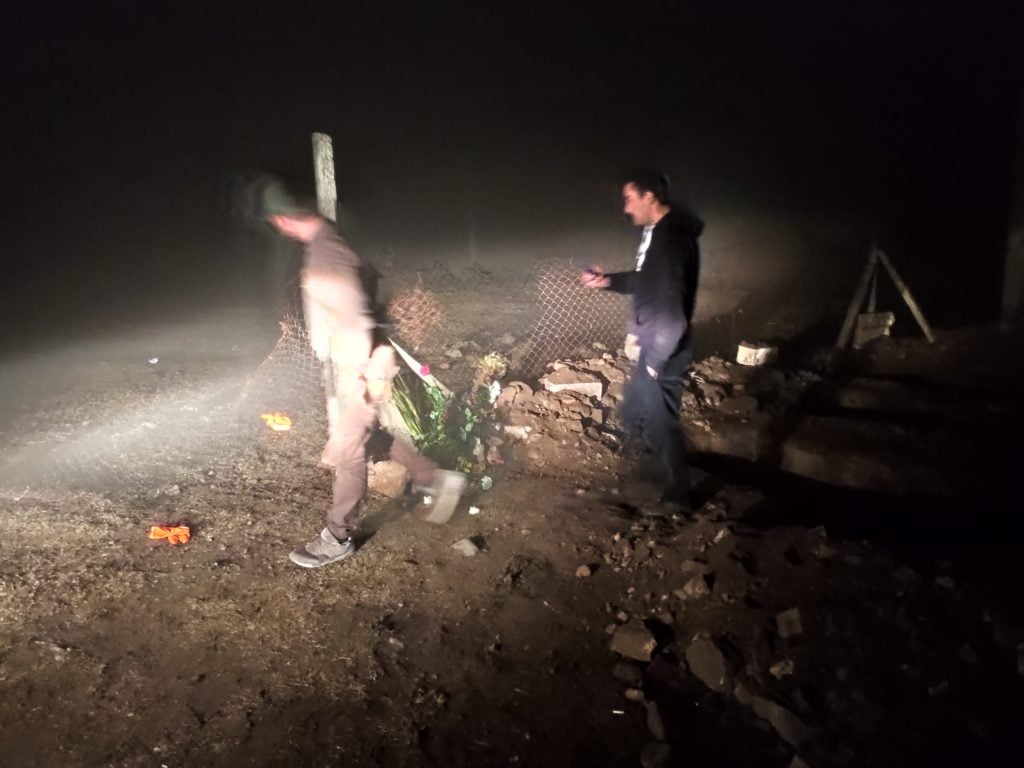
An ancient white khachkar stands in the darkness on a solid stone base, surrounded by a metal railing. Simple and beautiful.
“We definitely can’t leave it,” the guys decide. “They’ll smash it as soon as they come in here.”
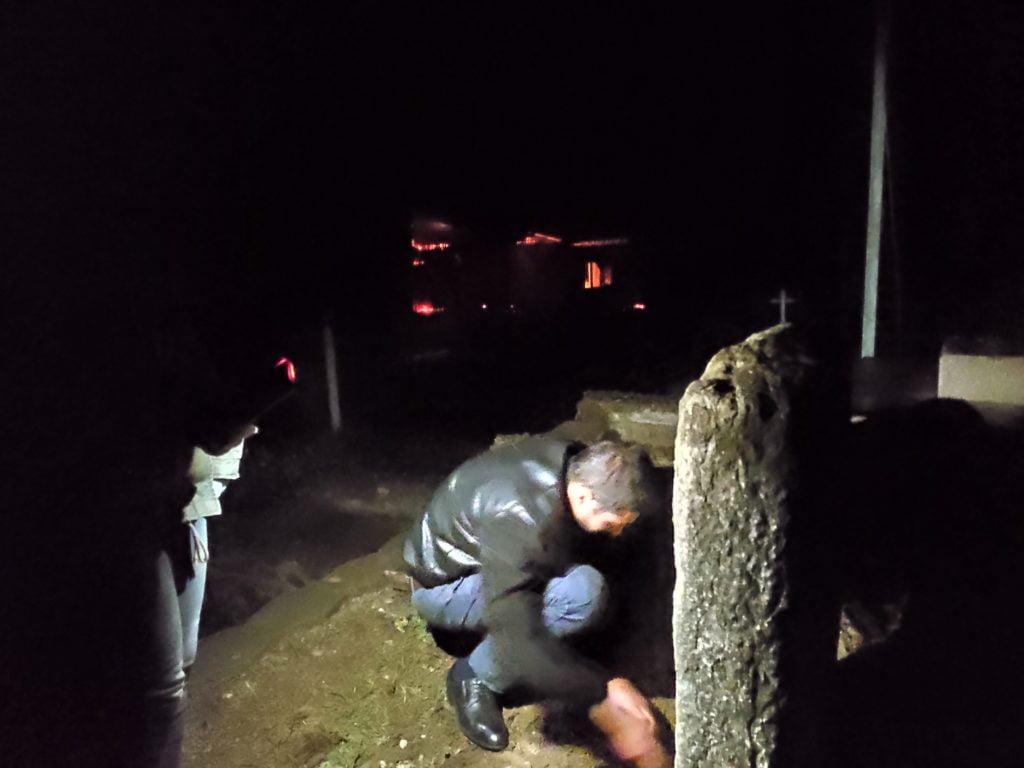
A small crowbar lies beside the khachkar. Karlen begins striking the foundation that holds the khachkar in place; Fyodor joins him, digging at the earth around it with a piece of wood. I hold a phone with its flashlight on. David, Hakob and Vahram go toward the houses, hoping to find other tools there.
The scene imprints itself firmly on my memory: at night, by the light of a phone flashlight, two grown men dig the earth with “children’s” tools, one of them fanatically repeating, “It has to work, we won’t leave it,” while the other, just three years ago, didn’t even know what a khachkar was.
Every so often Karlen drops the crowbar and starts shaking the stone. “Look, it’s moving, just a little, but it’s started moving!” he shouts. In fact, the khachkar stands impregnable. The time is 23:40.
The guys return without tools but with a Russian-language Bible they found in the medical station. We decide to persuade the Russian peacekeepers, who will soon enter here, and come back for the khachkar and the school’s property tomorrow. It is already past midnight when we leave the village.
“We arrived in Armenia, we’re leaving Azerbaijan,” Vahram says. Throughout the journey he provides us with a commercial break from reality—laughter. Our chuckle is followed by silence as everyone tries to digest this information.
“If the Azerbaijanis catch us and take us prisoner, I’ll shout louder than anyone: ‘Karabakh Azerbaijan dir!’” Vahram continues. He pitches his voice high and puts on an accent for the last words. It really is very funny.
We drive over the “bumps and potholes” of indistinguishable dirt roads and broken asphalt roads. There are no signs at many of the forks.
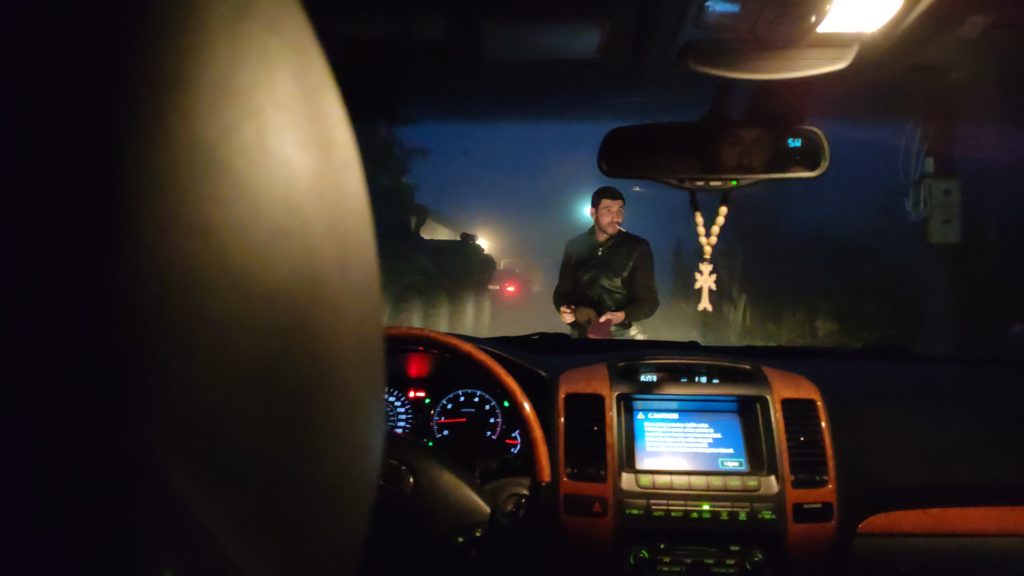
Suddenly a little light flickers ahead. Goes out, comes on again. As though someone were switching a flashlight on and off. A few seconds later, silhouettes in military uniform appear. On a road that was empty just a couple of hours ago, metal and tires have hastily formed a checkpoint.
“Russian peacekeepers? Not Azerbaijanis, surely?” one of us says uncertainly.
We slowly approach the checkpoint; David lowers the window. No, not peacekeepers, but Armenian soldiers. With slightly bewildered faces, but trying to maintain military sternness.
“Do you have your papers?” one of them asks. Instead of papers, jars of compote, jam and pickles are passed through the window. The soldier resists, repeating several times that they have everything.
“How much longer will you be here?” I ask.
“We don’t know yet. As long as we’re needed,” the young man smiles.
Boys. One of them looks like a teenager. Before their eyes, brothers and friends died on this land, and suddenly someone came and told them: leave, these lands are no longer ours.
We wish the smiling soldiers well in their service and drive off. Tsoi is in my head:
“War is the business of the young,
A remedy for wrinkles.”
Shushi-Shusha
We have been given a room in the “bunker” of the Martakert regional administration. The basement room has white walls, four iron beds, two chairs, two stools, a desk and almost empty brown shelves. On the floor is a plastic bag with half-liter bottles of water.
David, Karlen and Vahram leave for a military unit in Stepanakert to give the soldiers warm clothes and food.
Fyodor, Hakob, Gevorg and I settle into the room. Gevorg is an officer from Martakert who is going to his post tomorrow. At the beginning of the war he took his wife and children to relatives in Armenia. He has no plans to bring them back yet.
We go to bed at five in the morning. There are thin mattresses on the beds, no blankets. We cover ourselves with our jackets. The electricity has gone off; without the heater Garik brought into our room, it quickly gets cold. Naturally, the Wi-Fi working in the administration has gone off too. I think of the people who spent 45 days in shelters in even less comfortable conditions. To the sound of explosions.
At last I fall asleep. Again I have the dream I have had every night since November 9.
I am in Shushi. A battle is raging, with women and children on both sides taking part too. Both we and the Azerbaijanis are in trenches. We are separated by an earth bank formed by digging the two trenches. We have clubs in our hands; they have rifle butts. The Azerbaijanis climb onto the bank, jump into our trench, and we begin smashing one another’s faces and heads. There are many corpses around us. We are terribly exhausted, but we know victory is near.
Suddenly, from an invisible loudspeaker somewhere above, a voice rings out: “Stop immediately. Shushi goes to Azerbaijan.” I mechanically register that the voice says “Shushi”—the Armenian way.
We stop in confusion. They don’t understand what is happening either. We begin discussing how we have been betrayed and how unfair it is. They discuss how history is repeating itself, how 28 years ago they lost Shusha in exactly the same way. The children and the men remain grimly silent. The Armenian women mention the restored mosque and express the hope that our churches will be treated just as humanely. The Azerbaijani women begin droning on about the Albanian churches in Shusha that we have “appropriated.”
A wild irritation rises in me at the “Shusha” I keep hearing. “Shushi,” I say. “Shushi,” the other women take it up. “Shusha,” the Azerbaijani women retort. A minute later the club-and-rifle-butt battle resumes with renewed force. Forgetting smashed faces, corpses and the wounded bleeding out, we fight for the name. Our cries of “Shushi-Shusha” drown out the loudspeaker’s voice calling on both sides to stop the disturbances and not provoke the deep disquiet and grave concern of the international community…
Gevorg’s shout wakes me. In a second he pulls on his uniform and runs out. Half asleep, I don’t understand what is happening. Hakob says there was a sound like an explosion, but apparently nothing serious.
I remember the children from Stepanakert and their mother, temporarily living in a village kindergarten, who flinched every time a door slammed too loudly; I remember the boy in temporary accommodation in Abovyan who jumped at the bang of instruments being tuned by musicians who had come to entertain them, and smiled guiltily and awkwardly. How much longer will explosions ring in these people’s ears?
Nothing Is Known Yet
8 in the morning. There is still no electricity. We pull on hats and scarves, and Fyodor and I go outside. I am wearing “soldiers’” woolen socks. Wonderful women in Yerevan knitted them and sent them to the front. Then “peace” came, and activists led by the writer Narine Abgaryan organized a sale of their knitted socks and hats, as well as baklava, zhingyalov hats and pickles made by Karabakh women, and put the proceeds toward helping displaced people. Fyodor bought me beautiful, very warm gray socks. Eight sizes bigger than my size.
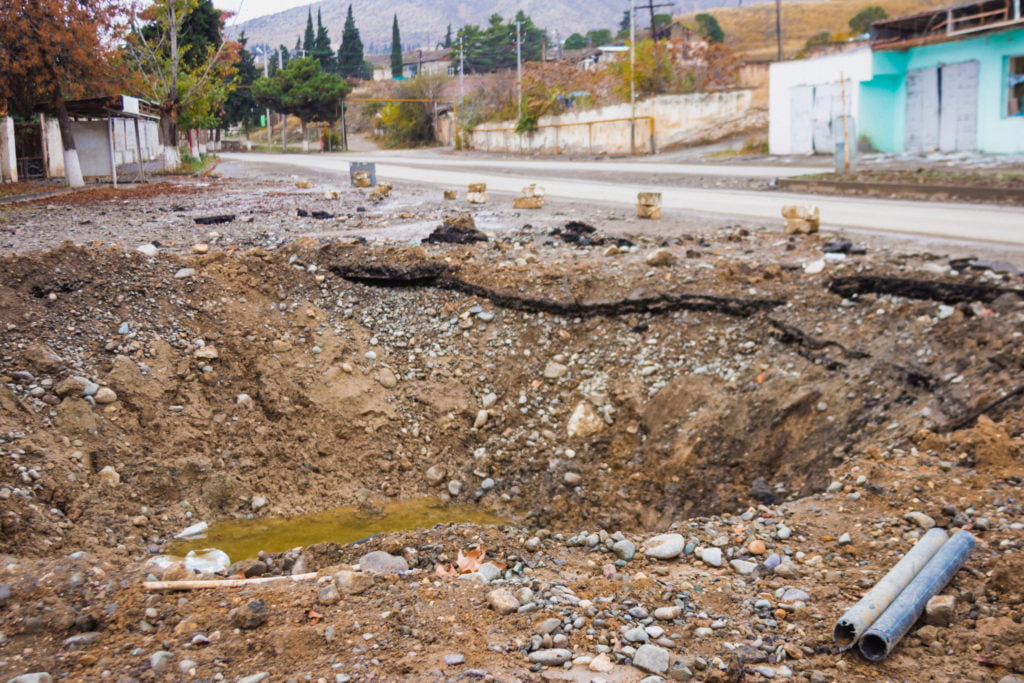
Martakert, which I remember as beautiful and clean, is now dirt and devastation—shattered windows in homes and shops, pieces of metal, shell craters in the ground. The basement windows of the regional center are blocked up with sandbags. Rubbish is scattered on the lawn in front of the building, and a dog’s body lies there. Another dog, alive, wanders bewildered down the street.
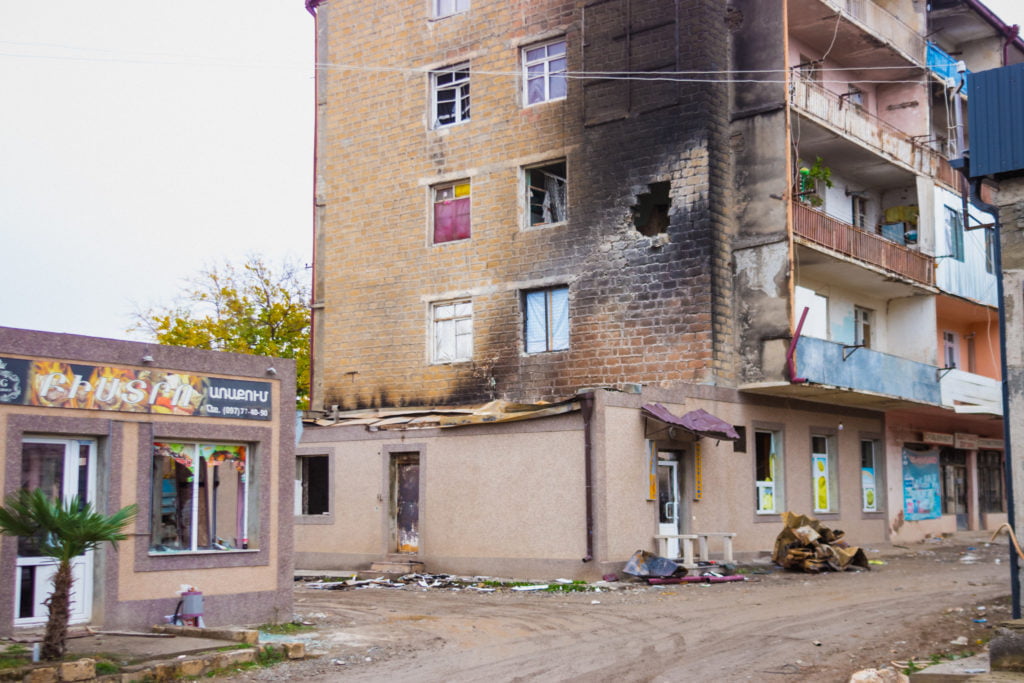
A shell has struck an apartment building, leaving a huge breach in the wall. The building is old, with little balconies; its “Moscow-style” windows are covered with plastic for the winter. One little balcony differs from the others with its soft coral walls and the brown frames of its modern double-glazed windows. Whitewashed walls can be seen through a window. It appears to have been renovated recently. The coral of the little balcony is the only bright spot on the whole street.
On the opposite side, a greengrocer’s, a hairdresser’s, a “meat bar,” a two-story hotel and a building supplies shop stand in a neat row. In front of the shop is an iron rubbish bin with fanciful metal curls for cigarette butts. A bearded man in a padded jacket and tall boots is confidently “warming” his hands over it. Catching sight of us, he begins shouting across the street: “Go film in your own Armenia, fuck you, and Nikol, and Armenia, for surrendering our Artsakh!” His eyes roll wildly.
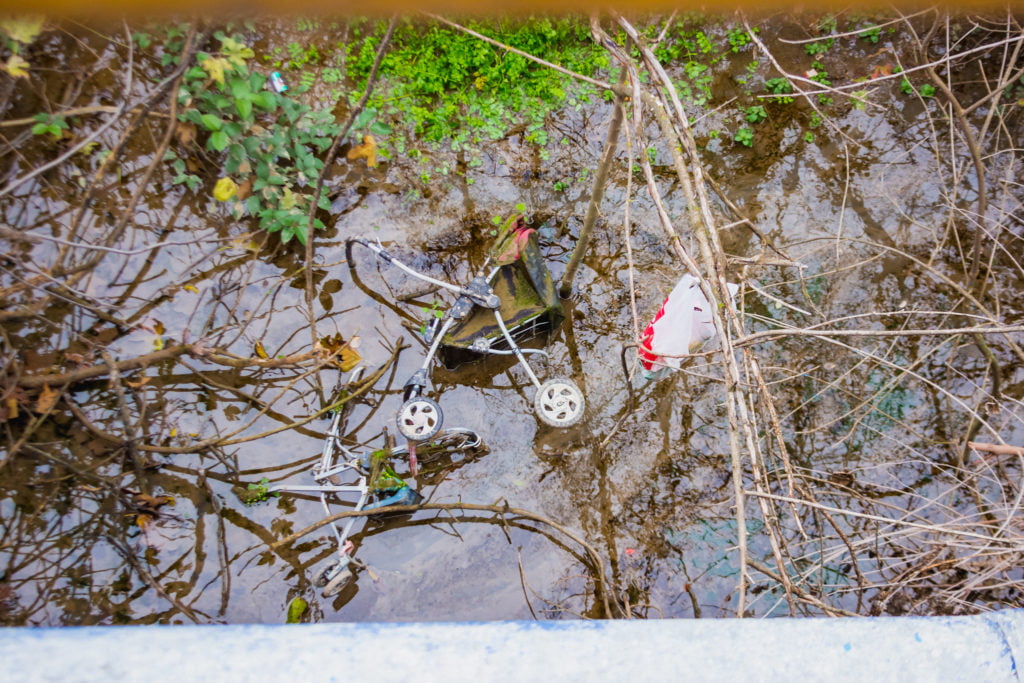
The man follows us as we film a huge crater beside a car wash and a bridge under which a fair amount of rubbish has already accumulated, and continues viciously swearing at us, Armenia and the “sellout government.”
Cars drive along the streets. In almost every one there are people in military uniform. One car makes a sharp turn. A serviceman is at the wheel; in the passenger seat is a striking old man with white hair, a white beard and a gentle gaze.
“There’s nothing to film here. Come with me to Yekhnikner (a post on the border with Azerbaijan—Kalemon), you can film there,” the serviceman says, lowering his window, then addressing Fyodor: “Don’t you remember me? We met in Hadrut?”
Fyodor replies that he hasn’t been to Hadrut.
“Ahh… are you from Moscow?” the young man doesn’t give up hope.
“I’m from the village of Ushi, Armenia.”
“Ahh,” the young man draws it out again. Disappointed. And drives away.
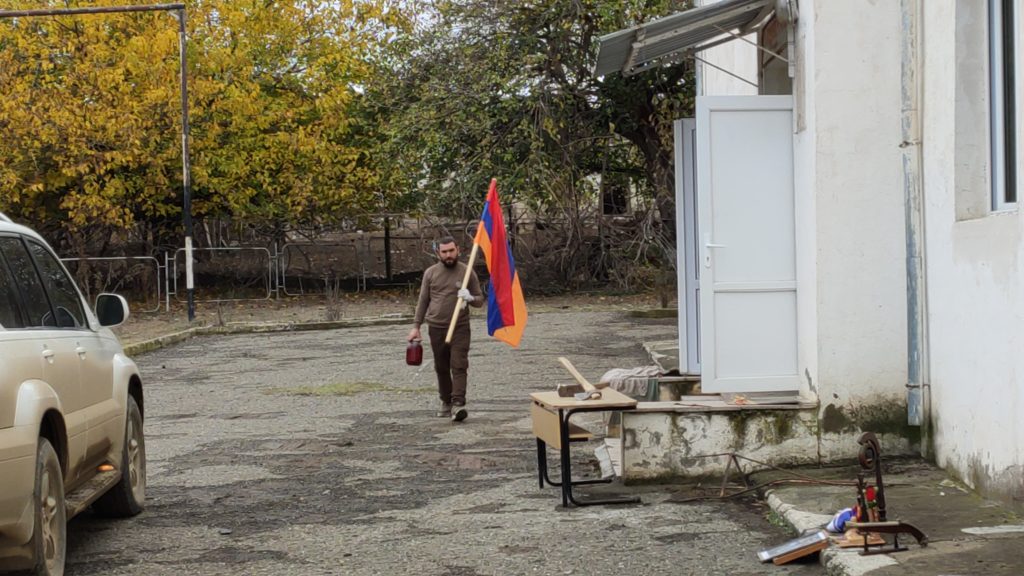
We return to the administration. Several staff members in suits stand by the door that won’t close, still waiting for someone to say something about whether they are surrendering the villages or not and to spell out what they should do next. The men don’t know whom they are waiting to hear from. Just as they don’t know whom to approach about taking out the khachkars.
Two women from the village of Karmiravan, a mother and daughter, have come to ask for 5000 drams for fuel for the car so they can get to Yerevan. Yesterday the family waited in vain for a truck to take away their belongings. All night they sat with the children in the car with the engine running so the children wouldn’t get cold, and used up all the fuel.
The daughter rents a tiny room in Yerevan. The others lived in the village. Now they will have to think about a larger place for the whole family.
“It’s hard for people from Karabakh to rent a place in Yerevan,” she says. “People in Yerevan hate them.”
“And do they hate people from Yerevan?”
“They hate them too,” she laughs. “We don’t need Turks; we’ll manage to destroy ourselves perfectly well.”
Her mother got married and moved here from Armenia at 17. She says she fell in love with Artsakh at once, that this is her land and it is unbearably painful to leave it. She turns away to hide her tears.
The Respiratory System of a Frog
We decide to try going for the school supplies and the khachkars after all.
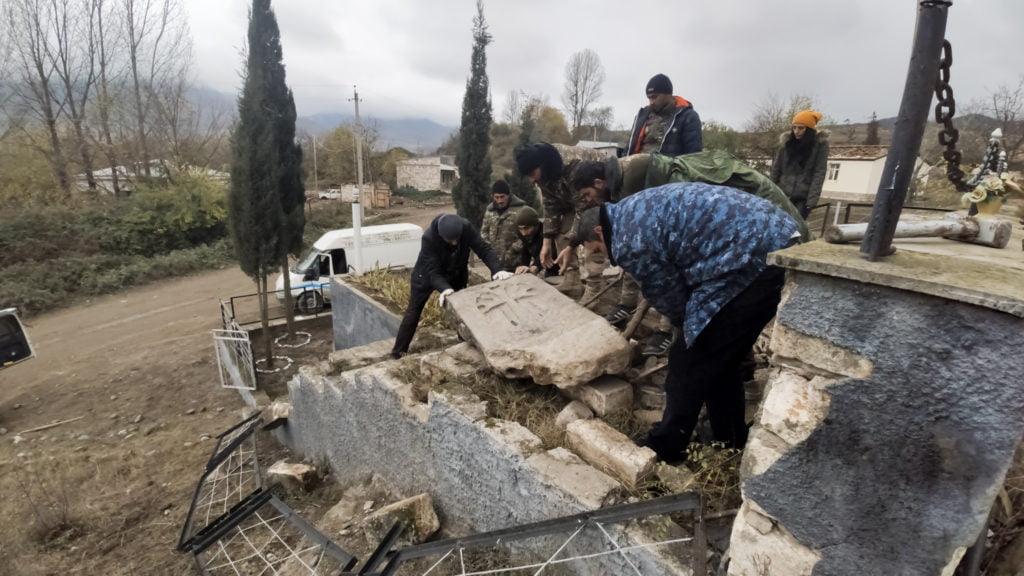
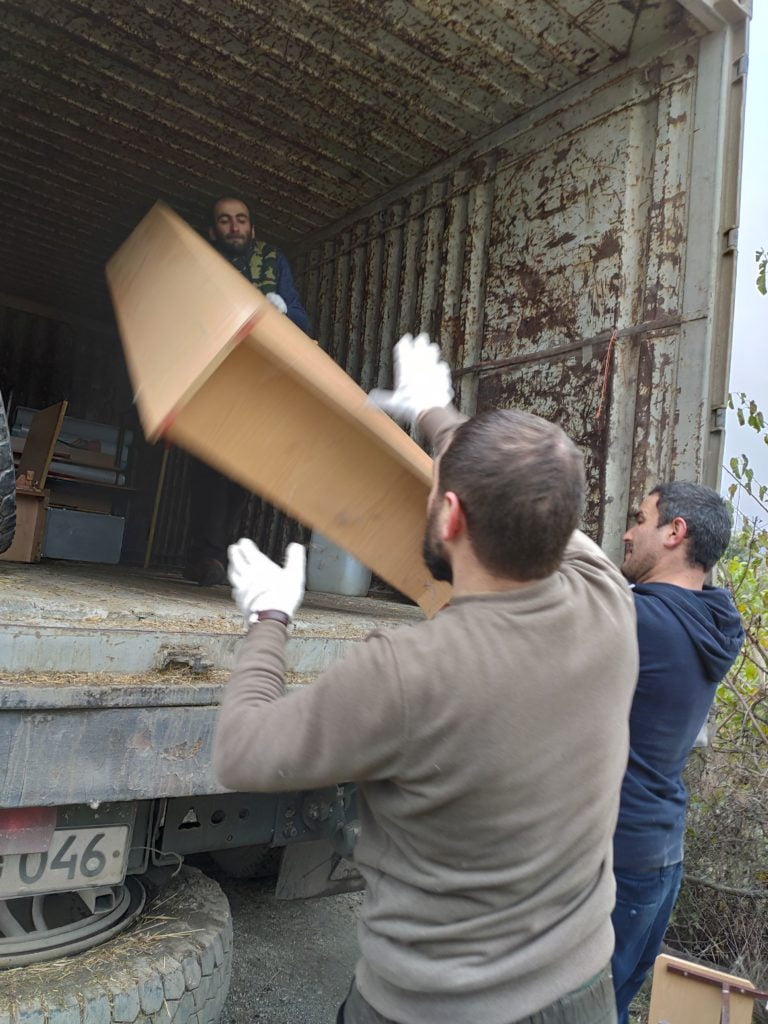
This time we enter Hovtashen with a large crowbar, a hoe and shovels. Not without difficulty, the guys dig out the khachkar. The last cars loaded with belongings pass us. We ask the drivers to stop and help pull the khachkar onto the road. The truck Hakob hired is already waiting by the school in Nor Aygestan. We decide to pick up the khachkar on the way back.
The guys break the metal railing that protects it from incursions by domestic animals so they can push the khachkar down the earthen slope to the road. An Azerbaijani media interpretation of the khachkar’s rescue forms in my head: “Armenian vandals even destroyed the cemetery fence so we wouldn’t get it.”
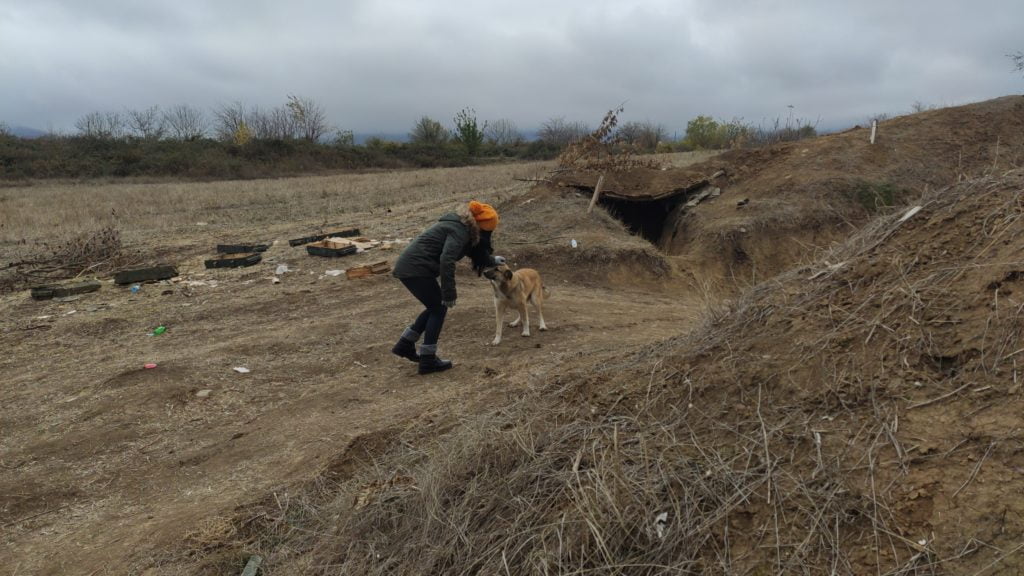
Houses are still burning in Nor Aygestan. Along the way we encounter dogs that run up to us, happy at the presence of a human being. In a field we come upon a dugout. Inside are a couple of soldiers’ uniforms; beside it, boxes of AGS rounds. We load several heavy boxes into the trunk to give to some military unit.
In the orchards, tree branches bend under pomegranates and persimmons. The pomegranates, long overdue for picking, have split in the nighttime cold and leave a bloody trace on our fingers. Now, in the daytime, Nor Aygestan is sunny, but empty and quiet in a way a village shouldn’t be. Beside the school, two dogs bark frantically, guarding an emptied house from us, a house that no longer belongs to them.
I want to load up all the dogs their owners have left behind instead of the school supplies. Videos of Azerbaijani soldiers abusing Armenian dogs rise before my eyes. Hakob reassures me that before the Azerbaijani soldiers arrive (in about a month, as the administration assured us), they will migrate to settlements where there is food. A foolish thought comes into my head: paint “Dogs of a rare Albanian breed” on the walls of the houses and protect them from violence that way.
On a table in the two-story school’s staffroom stand a half-empty bottle of cognac and an almost empty bottle of champagne. A black scarf is draped over the back of a chair. By the sink is a cezve with coffee left at the bottom and a coffee saucer with a bee-shaped candy. It looks as though something was being celebrated here and they decided they would tidy up tomorrow, but “tomorrow” decided to arrive differently.
The school library could easily pass for a small national library. Light-colored shelves with classics in Russian and Armenian, scholarly works, books about the first Karabakh war and its heroes, a Bible, textbooks and other books take up an entire wall.
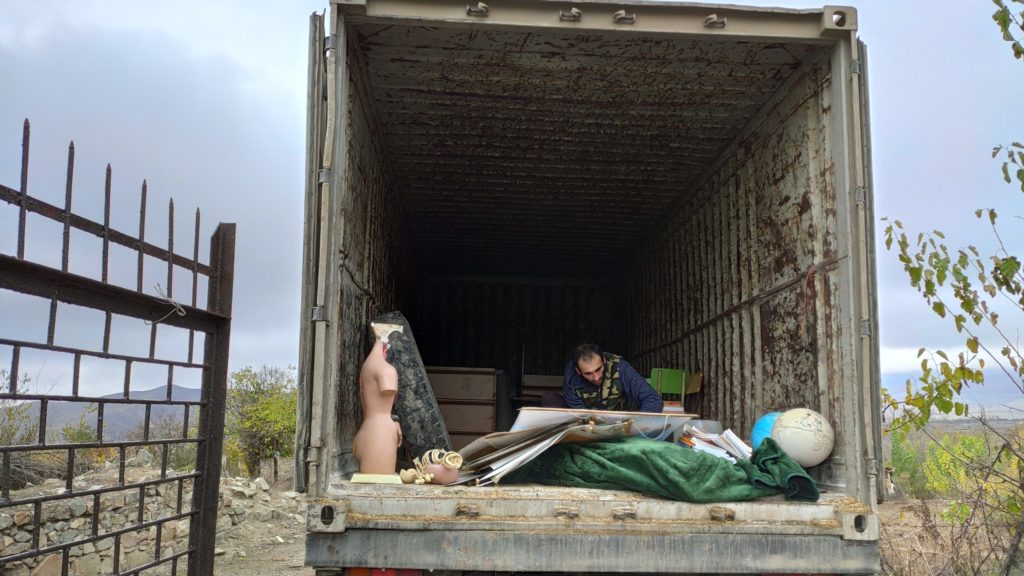
In another classroom hang posters on anatomy, biology, physics, chemistry and mathematics. We carefully take them down and stack them in the truck bed. “This school should be put on display in a museum as a model,” Karlen says. And really, where else will you see a frog’s respiratory system drawn in such detail? If only we could find these teachers and tell them that their painstaking work has not been destroyed but will go to another school.
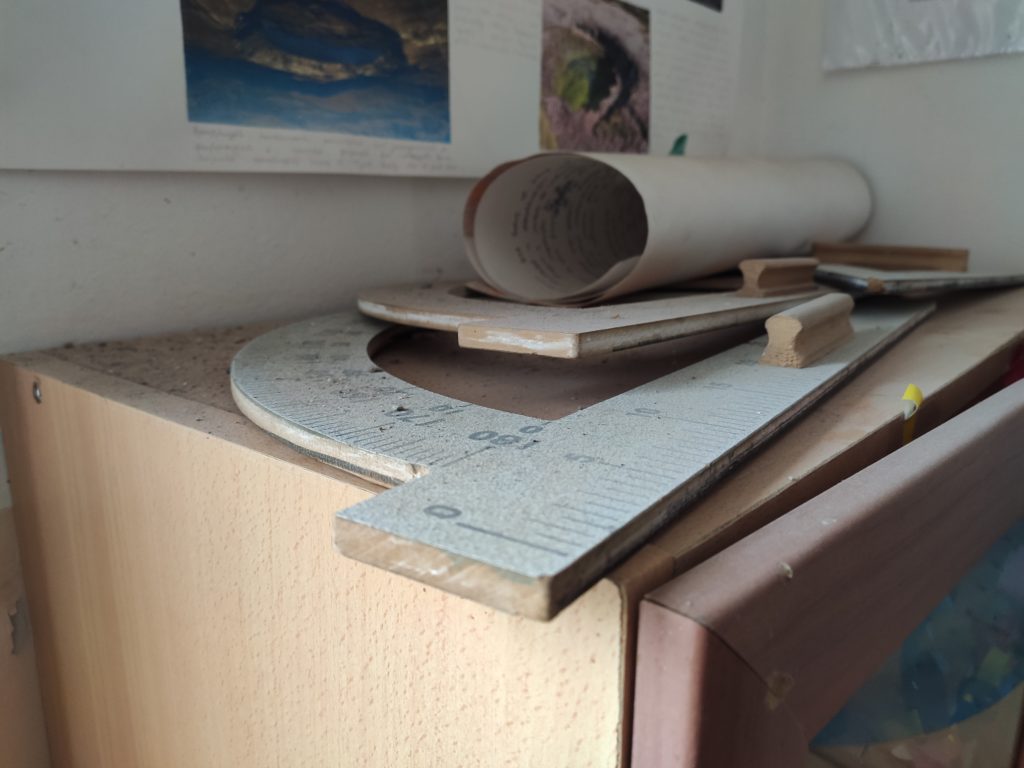
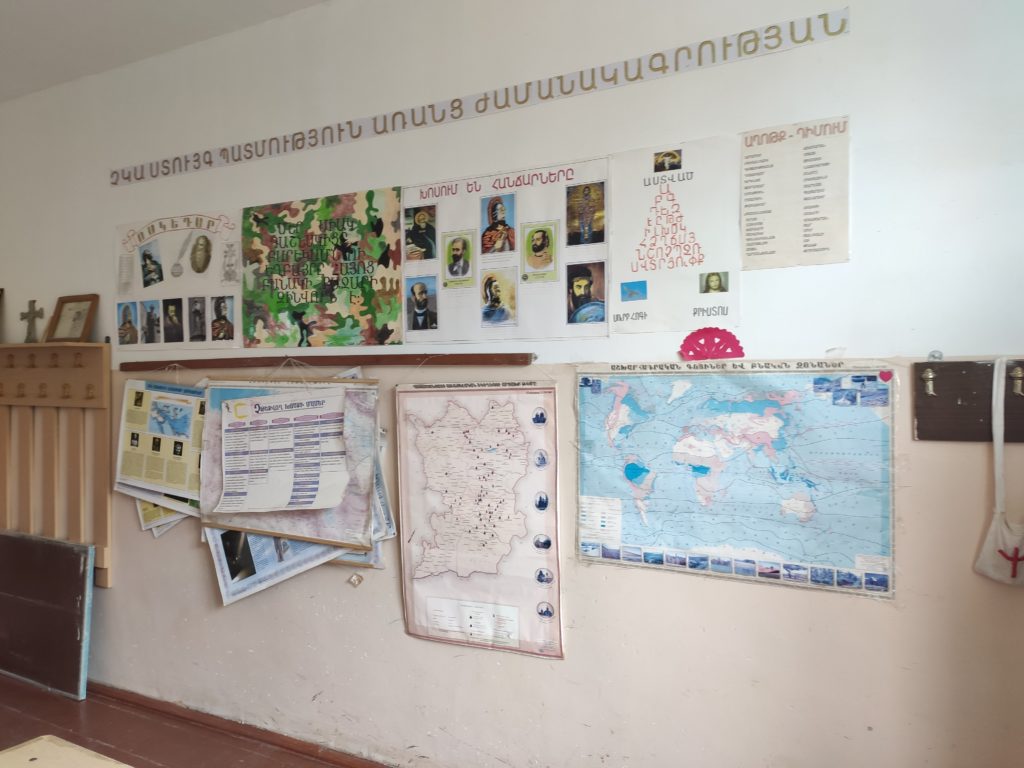
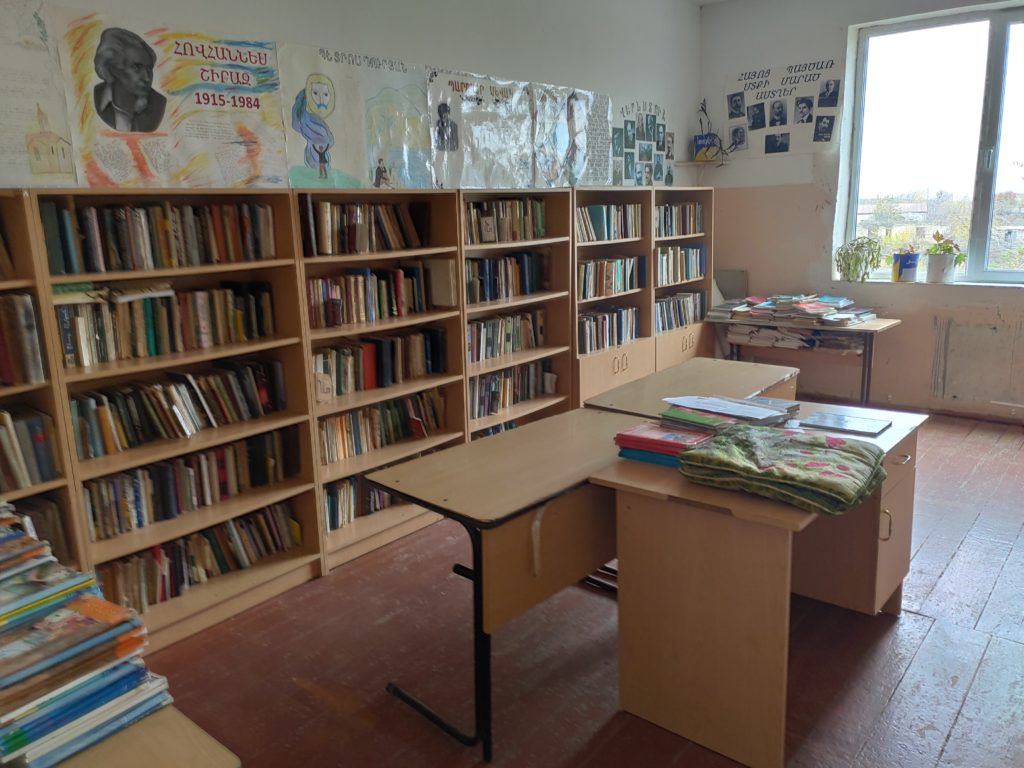
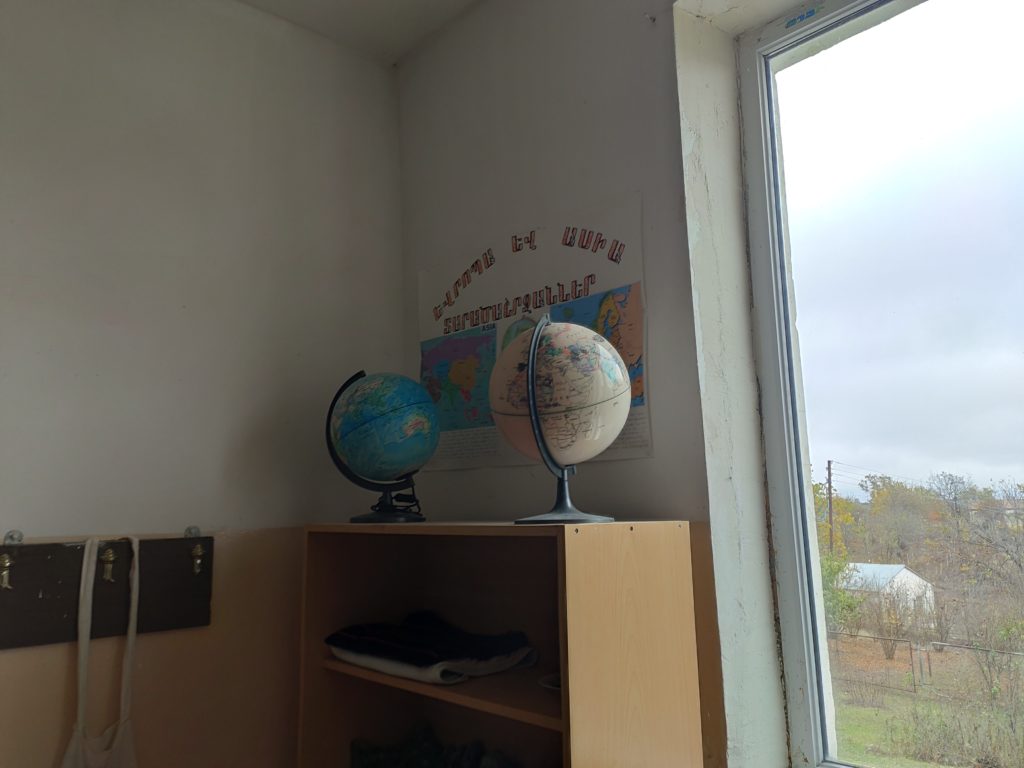
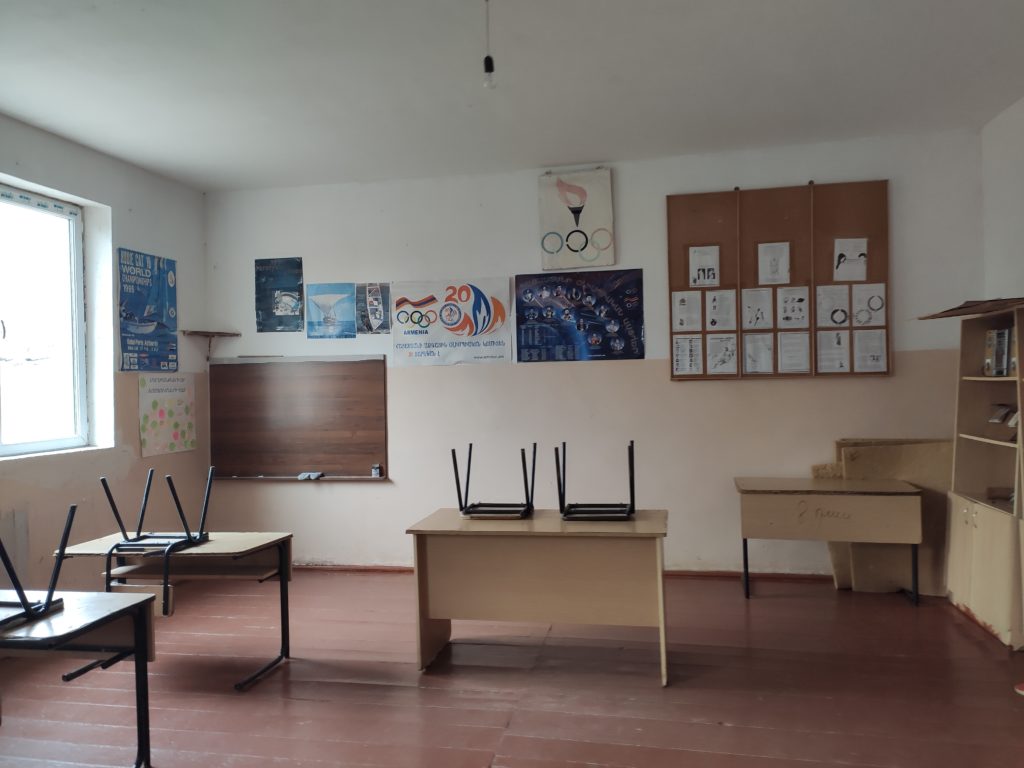
The guys break open the metal door to the laboratory. It is no less impressive than the library. Silver cases with flasks of every size and shape, microscopes, various devices for physics and chemistry experiments, models, replica assault rifles for life safety lessons, training grenades.
Loading the books takes most of the time. Once the tables and chairs have been carried out, I go to the pomegranate orchard to pick fruit that hasn’t split yet into a military crate found in the school.
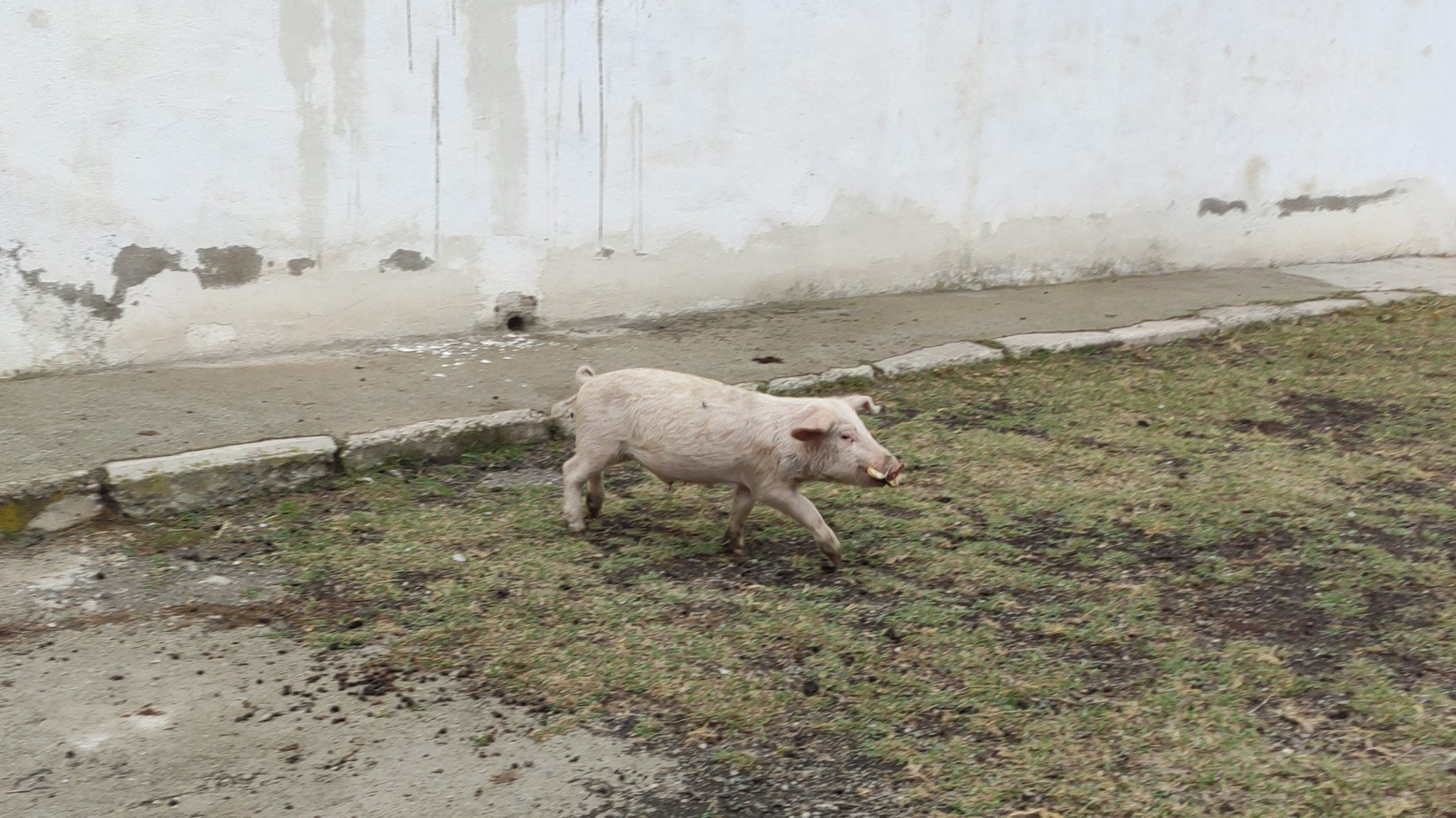
Karlen drives a boar over from somewhere. We try to catch it. The pig deftly dodges six men and me, never letting go of the piece of bread in its mouth. After many attempts, we give up on the pig.
A few heavy cupboards remain, and Roman, the KAMAZ driver, is hurrying us. Better to leave before it gets dark—despite the administration’s assurances, you never know whom you’ll meet on the road.
Roman, who is probably about 60-65 years old, fought in three Karabakh wars. His chest is covered in scars, and the man fears that if we are taken prisoner, he will certainly be in for it.
During this war, a shell fell on his house in Stepanakert, blowing out the windows and doors and breaking the furniture. The family sleeps on the floor in the half-destroyed house.
Roman has had a heart bypass. The bypass is already due to be replaced; the operation costs 4 million drams. Roman says he might get a discount as a war veteran, but he still has no money for the operation.
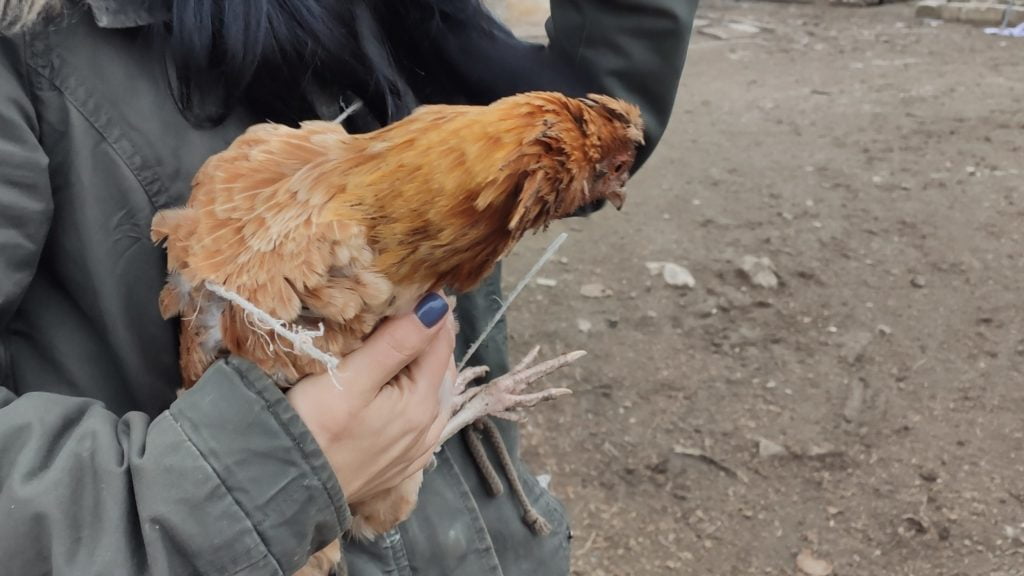
We are almost done loading when a frantic scream comes from the direction of the house beside the school, where the two dogs had barked at us—as though someone were being slaughtered. We run over. Fyodor finds a little light-red hen that the dogs had apparently intended to “prepare” for dinner, but they ran away when we appeared. The hen has no visible injuries. In an abandoned cowshed we find scraps of string, tie her wings and legs so she won’t flap about, wrap her in a dirty red jacket found on the spot, and take her into the car with us.
The Encounter
We return at about 5 in the evening. The KAMAZ drives ahead, with us following in the SUV. On the way we meet two young men with horses and a tractor. They say everything is all right, they’ll fill the tractor with water and leave.
Garik calls Hakob: in the same dispassionate voice with which he assured us in the morning that no one would come here for another month, he says the Azerbaijanis have entered Nor Maragha and that if we encounter their convoy we shouldn’t panic, “most likely they’ll let you through without any trouble.”
Before we can digest his words or warn the KAMAZ driver, two vehicles appear—a white Niva and a Ural with the letters “AZ” on their license plates. The vehicles slowly pass the KAMAZ, then our SUV.
A scene immediately forms in my head: they stop us and demand that we open the trunk. We get out—three of us in military pea coats—and say: there’s nothing special in there, we’ve only stolen a crate of pomegranates from you, a few weapons, this little hen too; in the KAMAZ there’s a poster explaining how a frog’s respiratory system works, and we’ll pick up our khachkars on the way as well, if you don’t mind.
But the Azerbaijani vehicles don’t stop.
The KAMAZ, which slowed down at the sight of them, is now racing at a furious speed. Its spare tire, fastened under the truck, comes loose and, held by only two chains, bounces and bangs against the stony ground.
We race after it. Hakob calls on everyone to calm down, says his faith in God is so strong that he is certain nothing will happen to him, and therefore to us, and that we absolutely must pick up the khachkars in Hovtashen.
The rest of us seem to be adherents of the saying “Put your trust in God, but don’t let yourself down.” It is terribly sad to leave the ancient khachkar we pulled out with such difficulty, but our pragmatism chooses the safety of the six people sitting in the car. We don’t know how many more of them will come here or how many we will meet. My caring pragmatism goes even further: I think about how to hide the hen if we see more vehicles and are stopped, so she doesn’t suddenly become someone’s dinner. We drive past the khachkar leaning against a concrete wall.
To relieve the tension somehow, Vahram practices “Karabakh—Azerbaijan dir” again, but it no longer sounds as convincing. Someone quickly tells him and Karlen to take off their military pea coats just in case. It isn’t so easy to do in a cramped car on the move.
“But there’ll be checkpoints, Armenian soldiers warning you that you can’t go in there, won’t there? Surely it can’t happen that you drive and drive and just run into Azerbaijanis?” Fyodor asked naively last night. It turned out it could.
We reach our checkpoint. The guys say Azerbaijani convoys have been driving along the lower road nearby. We give them the ammunition.
Soon we come upon an armored personnel carrier belonging to the Russian peacekeepers. We exchange a few words. The guys have already settled into the village where they are quartered, and the locals are friendly toward them. Vahram gets out of the car, then returns to our window and says sternly and firmly: “Karabakh is not Azerbaijan!” His eyes are not laughing.
We stay at the administration for a couple of hours to rest. Garik says that in one of the villages the Azerbaijanis stopped the village headman’s son, who was taking away a water tank, unhitched the tank and let him go.
A box is found for the hen at the administration. In the staff’s eyes there is incomprehension and even, I fear, disapproval of the little hen’s rescue. Garik advises taking her to some military unit and giving her to the soldiers for dinner. But we have already picked out a home for her with other hens in the village of Ushi, where we live. A home where she will “pay” for her lodging only with eggs and, we hope, live to a ripe old age.
At Their Own Expense
Karlen and Vahram move to the KAMAZ and take the school furniture, some of which broke during the mad race, to Vardenis. We intend to stop at Dadivank along the way, then join them.
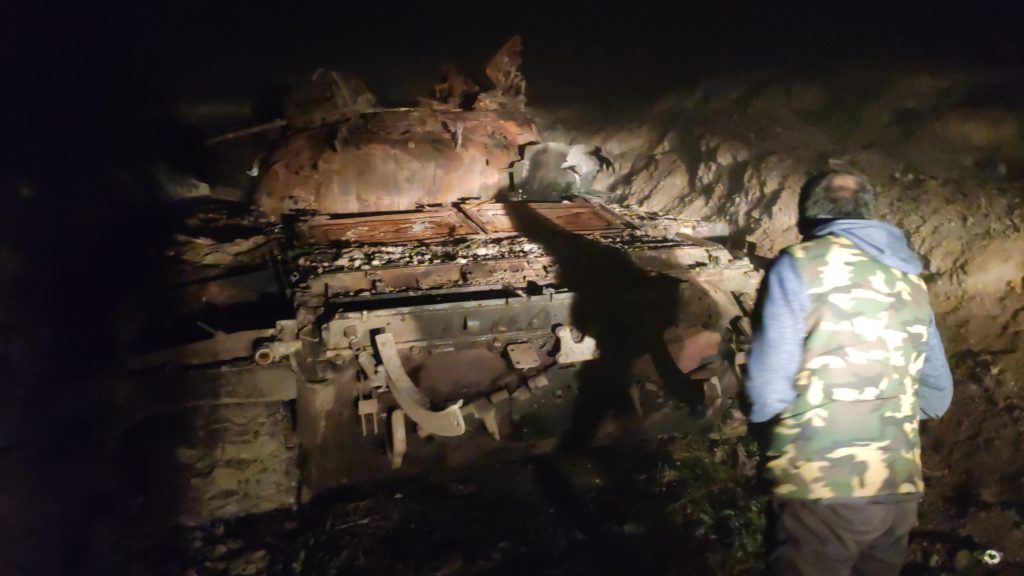
On the Martakert-Karvachar road we encounter a tank that has been hit by a shell. Beneath the tank is a solidified puddle of metal. There are several more tanks there, literally melted by the immense temperatures of the fire.
A group of mobilized servicemen stands on the cold night road. After a change of shifts they were brought down to the paved road; from there the soldiers have to get home at their own expense. Two of them ride with us as far as the Stepanakert-Karvachar fork.
Both are from Stepanakert. One’s house was undamaged by the bombardment; the other has yet to find out whether his house is intact. Their families are in Armenia. They apologize that I have had to squeeze over on the seat and for smelling of campfire.
The servicemen ask us which villages have passed to Azerbaijan and which have stayed with us. One of them did his military service in Karmiravan, now Azerbaijani, and was decorated in 2016 for shooting down a drone.
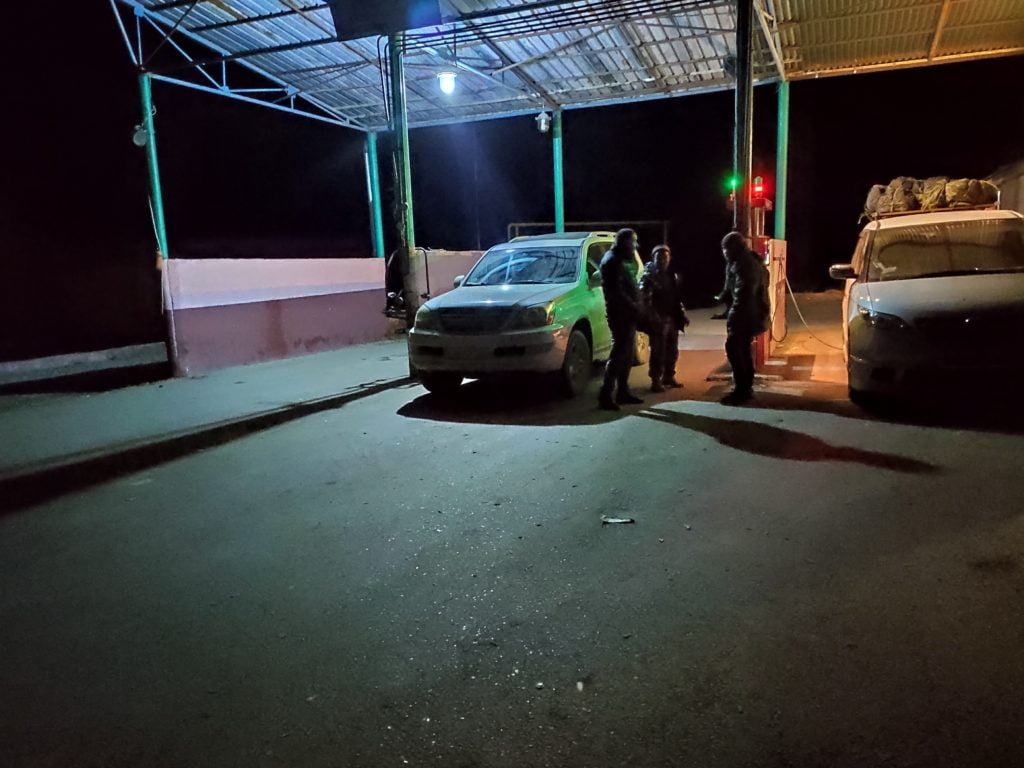
At a gas filling station we meet another group of eight servicemen. Left to fend for themselves too, they have hired a car for a considerable sum to get to Yerevan. Despite the servicemen’s protests, David pays for their car.
Wisdom and Peace
There are Russian peacekeepers at Dadivank. Several Armenian servicemen have stopped to pray and receive the blessing of the monastery’s abbot, Ter Hovhannes, before going to their posts. Dogs sleep serenely by the monastery gates.
The Russian peacekeepers are young lads with open, smiling faces. One of them is called Nikita. Hakob writes down his mother’s phone number to call as soon as we get reception and tell her her son is doing well. With Russian SIM cards they can’t connect to Karabakh’s network, and that network itself will soon be gone.
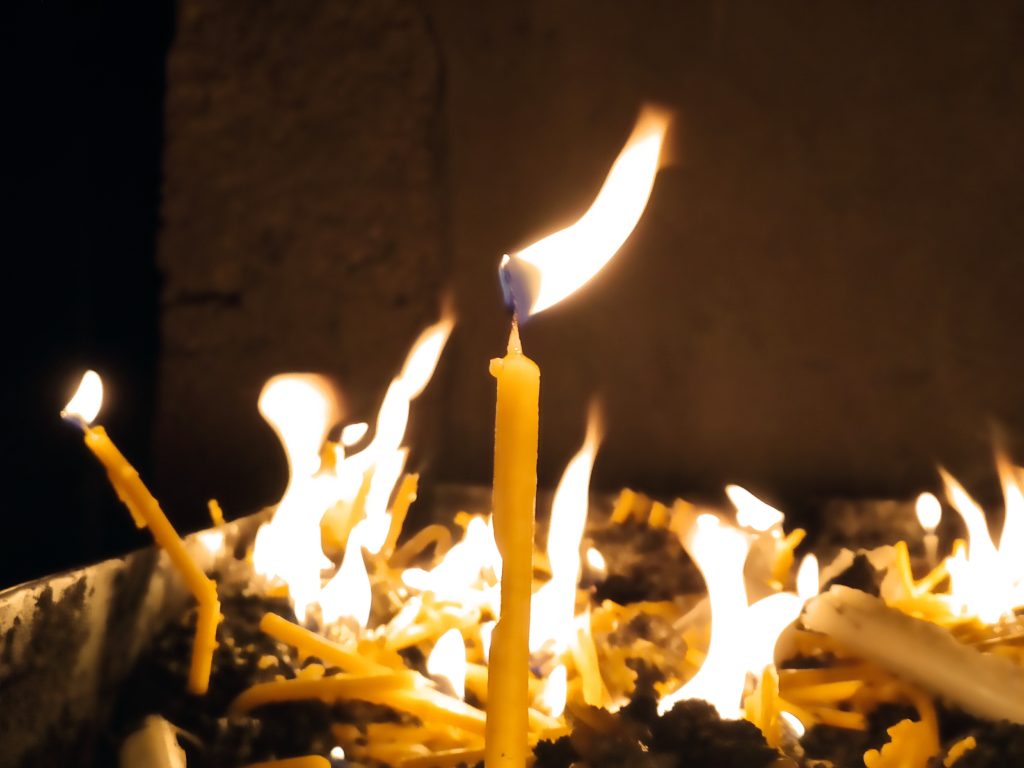
A serviceman enters the little prayer room, where there is a long metal candle stand, with an armful of yellow candles. With a concentrated expression, sniffing every so often, he brings the wicks of his candles to others already burning, then melts the opposite end and sticks it into the sand.
What is he asking God for? To protect the homeland and the soldiers, for service not to be too hard? Not to abandon us and to help us bear the terrible ordeal, pain and losses we are going through now? For this not to be the last time he lights candles here?
The serviceman picks up fallen candles and sticks them back in. Fyodor and I pick them up too. We don’t say a word to one another; we haven’t even said hello. But sometimes his red eyes meet our red eyes, and it feels as though we are family. I ask God for wisdom, the ability to accept, and peace of mind. For every single person on Earth.
At our last stop, in the town of Karvachar, are houses built very recently for resettlers. They have not been burned; they are all standing. Not all the furniture has been taken out of the town school. In a room on the ground floor rubbish lies scattered; almost in the middle stands a black piano, with a beautiful wooden chair in front of it. Fyodor sits down at the broken piano and, by the light of a phone flashlight, plays the only tune he knows how to play—Beethoven’s “Für Elise.” We take the wooden chair with us.