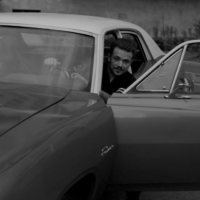

Two years ago on this day, he came up to me and invited me to his planet. He took me where everything was equal to the unequal, where love and hate were for and against each other — and both were perfect, where sadness and joy played an endless game, where cats and dogs, understanding, did not understand each other, where everything was inside out — so much so that it became right.
He took me there and taught me — patiently and calmly. He taught, I learned. And eagerly awaited the next journey. I listened to no one, no one understood me, they told me I was losing myself, but I went on the most captivating journey of my life.
He was the best bad one, he was an incomprehensible phenomenon that I loved too much, that loved me too much…
01 November 2020. From Nina’s Facebook post.
The Good Bad One
I saw Khoso three times. Every time with Nina, by chance, and always — in Saryan Park. The last time was either in late spring or early summer. I think one of us was in a hurry. We exchanged a few words and went our separate ways.
I caught myself having the same feelings about Nina’s boyfriend as on the previous occasions: as though he were surrounded by a shell — transparent and dark at the same time, like a dusty cobweb. You want both to get out of this field as quickly as possible and, at the same time, to poke a hole in it and see what is hidden inside.
But Khoso allowed very few people to do that. Nina probably most of all.
— Khoso always tried to seem worse than he was. I got an enormous amount of positive energy from him, while my friends said he radiated nothing but negativity, Nina says. And laughs.
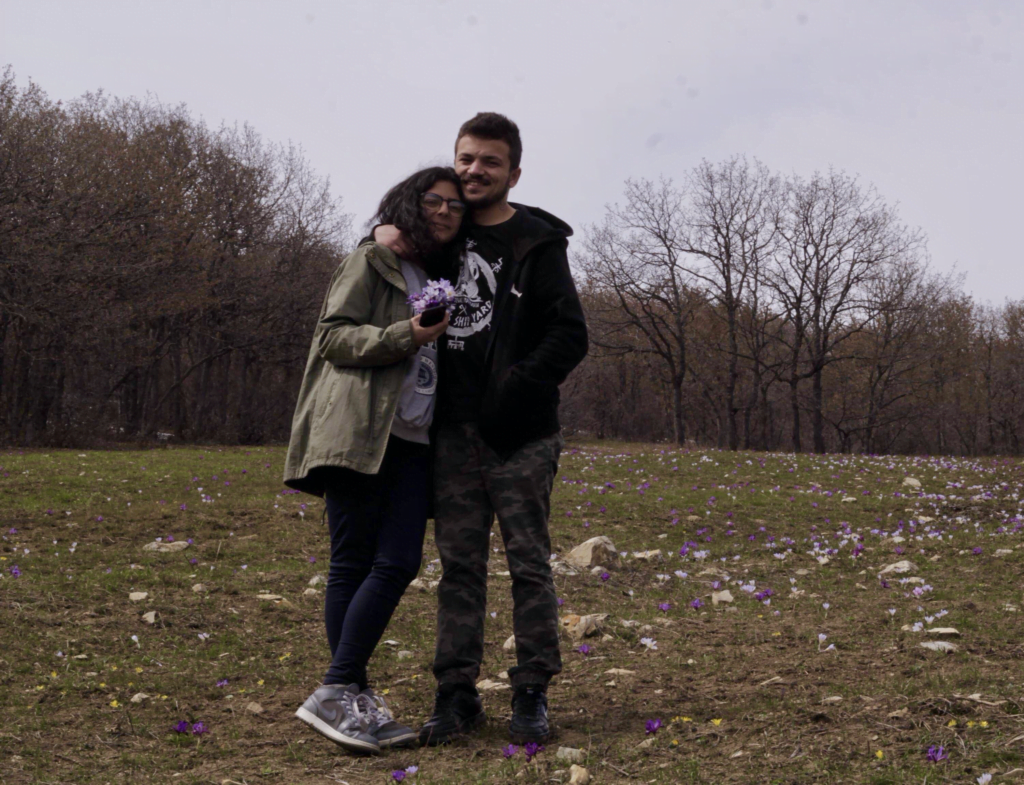
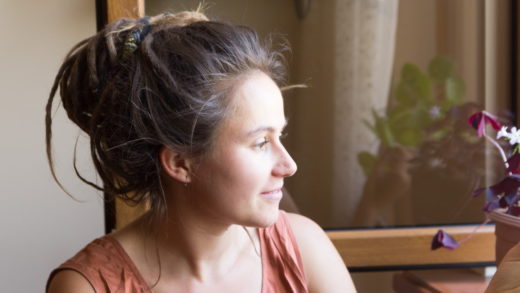
Winter. We are sitting in an outdoor café at the Cascade in a world hopelessly changed after the war. A cone-shaped gas heater is trying with all its might to warm us. Nina is wearing a black sweatshirt, her nails painted black. Nina loves black — it makes her feel protected. Her hands tremble slightly. The apple tea in front of her will stand untouched for another hour.
Nina is 19; she will be 20 in a month. I have known Nina since she was 8-9. Little curly-haired Nina, whom I taught to ride a horse, who would leap out of the car and throw herself into my arms with a cry of “I’ve missed you so much,” then laugh as she tried to stay on her feet under the affectionate leaps of our Alabai, Aslan.
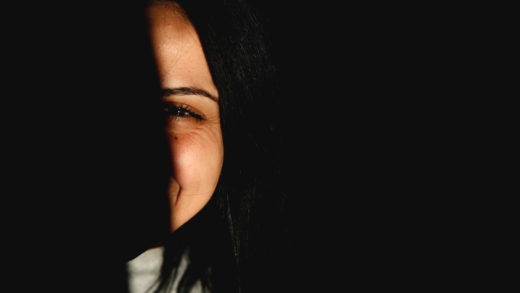
I am trying to catch a glimpse of the familiar eternal child Ninuk in the young woman sitting before me. But the only familiar thing left is her unusual laugh. It starts straight away, without the corners of her mouth creeping upward, without a preliminary smile, and ends just as abruptly. The “laugh-dots” that appear at the corners of her eyes scatter when the laughter stops.
— He liked to play the fool in public. When I asked him why he made himself out to be such a bad, immature boy, as though deliberately pushing people away, he would answer: “So they don’t get attached. So no one loves me, or they’ll feel bad afterward.”
— Do you think he sensed he would go early?
— Now I understand that he always sensed it. We celebrated last New Year at his friend’s country house — our favorite place. After the guests had gone, tired of the party, we sat talking, just the two of us. And he suddenly said: “This is my last New Year.” I carelessly asked him not to talk nonsense, but he repeated: “I really know, this is my last year, it’s as though I’m not meant for this world.”
After his death, Khoso’s friends showed Nina a video of the farewell party they had held to see him off to war. In the video, a friend asks: “Where are you going, Khos?” Khoso points a finger at the sky and answers: “Up.”
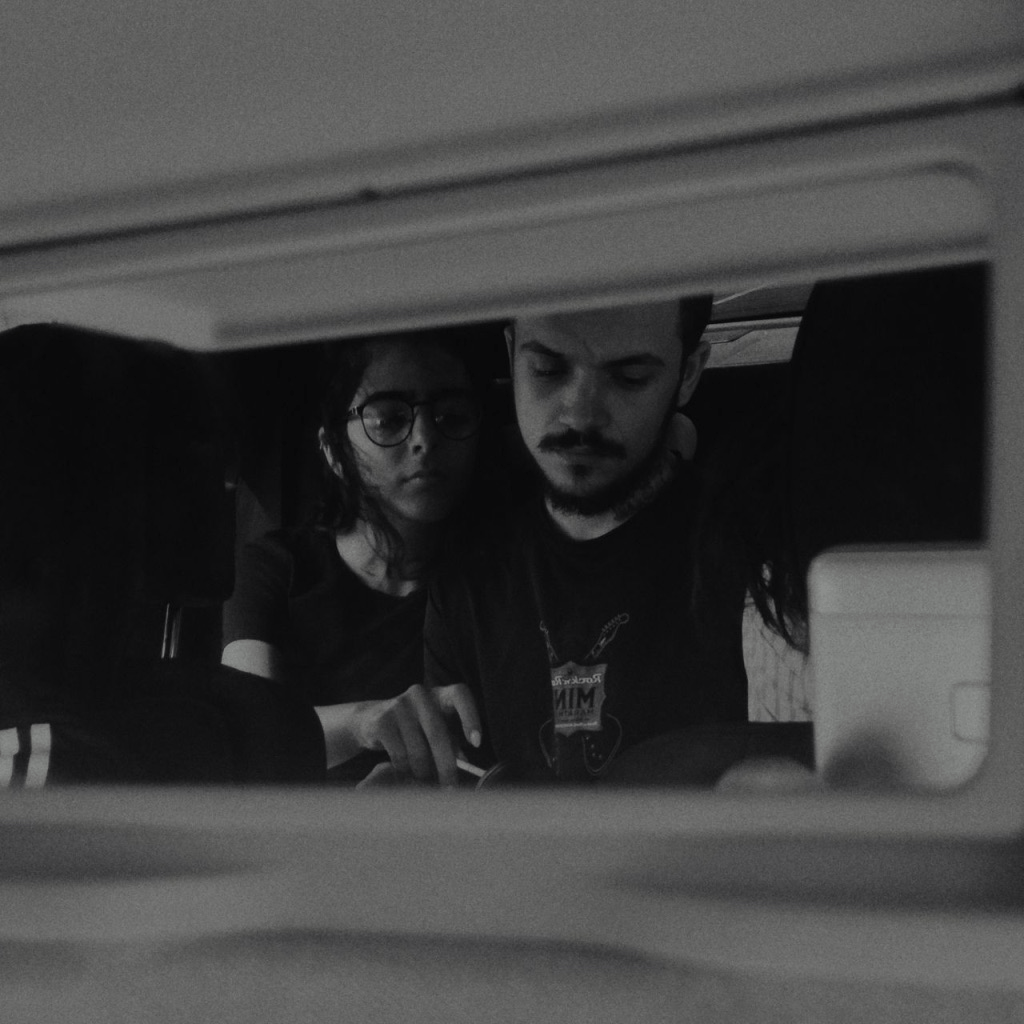
Nina was not at the party. She and Khoso had broken up a month before the war began. They had parted badly, after long quarrels. When they happened to meet in the street, Nina cut short his attempts to talk. On the eve of his departure for the front as a volunteer, Khoso’s friends told Nina he wanted to see her. Nina decided she was not ready to meet yet; let him come back safe and sound, then they would certainly meet and talk everything through.
Nina was planning to go to the USA to take animation courses at Disney’s studio. She wanted to move forward, build her own life, and was afraid of returning to the old daily routine of silly quarrels. Khoso told his friends: “Never mind, when I get back we’ll get engaged, she’ll see.”
On 26 September, Nina and her friends gathered at a club for her farewell party. They had fun all night and, toward morning, exhausted, crashed at a close girlfriend’s house. Nina woke to shouting. A friend who had been sleeping in the next room shouted that war had begun. “Who? With whom?” Nina asked, still half asleep. “Us, we’re at war!” he replied.
Presence
It cannot be said that Khoso, who had gone to war, often appeared in Nina’s thoughts. But on the evening of 25 October, she felt anxious. She could not get to sleep all night. Toward morning, she began going through photographs of them together and put on music they used to listen to together.
At 8 in the morning she finally managed to fall asleep. Two hours later Nina sprang up as if from a bad dream, immediately opened her laptop, and the first thing she saw was a photo of Khoso posted by his friend with the words: “Our Khoso has become light too.”
— Everything went dark before my eyes. I went and woke Mum, told her Khoso was gone. Mum hugged me and cried. My parents had never really encouraged our relationship, but they are taking Khoso’s death very hard. I lost a childhood friend and classmates in the war, many people suffered terrible wounds. I can’t imagine how I would have coped without my parents’ tremendous support.
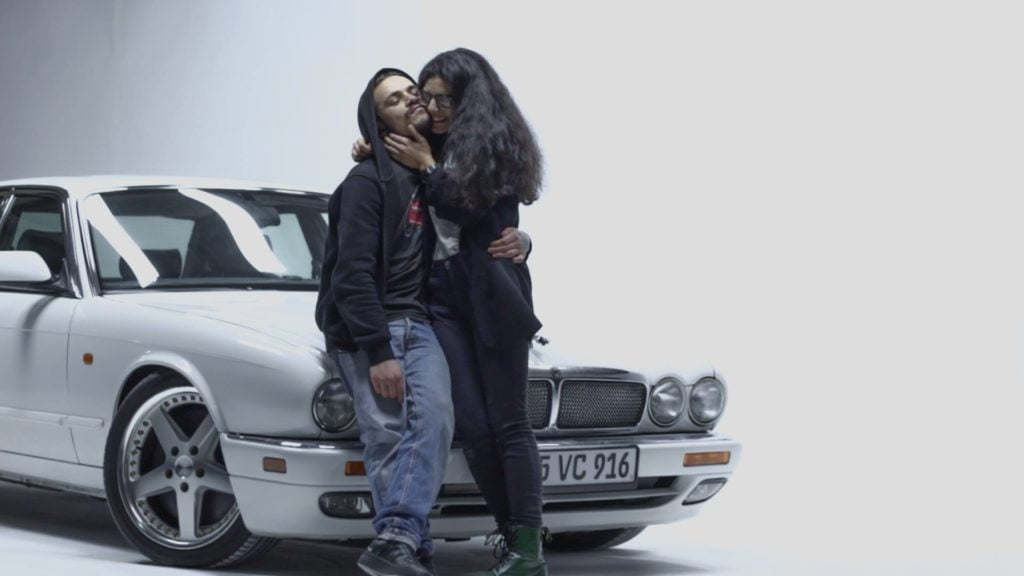
Nina remembers only vaguely how the day passed. At night she woke to a strange vibration. She looked at her phone — it was not vibrating. She noticed something black in the room. She squeezed her eyes shut, and when she opened them the black thing had vanished. And a few days later Nina had a dream.
— Gev and I were sitting somewhere, drinking, remembering Khoso and laughing. And suddenly he appeared. Said he had come to walk me home. I began asking him what it was like there, how he had managed to come back, what would happen afterward. He answered: “You’re a clever girl, you already know,” hugged me, and I woke up.
Nina still feels Khoso’s constant presence. Sometimes it is unsettling, but on the whole it is a good feeling.
— For example, when I feel like crying, I tell myself — Nina, stop it, Khoso will get angry. He really hated it when I cried. And I don’t cry. Also, if I did something childish, he would say: “These children, where do they come from?”
Last New Year Nina gave Khoso a kitten — a cross between a British cat and a Van cat. Khoso decided to name him Rudolf — after Rudolf Hess (a German politician, leader of the Nazi Party until 1941, arrested in Great Britain, convicted at the Nuremberg trials, died by suicide in 1987 — Kalemon). The cat grew into an enormous fatso. He sleeps exclusively on Khoso’s bed.
A few days after Khoso’s death, Nina and his sister were sitting in his room, looking through photo albums. Khoso smiled down from the wall in the red hoodie he had worn to the front — a rare photograph in which he was smiling.
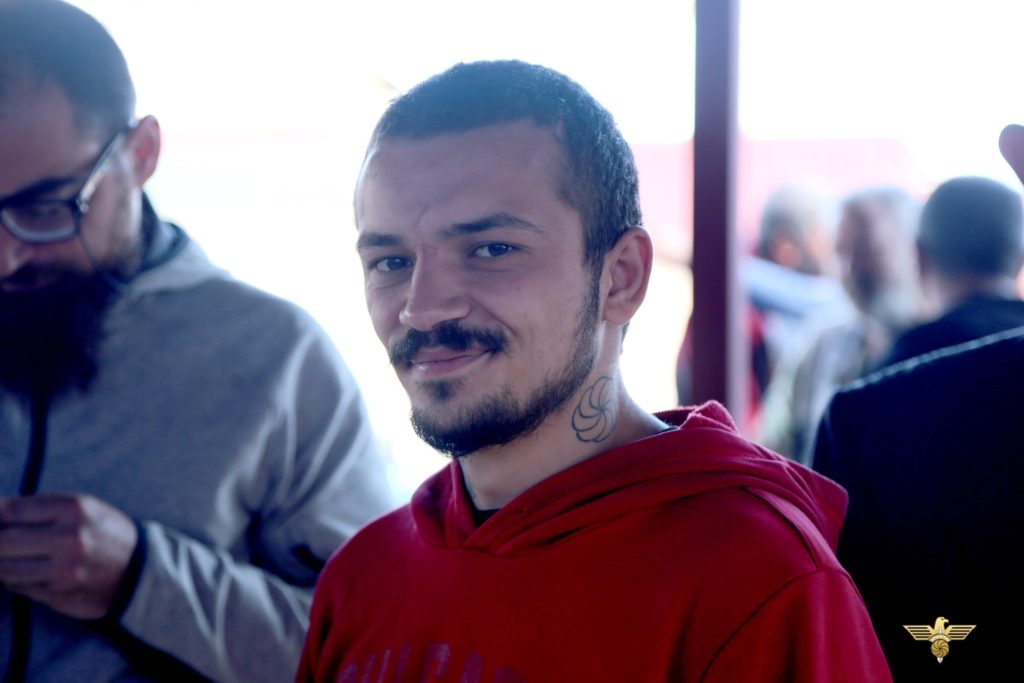
Rudolf managed to slip out through the unlocked door. After a long search, Nina found him behind a barred door in the attic. They had to find a neighbor with a key to unlock the door and free the cat.
— All this must have taken about 40 minutes. I came back into the room with Rudolf — out of breath, my hair disheveled — and sat down on the sofa. I look, and Khoso in the photo is openly laughing at me. As if asking again: “These children, where do they come from? They can’t even catch one cat.”
They Play Backgammon in Valhalla
Khoso fought in Hadrut. He was the youngest in the unit — 25. The men of 40-50 kept trying to look after him, shield him from heavy fighting, while he kept straining to get into the thick of it.
— He always said he would be the first to go if war broke out. He said: “So a Turk doesn’t kill me at home.”
Khoso went to Hadrut with Gev. They agreed right away that they would try to stay some distance apart, so that if anything happened, at least it would not happen to both of them at once. Gev had taken part in the April War; unlike Khoso, he knew what war was.
Gev heard a mortar shell explode. Ran toward it. When he got there, he saw his friend’s body, its heart still beating. Two minutes later the heart fell silent.
The day after my meeting with Nina is the fortieth day since Khoso’s death. His friends are still trying to find a way to return to Hadrut and bring back his remains.
Gev was only 7 years older than Khoso. But he looked after his friend, who had grown up without a father, like a son. That was what he called him: “My boy.” Nina says it is impossible to talk to Gev now. He keeps repeating: “I didn’t keep my boy safe, he took my place in Valhalla.” That was exactly where Khoso dreamed of going after death.
Khoso died on Gev’s birthday.
Only seven returned from their unit of 60.
When Nina and Khoso broke up, they childishly unfriended each other on Facebook. The day Nina learned of his death, she sent him a friend request. It is hard to say why. Perhaps there was some stupid hope, she reflects, or perhaps… She shrugs vaguely.
Sometimes Nina opens Facebook, looks at “friend request sent,” repeats to herself that her request will never be accepted. It makes her uncomfortable. Then she reminds herself — he is here, up there, nearby, we communicate anyway.
— If we hadn’t broken up, it would probably have been harder for me, I don’t know. The first week was very bad, I walked around… somehow white, empty. There was an enormous sense of guilt that I hadn’t seen him before he left. Then I pulled myself together, ordered myself to hold on — I didn’t see him, so that was how it had to be.
I keep imagining how he’s hanging out there with Odin now, playing backgammon, for instance. I had never thought about it before, never considered myself part of any religion. But deep down, I probably believe there is something after death.
Time to Live
Nina sips her tea, which has already gone cold. Smiles through me at an acquaintance walking past. Her nails are very long. Nina does not like shortening them. Nor does she like cutting her hair, even the split ends.
— I feel as though all my energy is in them, and when even the ends of my hair are trimmed or my nails filed down just a little, I feel emptied out. As though something important is leaving me. I thought that when the war ended I would go and get a haircut to get rid of everything my hair had accumulated, but then I realized that, along with all the bad things, I had acquired so much information, become so strong, that if I cut my hair that strength would leave too. So many times I thought I was weak, that I wouldn’t bear it, but then I endured and kept going.
And, after a silence:
— Khoso really loved the little hairs sticking up on my forehead. He would say — look, Ninel, they’re like little suns. He called me Ninel.
Khoso was irrepressible. He would get up in the morning and immediately start thinking up something unusual, interesting to do that day. Every second of his life had to be full, bright. As if he were trying to fit in as much living as possible.
Khoso was spontaneous. He could call at three in the morning and say — get ready, we’re going to Sevan. And they would go. And they would always have adventures. If nothing else, they were sure to run out of petrol on the way.
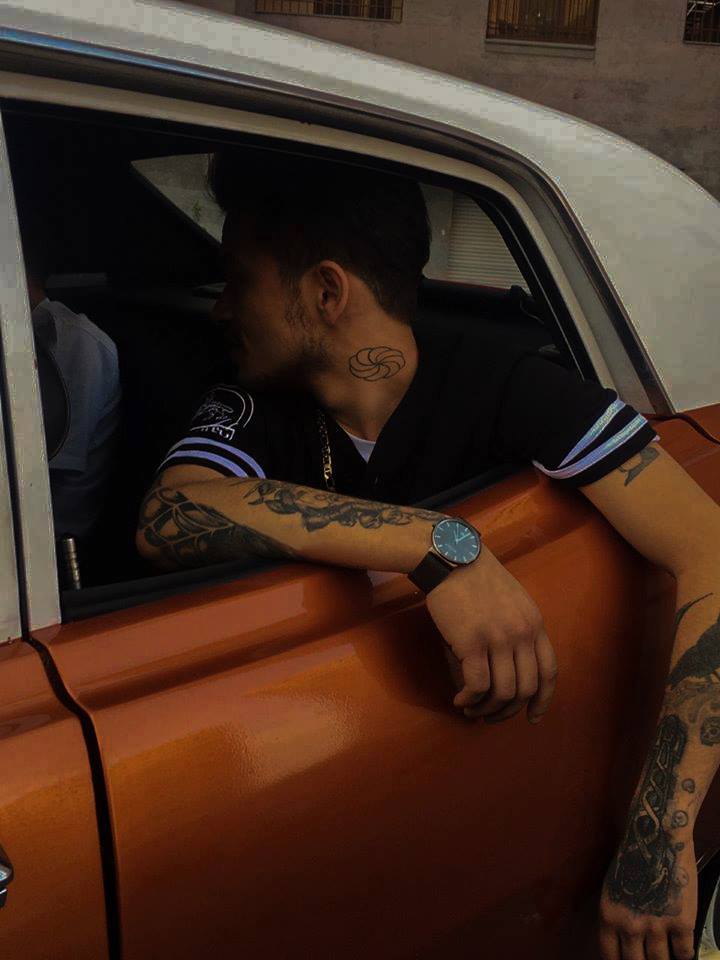
The people around Nina did not like Khoso. Either he was not the right person for her, or he was not mature enough, or not educated enough. Khoso had no higher education, had not even properly finished school. He had no interest in attending tedious classes. But he eagerly awaited Nina’s exams — he drew models for her and made technical drawings (Nina is studying to be a designer-architect).
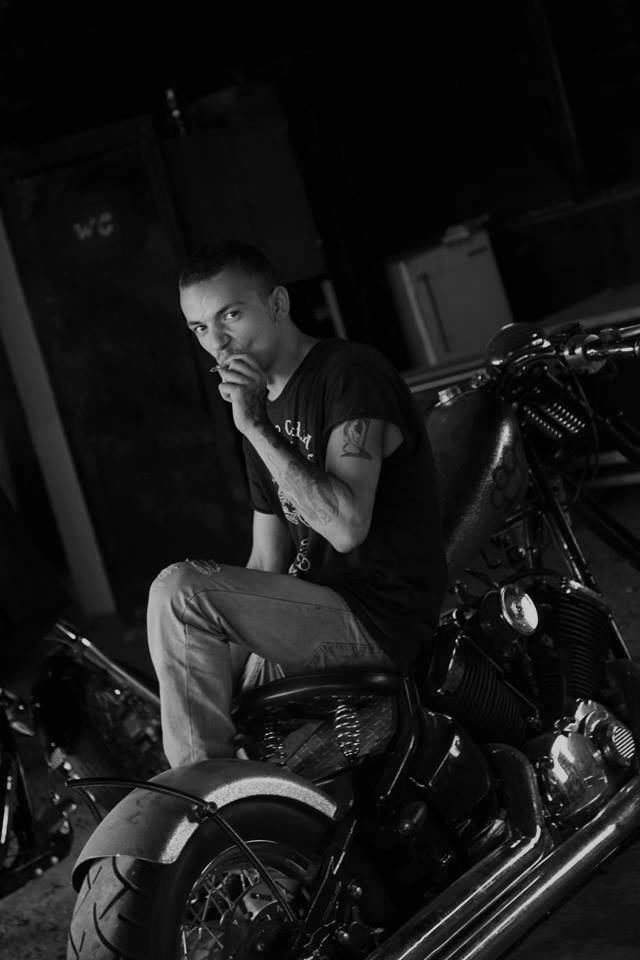
Khoso’s whole body was covered in tattoos. Very different ones. On his right arm, the Indian deities Shiva and Kali; on his stomach — the word “Outlaw”. He had tattooed a raven on his own leg. He loved ravens for their intelligence and for managing to live so long. Odin lived on his head with runes; on his neck — the eternity symbol and the words “Fuck the world”.
Four swastikas and an eagle — the symbol of the Third Reich — also put many people off. He and Nina had agreed not to touch on his beliefs and sympathies; they both knew it would end in a quarrel.
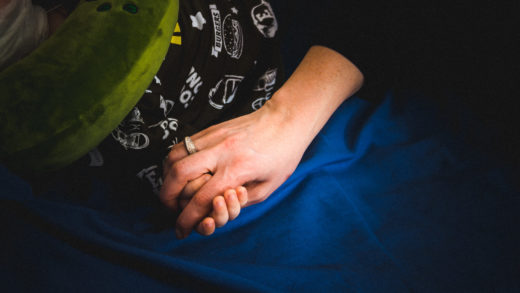
Khoso gave Nina peonies — her “greatest, greatest weakness.” With Khoso, Nina walked through Saryan Park, his favorite place. Holding his thumb: “He never gave me his whole hand.” They talked exclusively about lofty things. “We didn’t even know each other’s favorite colors, even a subject like that was too mundane for us,” Nina laughs.
Khoso loved to read. His favorite book was “Fight Club.” Nina, on the other hand, does not like reading. She gets attached quickly and takes it hard when a book ends and the characters leave her.
Khoso edited videos for musicians. A racer himself, he dreamed of a garage where cars and motorcycles would undergo work of a jeweler’s precision. And a pub above the garage, where his favorite music would play. In Khoso’s eclectic soul, for instance, Rammstein, Cypress Hill, Russian punk-rock legend Stupin, and rabiz singer Khatuba coexisted peacefully.
Khoso posted Stupin’s song “When I Died” on his page 16 days before the war began.
When I died, only cats and owls remained.
And sharks, and lobe-finned fish
Came ashore like dogs.
Formed packs, formed packs, devoured blacks,
When I died, when I died.
Necrophiliacs dug up Tsoi, Yoko Ono’s illegitimate son,
And the icons wept when I…
Too Small Right Now
On the night of 9 November, Nina was staying at a girlfriend’s. Her friend conked out a few minutes before “peace” arrived, and another “war” — outside the National Assembly building.
— I heard crashing and shouting. They were breaking things, there was a stream of choice swearwords. I was afraid the crowd, gone savage, would burst in on us too. It was terribly sickening — so many boys had died, I alone had lost so many people in this war, and what are you doing? Where does all this aggression in us come from, all this hatred for one another? Before the war I had noticed smiles appearing on people’s faces, some warmth returning to my beloved city. That night I realized that another 20-30 years of national weeping, suffering, the syndrome of a victim who had been betrayed, destroyed, were beginning.
Instead of weeping, Nina thinks, it would be better if people pulled themselves together, cleaned out their inner dirt, stopped waiting for saviors from outside, if everyone collected themselves, shook themselves off and moved forward.
“I entrusted myself only to Yerevan,” Nina says, describing her relationship with the city. Now she wants to leave the city for a while. Perhaps try America again (at the beginning of the war, when another badly wounded friend was brought to the hospital, Nina returned her ticket). Right now she feels too small — not in terms of age, she clarifies — to change anything on a global scale. She wants to concentrate on herself, understand herself and her capabilities, acquire new ones. And only then help Armenia rise again.
— The thought came to me that Armenians are altogether superfluous in today’s reality, have no place in this world. We live in the past, completely cut off from reality. We huddle in closed groups and isolate ourselves from the rest of the world. We only know how to weep together, never to rejoice.
I don’t want to cry, it’s useless. Khoso and I talked a lot about the person I want to be, the person he wants to see me become. Instead of sitting and crying over him, I will put all my strength into becoming that person, to make him happy there.
Nina says that in those first days it was especially hard to encounter sympathetic looks everywhere and receive messages asking about Khoso. “Why me, why is it me?” she asked herself. Then she understood — even despite their breakup, they had been the closest people to each other. And everyone knew it.
In the first days after Khoso’s death, Nina posted photos of them together, wrote about her emotions, as though asking for forgiveness or perhaps trying to pour the pain out of herself.
— But I only spoke about the good, the positive. I used to be very depressed. Then I realized that I could filter things, catch all the good there is in my life, in the world, hold on to it for myself and give it to others. When my positive energy runs out, I’ll withdraw, replenish it, return, and spread it again. I decided for myself that it is better to be a bright sun than murky water.
Khoso: I want to understand what role you play in my life.
Nina: That of a smiling passerby.
Khoso: A chance passerby?
Nina: A passerby who happened to be in the right place at the right time. Suddenly popped out of somewhere and saw you. Do you know why she’s smiling?
Khoso: Why?
Nina: So you’ll smile back. She likes that her smile makes you smile.
Khoso: Your smile makes me smile…
11 November 2019.