
The name “Sloyan” became known throughout Armenia after the 2016 Artsakh war. Azerbaijani soldiers beheaded the corpse of 20-year-old conscript Kyaram Sloyan, then filmed and posted online how they carried his head through Azerbaijani villages as a “trophy of victory.”
Two years later, Kyaram’s younger brother, Hrach, went to serve in the army, although the military recruitment office had offered to exempt him from service. His older brother, Amik, is fighting on the front line as part of the Kyaram Sloyan Yazidi volunteer unit.
***
We smoke in silence in the clean, tidy courtyard of the Sloyans’ house in the village of Artashavan. The sun makes our faces squint, quite unlike an October sun. Sparrows chirp. Three little white hens strut about the yard looking for food, hesitate for a second by a low wall from which they could hop down into the orchard, then turn back.
Beneath the plaster peeling off the front of the house in places, blue mesh and insulation — mineral wool — show through.
“They built this house properly. Well done to everyone who helped,” says the Big Man. That is what I call Gor to myself: as huge as a bear, a friend of the Sloyan family who has come with us.
When Kyaram was called up, his family had only just begun building a house. Construction was slow; there was not enough money. Kyaram promised to finish his service, come home, find a job and finish building the house. After his death, people they knew and people they did not — both Yazidis and Armenians — came together and fulfilled his promise.
Fyodor and the Big Man are about to go back into the house — to drink coffee from “the little cups from the coffee set,” with cakes and sweets. An unbreakable rule of Yazidi hospitality: refreshments first, the interview afterwards. I decide to sit a little longer on the sun-warmed stone — to gather my resolve. Conversations are hard these days, especially with mothers.
***
Amik’s son runs out of the house. He was named after his uncle. The boy is two; he has only just begun saying individual words. He calls his father by his first name. I smile at him. He runs back into the house, glancing over his shoulder at me with wary curiosity.
A little later we will make friends and play one of my favourite childhood games — a battle with forks. Little Kyaram parries my “attacks,” strikes back himself, the tines of his fork catching in those of mine. He throws back his head and laughs. I laugh too. May a fork be the most terrible weapon in your life, little one.
“When my son grows up, will he be a brave soldier?” Amik kisses him on the head.
“Nope,” the boy replies.
“May there be no more wars and no need for soldiers by the time he grows up,” I say. For what I think is the first time in my life, I feel the relevance of this worn-out phrase with every cell of my body.
“Ah, that’s what the grown-ups used to say when I was little,” says the Big Man. “Then we said it to our children, and they’re saying it to theirs. But the wars go on.”
The Big Man fought in the first Karabakh war. He remembers every nook and cranny of the places where he fought, asks the lads briefly home from the front about almost every little bush. It was a different war then. An honest one, face to face. Back then, death did not fall on people from the sky at the command of a joystick.
The Big Man’s great-grandfather restored the Cathedral of the Holy Christ the All-Saviour, Kazanchetsots, in Shushi (the cathedral hit in October 2020 by a double-tap, an attack in which the same place is struck twice, minutes or hours apart, to hit not only the initial target but also the rescue teams that arrive at the scene — Kalemon); his grandfather restored the pagan temple of Garni.
***
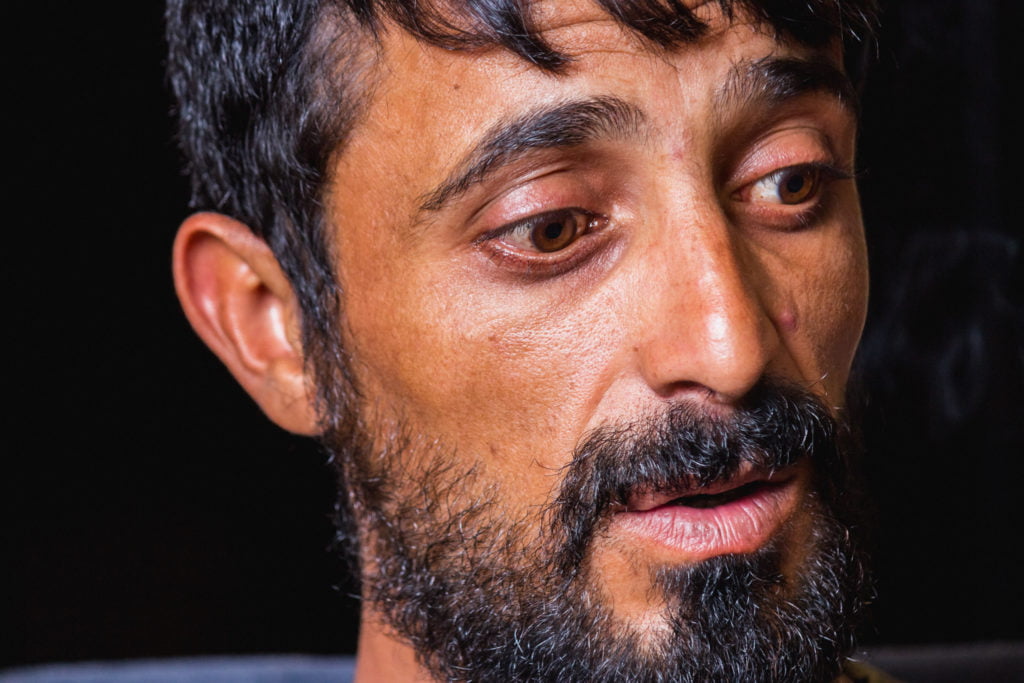
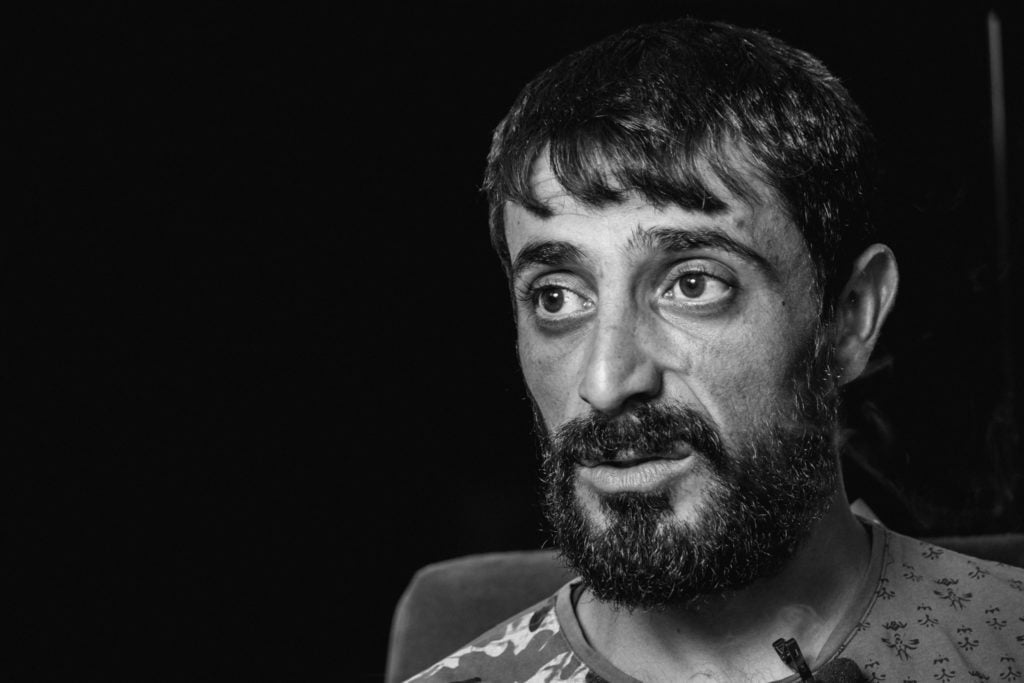
“Why did you decide to volunteer?” I ask Amik.
“Because the war started,” he replies simply. “My blood is no redder than anyone else’s.”
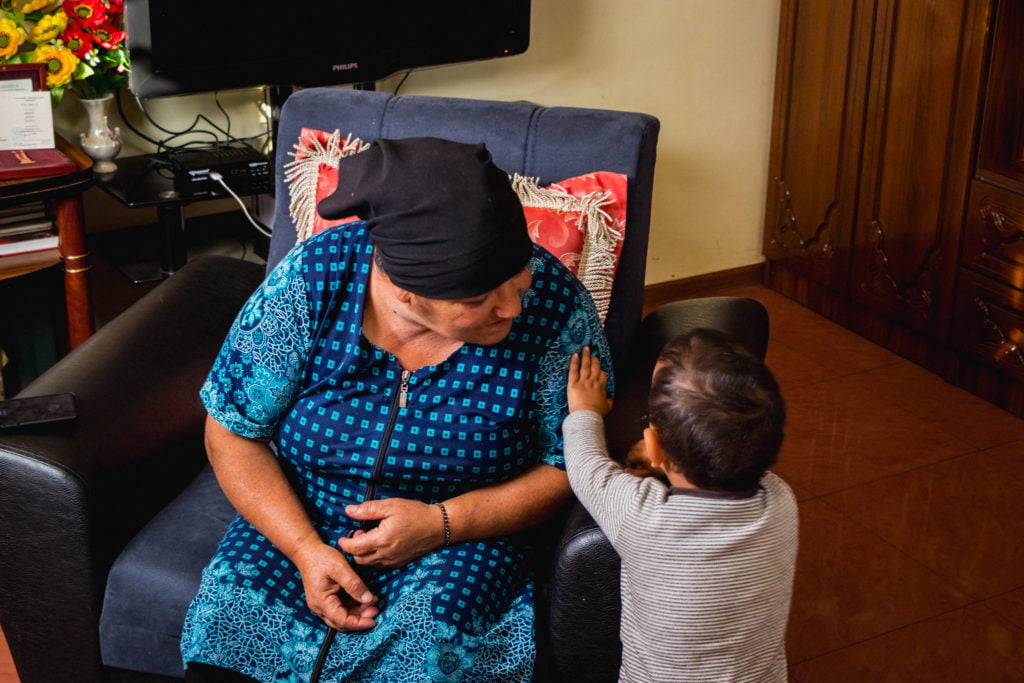
Amik is 32. Before going to the front, he had never held a weapon in his life. A month before he was due to be called up, he and his friends were in a serious accident, after which his leg had to be pieced back together and he was exempted from service. “But I’m a quick learner, I soon learned,” he laughs.
When Commander Rzgan assembled a unit of Yazidi volunteers, Amik was one of the first to sign up. “There are 42 of us in the unit — 38 Yazidis and 4 Armenians, all ‘lion lads,’” he says proudly. And the fearless nurse Dilbar, a Yazidi woman from Oktemberyan. The unit’s task was to hold the line — to cover their own men if they retreated and support the rear during an attack.
Amik tells me that at the front, once the whole unit learned that he was Kyaram’s brother, they secretly “looked out for” him so that his mother would not lose another son. We meet Amik a few days before his unit, home for a rest, leaves for the front again.
***
“Amik, what is a homeland?”
“A homeland is a great hearth of our fathers that must always burn. And we all put logs on it, each as much as we can.”
“How do you stay brave in a war?”
“It’s normal to be afraid of going to war and being killed. Everyone has fears. You just have to accept that and learn to conquer fear so that fear doesn’t conquer you.”
“Your greatest fear?”
“A meaningless death. Every day at the front I was afraid I would die without dragging a single enemy into the next world with me. When you see the dead boys in front of you, of course, your thirst for revenge grows stronger too.”
“What is victory?”
“They (the Turks) want to conquer our homeland, and we’ve decided they’re not going to get it. That is already a victory.
“It comes at the cost of our boys’ blood; every loss is an enormous pain for us. Two men from our village have been killed — Derenik and Harut. Dero is Kyaram’s childhood friend, Harut is my age. Neither of them is just a neighbour, just someone’s child: they are my brothers. We owe them victory. War is a bad thing, but what can you do if you’ve been landed with bloodthirsty neighbours who want to destroy you?”
“What is our enemy like? I can’t bring myself to say ‘opponent.’”
“We’ve been landed with the worst of the lot. What can you say about people who wage war on our corpses? They’re afraid of us even when we’re dead. I can’t explain it any other way. Sometimes I think, I wonder what they’re made of, because a human being can’t behave like that, can they? As though they’re all high.”
“Did you ever want to do to them what they did to your brother?”
“In all these four years, not a day went by without me thinking — just let me get my hands on you, dead or alive. But there (at the front) I realised I wouldn’t do anything. Kill — yes, I’ll kill anyone who threatens my land, our soldiers. Even though in peacetime I’m someone who turns away when a chicken is slaughtered. But mutilate corpses — no. I can’t even mock a wounded man. That’s what makes us different from them.”
I don’t tell my two-year-old child what they did to his uncle. He’ll grow up and find out. But nurturing hatred in a child is wrong. First and foremost, it will poison his own life.
Amik has an open face and an unhurried voice. “A man without inner conflicts or doubts,” I think, not without envy. A simple, wise man of nature. As we were leaving, he said: “I’m glad you came. Usually I’m the life and soul of the party, I make everyone laugh, but now it’s as though there’s a wound inside, the words won’t come out. But we’ve talked, and it’s taken my mind off things a little.”
***
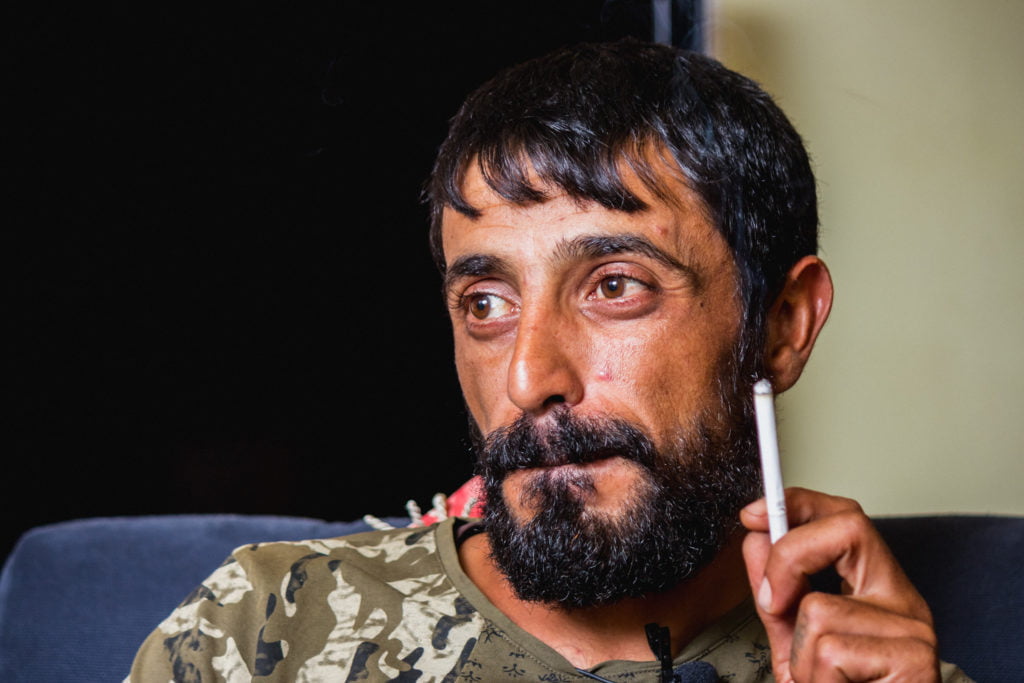
Amik’s mother, Nvard, was 25 when she saw her husband off to the first Karabakh war. She waited for him in her father-in-law’s house, with two small children — Amik and Nver.
Nvard herself is from Abovyan. She only got to know her husband after the wedding — theirs was an “arranged” marriage, common among both Armenians and Yazidis at the time. “But I never regretted it,” she says. “Look at the children we had (4 sons and a daughter) — all brave and strong.”
During that war the electricity was cut off, the gas supply stopped, there were severe food shortages, humanitarian aid came in. Meals were cooked over open hearths. Nvard picked raspberries, worked in the fields, tried to feed the children. There were times when they went hungry too, but they pulled through. The children made pistols out of bits of wood and played war.
Nvard’s husband, Kyalash, came back from the war with a leg wound and two medals for bravery. But she had waited two years for him. There were no social networks or mobile phones then — even the landlines were down, and news travelled slowly and took a long time to arrive. But Nvard was not afraid. And when she saw Kyaram, then her youngest son off to the army, and her eldest to war — she was not afraid then either.
“What’s the use of being afraid?” she says. “Will it change anything? Will it end the war?”
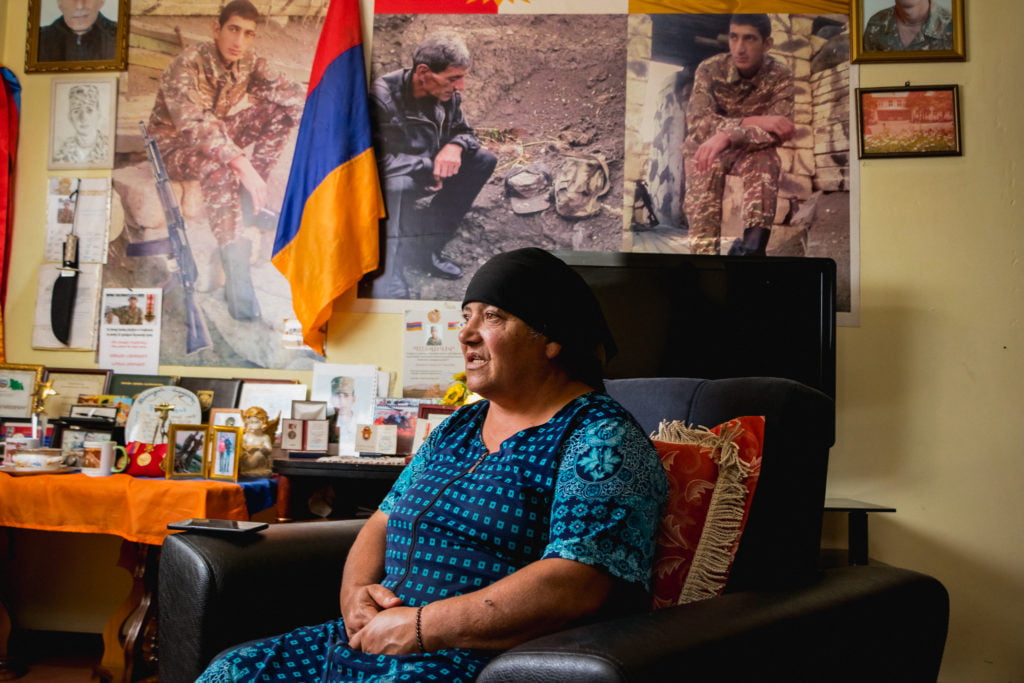
I sit on a little low chair opposite her armchair. Two Kyarams look at me from the wall: one standing full-length, the other seated, half-turned. From cups, saucers, keepsakes — in photographs, in gouache and oil paintings — a boy with large, sad eyes looks out, a boy who has remained forever almost half my age. This wall in the large living room is called Kyaram’s Corner.
There is also a portrait — a large one too — of Kyalash. The 52-year-old father of the April War hero died a year after his son’s death, in the same month.
Behind me, adults and children — Yazidi homes are always full of relatives — have seated themselves in a semicircle as if at a performance and listen to our conversation with bated breath. They think they are witnessing the important work of an important journalist.
Meanwhile, the “important journalist” has shrunk, become very, very small, and thinks this is the worst interview of her life. And that her colleagues at the Yazidi media platform “Khirat” will not get the material she so rashly offered to record for them on video as well.
I ask Nvard stupid questions, get short answers. When I transcribe it, there will be more pauses than words on the recorder. I think about how we come to them – the families of heroes — when we need to record an interview or bring them some sort of aid. Humanitarian aid. Then, without a second thought, we forget them in the bustle of our own lives and our own problems.
How many times will I myself brave that nightmare road to Artashavan again, the one where we almost wrecked the car (they are laying asphalt on the highway), and come to this woman simply to sit, listen to her memories, cry and laugh together?
I think about how her strength frightens me.
“I wasn’t always like this. I became strong after Kyaram.”
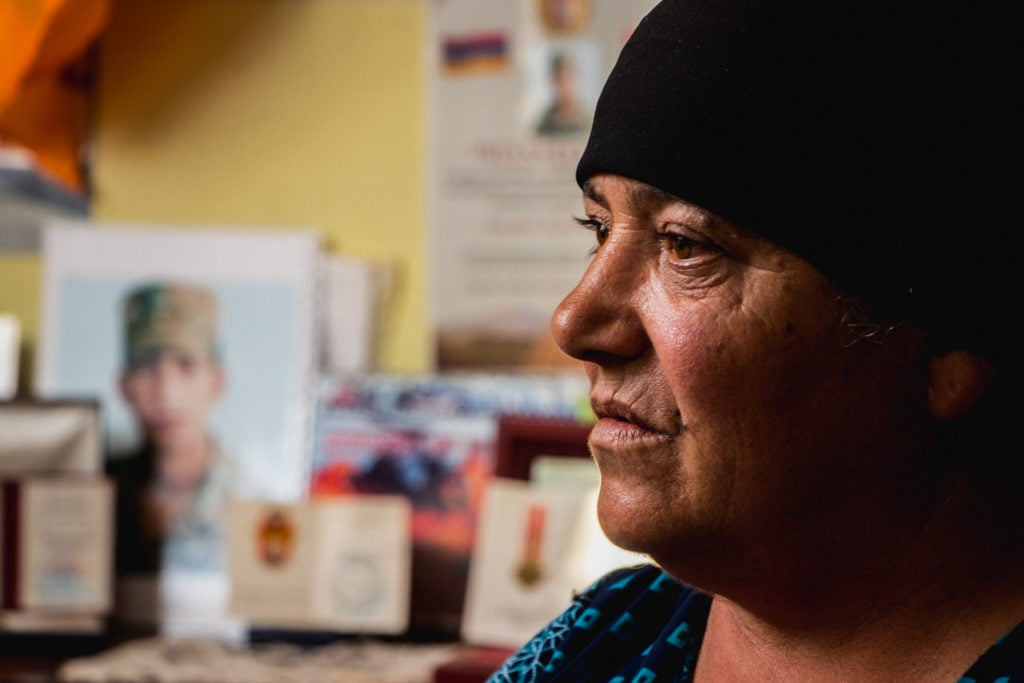
Hearing the name he shares with the uncle he has never seen, Nvard’s grandson comes running and demands that his grandmother stop saying things he does not understand and turn her attention to him. I readily turn to the child. I smile at him and ask about him. Nvard says her grandson is the spitting image of Amik as a child, though he has his grandfather’s ears and there is a resemblance to Kyaram too.
“Our house was half-built when my Kyaram went into the army. Then… This happened to him… We are very grateful to the people who helped us, who stood by us,” she says in answer to another idiotic question of mine, one that was not about her son at all. I cannot bear it.
“I don’t want to ask you these meaningless questions. What I really want is to sit here and keep saying, endlessly — forgive us. For not keeping your boy safe. The other boys,” I say, surprising myself. I cannot control my voice, making her cry too.
But Nvard wipes away her tears.
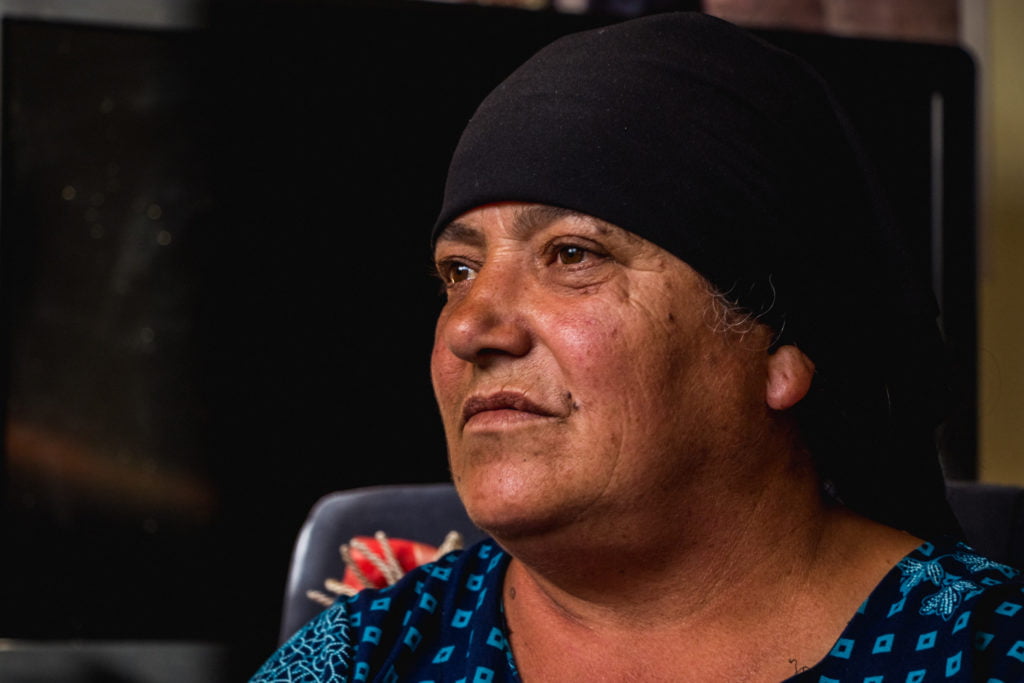
“We in the rear have to be strong, we have to be pillars of support for our boys. They are so fearless because we give them courage. I saw Amik off to war myself. He knows I’m always with him and on his side. Why, I’d have gone with him myself.”
“Mum’s good at driving a tank,” Amik laughs.
“No, I can’t drive a tank, but they’d certainly have found something for me to do.” She laughs too. “We just have to hold on a little longer and we’ll win, I can feel it.”
“Mum is the granddaughter of Vanga’s sister,” Amik nods with exaggerated solemnity. We all laugh.
Little Kyaram brings two balls out into the courtyard, trying to manage both at once. An older girl — apparently a relative — follows close on his heels, ready to catch him if he decides to run after a ball down the high concrete steps into the orchard. This is a house where terrible grief has struck, but life goes on. And heroes are born.